Crown Imperial
Fritillaria imperialis
Overview
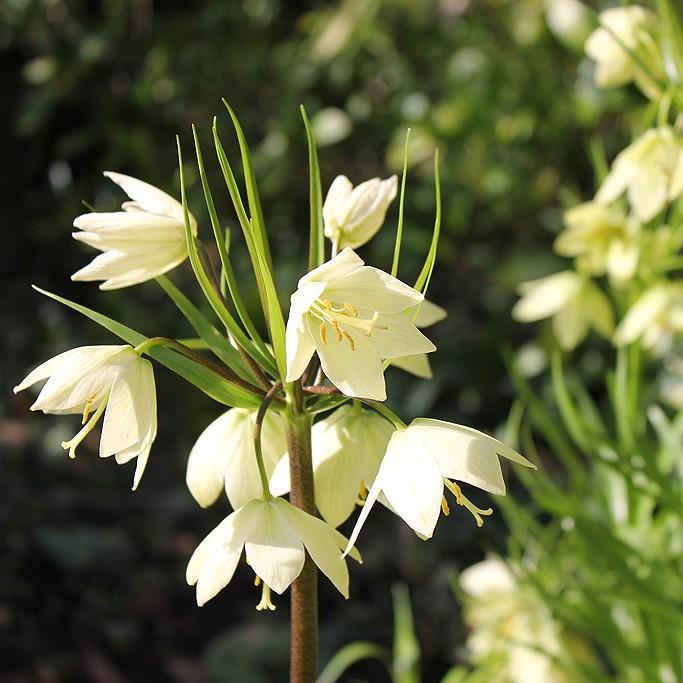
Crown imperial is a dramatic, deer-resistant bulb plant that blooms in mid-spring, producing clusters of pendent, bell-shaped flowers in shades of red, orange, or yellow, often with a distinct musky scent. The signature tuft of bright green, lance-shaped bracts sits directly above the flower cluster, giving the plant its regal 'crown' common name. It naturalizes well in suitable climates, returning reliably each year to create a bold focal point in garden beds.
Care Guide
Watering
Water thoroughly after planting in fall to encourage root establishment, and keep soil consistently moist but not waterlogged during active spring growth. Reduce watering gradually once flowers fade and foliage begins to yellow in summer, allowing bulbs to enter a dry dormant period.
Light
Plant in full sun for the sturdiest stems and most abundant blooms, though it tolerates partial afternoon shade in regions with very hot, intense summer sun. Too much shade will cause stems to become leggy and prone to flopping over under the weight of flower clusters.
Soil
Requires deep, well-drained, fertile soil with a neutral to slightly alkaline pH; heavy, waterlogged soils will cause bulbs to rot quickly. Amend planting areas with compost or well-rotted manure before planting, and plant bulbs 6-8 inches deep on a bed of grit to improve drainage.
Fertilizer
Apply a balanced, slow-release bulb fertilizer in early spring as new shoots emerge from the soil to support robust growth and flowering. Top-dress with a thin layer of compost each fall to replenish soil nutrients for the following growing season.
Temperature
Thrives in USDA hardiness zones 5 to 8, requiring a 12-16 week period of cold winter temperatures between 35-45°F (2-7°C) to trigger proper bulb dormancy and spring blooming. It tolerates short periods of frost in spring, but unseasonably hard freezes can damage emerging flower buds.
Pruning
Deadhead spent flower clusters immediately after blooming to prevent the plant from expending energy on seed production, but leave all foliage intact until it yellows and dies back naturally in late summer. Do not cut back green foliage, as it photosynthesizes to store energy in the bulb for next year’s growth.
Propagation
Most commonly propagated by separating small offset bulbs from the parent bulb during the late summer dormant period, replanting offsets immediately at the same depth as mature bulbs. It can also be grown from seed, though seed-grown plants take 4-7 years to reach flowering maturity.
Humidity
Adaptable to average outdoor humidity levels in its hardiness range, with no special humidity requirements during active growth. Dry conditions during the summer dormant period are ideal to prevent bulb rot, so avoid planting in low-lying areas that stay moist in summer.
Repotting
When grown in containers, lift and divide bulbs every 2-3 years during dormancy to prevent overcrowding, replanting in fresh, well-drained bulb mix with adequate space between bulbs. Container-grown crown imperials may need extra winter protection in colder zones to prevent bulb freeze damage.
Uses & Symbolism
Crown imperial is a popular ornamental focal point in spring borders, cottage gardens, and bulb displays, where its tall stature and bold blooms create vertical interest. Its strong musky scent repels deer, rabbits, and rodents, making it a useful choice for gardens prone to pest damage, and cut stems can be used in large floral arrangements with proper handling to avoid skin irritation.
Diseases & Pests
The most common issue is bulb rot, caused by overwatering or poorly drained soil, which can be prevented by planting in grit-amended soil and reducing moisture during dormancy. It may also be affected by lily beetles, slugs, and snails that feed on foliage and flower buds, which can be controlled with handpicking or appropriate organic pest treatments.
Related plants
Other plants you might like if you grow Crown Imperial.