Fritillary
Fritillaria spp.
Overview
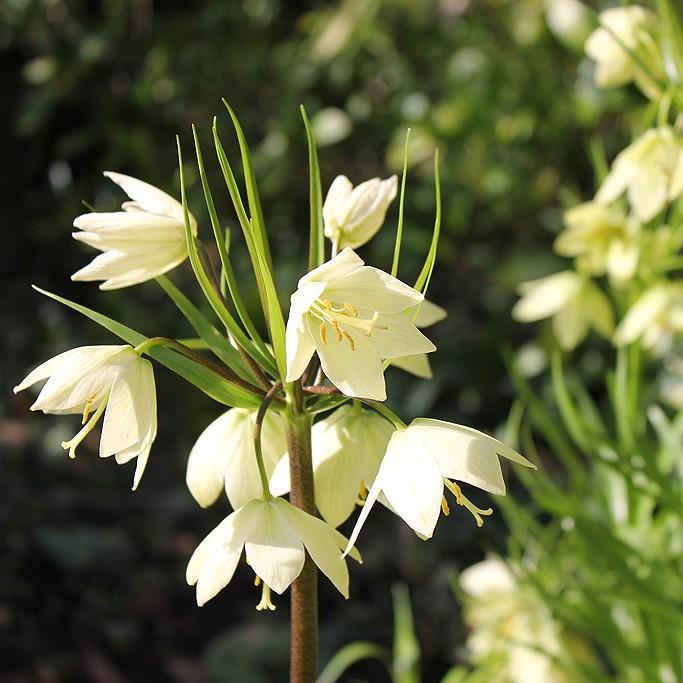
Fritillaries are a diverse genus of over 100 bulbous perennials, prized for their unique nodding, bell-shaped flowers that often feature a characteristic checkered or marbled pattern. They range from low-growing alpine species suitable for rock gardens to tall, stately varieties ideal for perennial borders. Many species are valued for their early spring bloom, adding unique texture and color to gardens before many other flowering plants emerge.
Care Guide
Watering
Keep soil consistently moist but not waterlogged during active growth in fall and spring; reduce watering gradually once foliage begins to die back after blooming. Allow bulbs to remain dry during their summer dormancy period to prevent rot, as saturated soil during this phase will damage the underground storage structures.
Light
Most fritillary species thrive in full sun to partial shade, with alpine varieties requiring more direct sunlight and woodland-adapted species tolerating dappled shade under deciduous trees. Avoid dense, year-round shade, as this will reduce flower production and weaken bulbs over time.
Soil
Plant fritillary bulbs in well-drained, fertile soil with a neutral to slightly alkaline pH, though some woodland species adapt to mildly acidic conditions. Heavy clay soils should be amended with compost, grit, or sand to improve drainage, as excess moisture around bulbs is the most common cause of failure.
Fertilizer
Apply a balanced, slow-release bulb fertilizer in early spring as new shoots emerge, and top-dress with well-rotted compost in fall to provide nutrients for root development. Avoid over-fertilizing with high-nitrogen products, as this can encourage excessive foliage growth at the expense of flowers.
Temperature
Most fritillary species are cold-hardy in USDA zones 4-8, requiring a 12-16 week period of cold temperatures below 50°F (10°C) in winter to trigger proper spring blooming. Warmer climate gardeners can pre-chill bulbs in a refrigerator for 8-12 weeks before planting if winter temperatures do not stay consistently cool.
Pruning
Remove spent flower stalks after blooming to prevent seed production, which diverts energy from bulb growth, but leave foliage intact until it yellows and dies back naturally. Do not cut back green foliage early, as it photosynthesizes to store energy in the bulb for the next year’s growth and bloom.
Propagation
Fritillaries are most commonly propagated by separating small offset bulbs from the parent bulb during summer dormancy, replanting offsets immediately at the same depth as mature bulbs. They can also be grown from seed, though seed-grown plants may take 3-5 years to reach flowering size, making vegetative propagation far faster for home gardeners.
Humidity
Fritillaries prefer moderate ambient humidity and do not tolerate excessively high, humid conditions during summer dormancy, which increases the risk of bulb rot. Most species are well-adapted to the average humidity levels of temperate spring climates, and no extra humidity adjustments are needed for outdoor-grown plants.
Repotting
Container-grown fritillaries should be lifted and divided every 2-3 years during dormancy to prevent overcrowding, which reduces flowering and increases disease risk. When repotting, use a well-drained bulb potting mix, plant bulbs at a depth 2-3 times their width, and space bulbs at least 2 inches apart to allow for growth and offset production.
Uses & Symbolism
Fritillaries are widely grown as ornamental plants in rock gardens, perennial borders, woodland gardens, and naturalized meadows, where their unique spring blooms add distinct visual interest. Several species, including Fritillaria cirrhosa and Fritillaria thunbergii, have a long history of use in traditional Chinese medicine to treat respiratory conditions such as coughs and bronchitis, though medicinal use requires careful preparation to avoid toxicity. Taller varieties also make unusual, long-lasting cut flowers for floral arrangements.
Diseases & Pests
Fritillaries are relatively pest-resistant, but they are susceptible to bulb rot caused by poorly drained soil or overwatering, especially during summer dormancy. They may also be affected by lily beetles, which feed on foliage and flowers, and fungal diseases such as gray mold in excessively wet, cool spring conditions. Slugs and snails may also feed on young, tender shoots in early spring, especially in damp, shaded locations.
Related plants
Other plants you might like if you grow Fritillary.