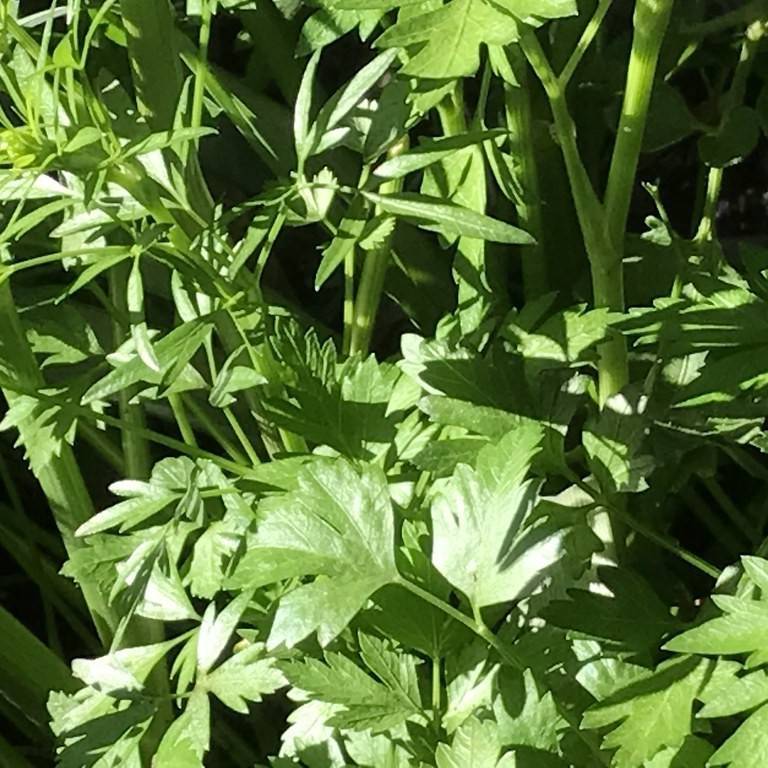
Italian Parsley
Petroselinum crispum var. neapolitanum
Overview
Italian parsley is a biennial herb in the Apiaceae family, distinguished from curly parsley by its flat, serrated dark green leaves and more intense, peppery taste. Grown widely as a culinary herb, it is often harvested in its first year of growth when leaves are most tender and flavorful, though it will produce small white umbel flowers and seeds in its second year before dying back. It is both a popular garden plant and a common container-grown kitchen herb, valued for its hardiness and continuous harvest potential.
Care Guide
Watering
Water Italian parsley regularly to keep soil consistently moist but not waterlogged, allowing the top 1 inch of soil to dry out slightly between waterings to prevent root rot. Reduce watering frequency during cooler winter months when growth slows, and avoid overhead watering to minimize fungal leaf spot issues.
Light
Italian parsley thrives in full sun to partial shade, requiring at least 6 hours of direct sunlight daily for optimal leaf production. When grown indoors, place it near a south-facing window or under grow lights for 12 to 14 hours per day to prevent leggy, sparse growth.
Soil
Plant Italian parsley in well-draining, loamy soil rich in organic matter with a pH between 6.0 and 7.0 for best results. Amending garden soil with compost or well-rotted manure before planting will improve nutrient content and drainage, supporting vigorous leaf growth.
Fertilizer
Feed Italian parsley with a balanced, water-soluble fertilizer diluted to half strength every 4 to 6 weeks during the active growing season from spring to early fall. Avoid over-fertilizing, as excess nitrogen can dilute the herb's signature flavor and lead to soft, vulnerable growth.
Temperature
Italian parsley grows best in temperatures between 50°F and 75°F (10°C to 24°C), and can tolerate light frosts down to 20°F (-7°C) for short periods. Hot summer temperatures above 85°F (29°C) can cause the plant to bolt (go to seed) prematurely, so provide partial shade in warm climates to extend harvest time.
Pruning
Harvest Italian parsley regularly by snipping outer stems at the base, which encourages the plant to produce new, bushy growth from the center. Remove any yellowed or damaged leaves as they appear, and cut back flower stalks as soon as they emerge in the first year to redirect energy to leaf production.
Propagation
Italian parsley is most commonly propagated from seed, sown directly in the garden or containers 2 to 3 weeks before the last spring frost date. Seeds can take 2 to 4 weeks to germinate, so presoaking them in warm water for 12 to 24 hours before planting can speed up the process; avoid transplanting mature plants, as they have long taproots that are easily damaged.
Humidity
Italian parsley adapts well to average household humidity levels between 40% and 60%, requiring no extra humidity for outdoor or indoor growth. In extremely arid indoor environments, misting the leaves occasionally can help prevent leaf tip browning, though it is not strictly necessary for healthy growth.
Repotting
Container-grown Italian parsley should be repotted every 1 to 2 years in early spring, moving it to a pot 1 to 2 inches larger than the current one to accommodate its deep taproot. Use fresh, well-draining potting mix at repotting time, and gently loosen any tangled roots before placing it in the new container to encourage healthy root spread.
Uses & Symbolism
Italian parsley is a staple culinary herb, used fresh or dried in a wide range of dishes including pasta sauces, soups, salads, marinades, and garnishes, with a more robust flavor that holds up better to cooking than curly parsley. It is also highly nutritious, rich in vitamins A, C, and K, as well as iron and antioxidants, and has been used in traditional herbal medicine to support digestion and as a natural breath freshener.
Diseases & Pests
Italian parsley is relatively pest-resistant, but can be affected by aphids, spider mites, and carrot rust flies, which target the plant's roots and foliage. Fungal diseases including leaf spot, powdery mildew, and root rot can occur in overly wet conditions or with poor air circulation, so avoid overwatering and space plants appropriately to reduce risk.
Related plants
Other plants you might like if you grow Italian Parsley.