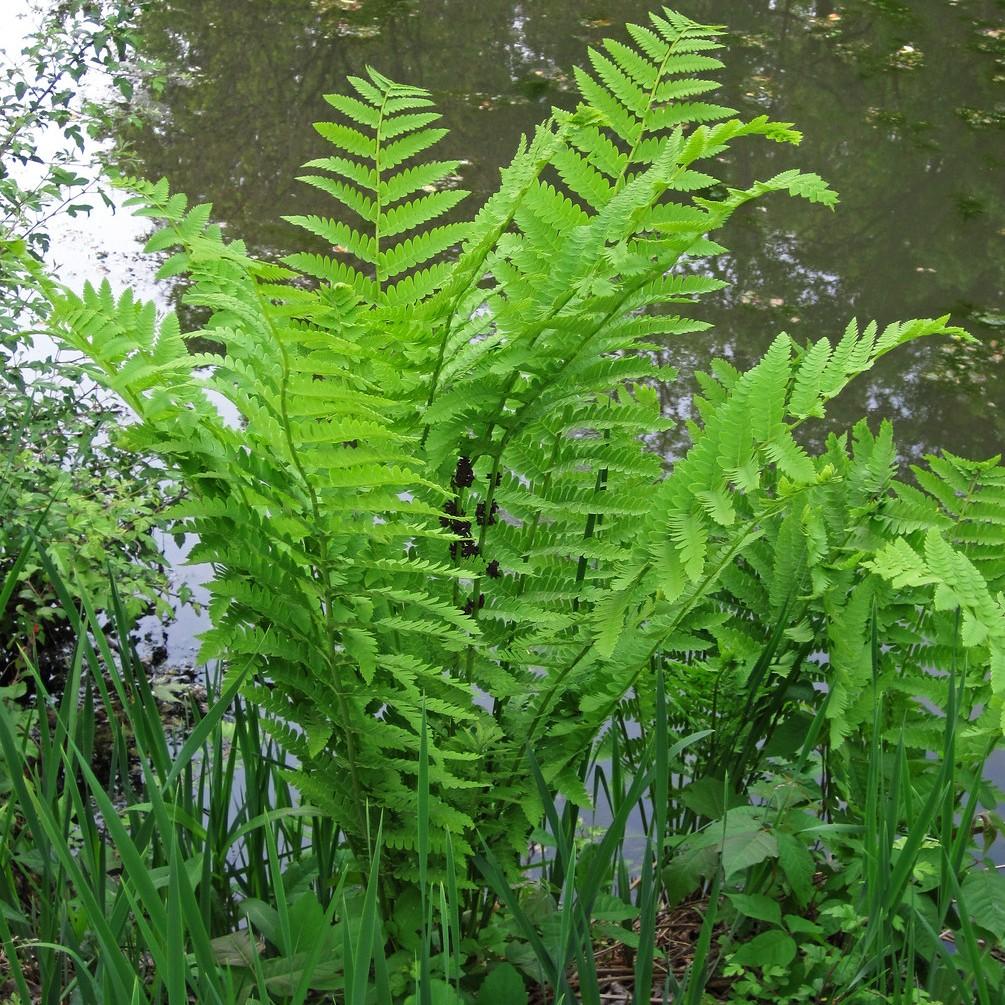
Interrupted Fern
Osmunda claytoniana
Overview
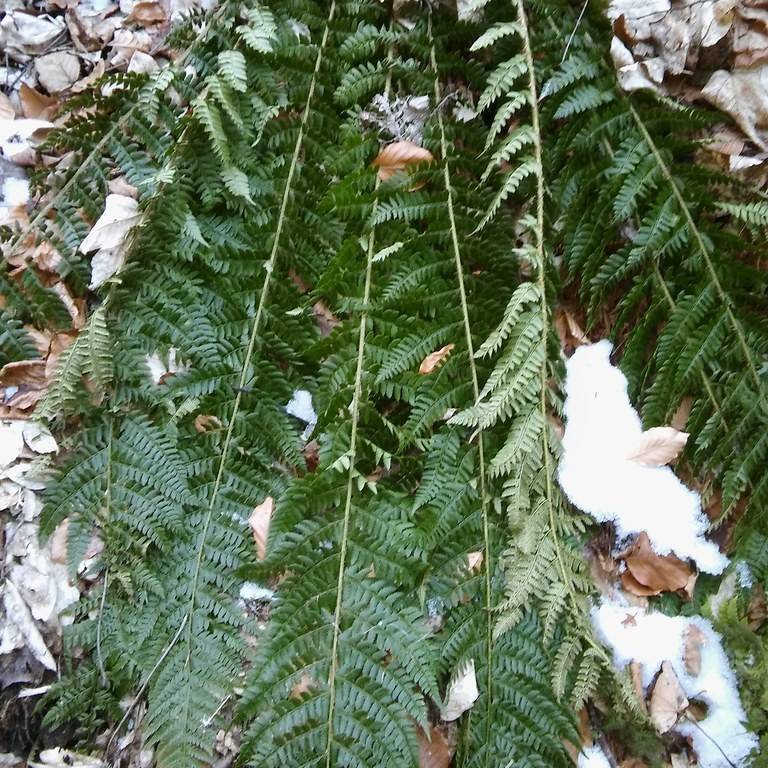
Interrupted fern gets its common name from the distinct gap formed in the middle of its fertile fronds when spore-bearing leaflets mature, turn brown, and drop off early, leaving a bare section between upper and lower sterile leaflets. It is a clumping fern that spreads slowly via short, woody rhizomes, forming dense, lush colonies in cool, moist shaded environments. Its fronds unfurl in early spring as fuzzy, silvery fiddleheads that mature into bright green, broadly arching foliage that turns a warm golden yellow in fall before dying back for winter.
Care Guide
Watering
Keep soil consistently moist but not waterlogged, providing 1 to 2 inches of water per week during active growth; reduce watering in fall as foliage dies back, and keep soil slightly damp through the dormant winter period. Avoid letting the root zone dry out completely, as extended drought will cause fronds to brown and drop prematurely.
Light
Thrives in partial to full shade, preferring dappled sunlight or filtered shade under tall deciduous trees; it can tolerate short periods of early morning direct sun, but harsh midday or afternoon sun will scorch fronds and cause discoloration. Too much light will stunt growth and reduce the plant’s overall vigor over time.
Soil
Grow in rich, humusy, well-draining soil with a slightly acidic to neutral pH between 5.0 and 7.0. Amend heavy clay or sandy soils with compost, leaf mold, or well-rotted manure to improve moisture retention and nutrient content, as this fern prefers organically rich growing medium.
Fertilizer
Fertilize once annually in early spring just as fiddleheads begin to emerge, using a balanced, slow-release organic fertilizer or a thin topdressing of compost or leaf mold spread around the base of the clump. Avoid over-fertilizing, as excess nutrients can burn delicate root systems and cause abnormal frond growth.
Temperature
Prefers cool, temperate climates with average summer temperatures between 60 and 75°F (15 to 24°C), and is hardy in USDA zones 3 through 8. It can tolerate short periods of temperatures above 80°F (27°C) if kept consistently moist and shaded, but prolonged heat will cause foliage to decline early. It is extremely cold tolerant, surviving winter temperatures as low as -40°F (-40°C) when dormant.
Pruning
Prune back dead, browned fronds to the ground in late fall or early spring before new fiddleheads emerge to keep the planting area tidy and reduce overwintering pest or disease habitat. Remove any damaged, diseased, or discolored fronds promptly during the growing season to maintain the plant’s health and appearance. Avoid cutting back green, actively growing fronds, as this will reduce the plant’s ability to photosynthesize and store energy for the next growing season.
Propagation
Most easily propagated by dividing mature clumps in early spring just as fiddleheads begin to emerge, carefully splitting the woody rhizome into sections with at least 2 to 3 growing points per division before replanting at the same depth as the original plant. It can also be grown from spores, but this method is far slower, taking 2 to 3 years for plants to reach mature, frond-producing size, so division is preferred for home gardeners. Ensure new divisions are kept consistently moist and shaded until they are well established.
Humidity
Prefers moderate to high humidity levels between 50 and 80%, typical of its native woodland habitat. Dry indoor air or low-humidity outdoor conditions will cause frond tips to brown and crisp; to boost humidity for container-grown plants, place the pot on a tray filled with pebbles and water, or group it with other moisture-loving plants. In dry garden settings, mulch heavily around the base of the fern to help retain soil moisture and raise local humidity around the foliage.
Repotting
Container-grown interrupted ferns only need repotting every 3 to 4 years, when rhizomes begin to crowd the pot or emerge from the drainage holes. Repot in early spring before new growth starts, using a pot one size larger than the current container with fresh, humusy potting mix amended with leaf mold or compost. Ensure the pot has adequate drainage holes to prevent waterlogging, and plant the rhizome at the same depth it was growing in the previous pot to avoid rot.
Uses & Symbolism
Interrupted fern is a popular choice for shade gardens, woodland plantings, rain gardens, and shaded border edges, where its lush, arching foliage provides soft texture and a natural, wild appearance. Its young, tightly coiled fiddleheads are edible when properly cooked, and have a mild, asparagus-like flavor, though they should be harvested sparingly from wild populations to protect existing colonies. Historically, Indigenous peoples used parts of the plant for medicinal purposes to treat a variety of ailments including respiratory issues and skin irritations.
Diseases & Pests
Interrupted fern is relatively pest and disease resistant, but can be susceptible to foliar fungal diseases such as rust and leaf spot in overly wet, poorly ventilated conditions, which cause brown or yellow spots on fronds and can be prevented by avoiding overhead watering and providing adequate space between plants for air circulation. Slugs and snails may feed on young, tender fiddleheads and new fronds in damp, shaded areas, and can be controlled with handpicking, organic slug baits, or copper barriers around planting areas. Root rot can occur in heavy, poorly draining soil that stays waterlogged for extended periods, so ensuring proper soil drainage is critical to preventing this fatal condition.
Related plants
Other plants you might like if you grow Interrupted Fern.