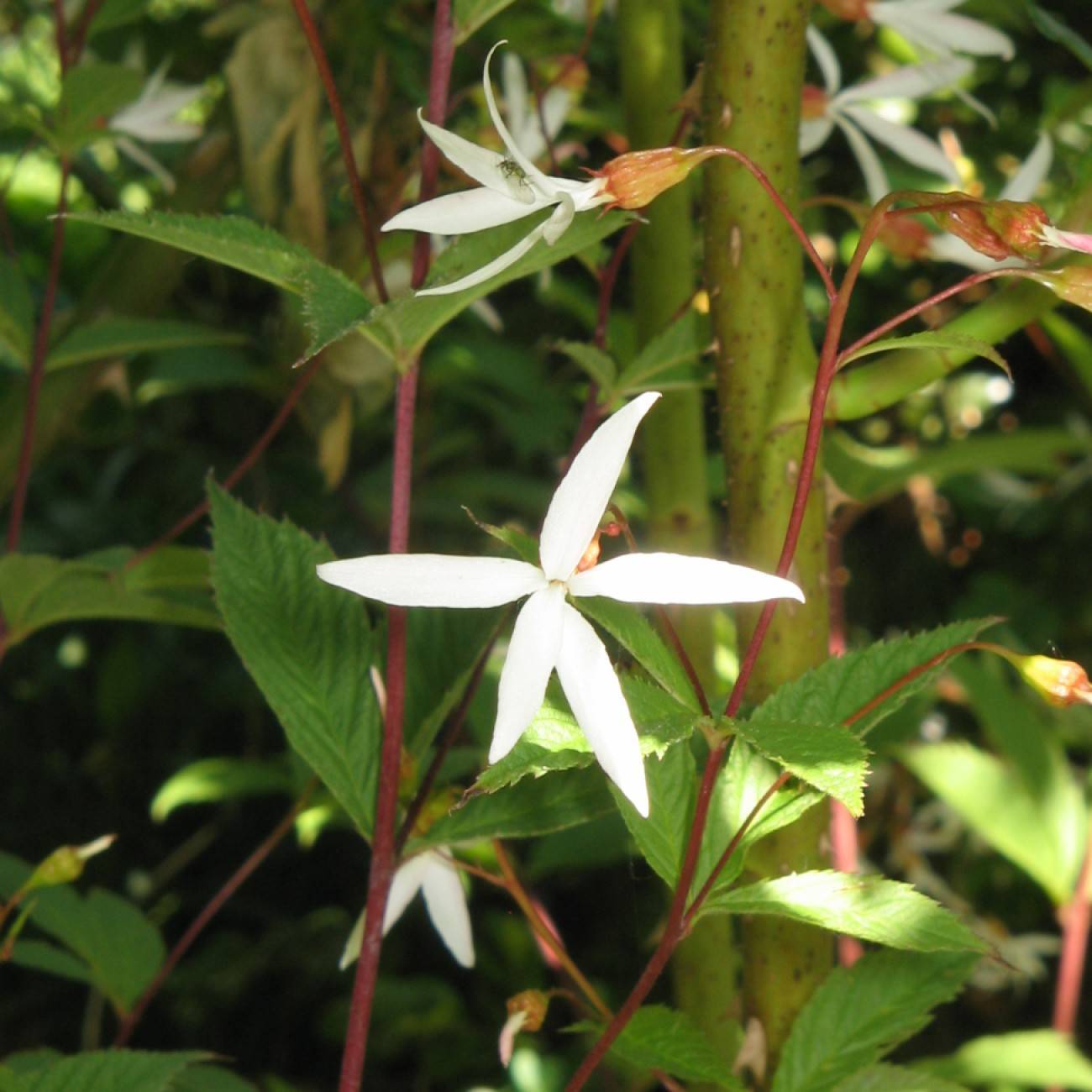
Indian Physic
Gillenia trifoliata
Overview
Indian Physic, also called Bowman’s Root, is a herbaceous perennial valued for its airy, loose clusters of five-petaled white to pale pink flowers that bloom in late spring to early summer. Its three-parted, toothed green foliage turns a warm coppery red in autumn, adding seasonal interest to woodland and native plant gardens. Historically, Indigenous peoples and early settlers used its root to prepare emetic and laxative remedies, inspiring its common name.
Care Guide
Watering
Indian Physic prefers consistently moist, well-drained soil, though it develops moderate drought tolerance once established. Water regularly during the first growing season to establish a deep root system, reducing frequency in subsequent years except during extended dry spells. Avoid overwatering or soggy soil, which can cause root rot.
Light
This species thrives in partial to full shade, making it ideal for woodland gardens or dappled sunlight under deciduous trees. It can tolerate a few hours of direct morning sun, but intense afternoon sun will scorch its foliage and cause wilting. In cooler northern zones, it may grow successfully in full sun if soil moisture is maintained.
Soil
Indian Physic adapts to a wide range of soil types, including sandy loam, clay loam, and rocky soils, as long as drainage is good. It prefers slightly acidic to neutral pH levels between 5.5 and 7.0, and benefits from soil amended with organic matter such as compost or leaf mold to boost moisture retention. It tolerates poor, low-nutrient soils better than many ornamental perennials.
Fertilizer
This low-maintenance plant rarely needs supplemental fertilization, especially when grown in soil amended with organic matter. If growth is stunted or foliage is pale, apply a balanced, slow-release 10-10-10 fertilizer once in early spring before new growth emerges. Avoid overfertilizing, which can cause leggy growth and reduce flower production.
Temperature
Indian Physic is cold hardy in USDA zones 3 through 8, tolerating winter temperatures as low as -40°F (-40°C). It prefers cool summer temperatures between 60 and 75°F (16 and 24°C), and may struggle in prolonged heat above 90°F (32°C) without adequate shade and moisture. Mulch around the base in late fall to insulate roots in colder regions.
Pruning
Pruning is minimal for Indian Physic; spent flower stalks can be cut back after blooming to encourage a tidy appearance, though leaving seed heads provides food for small birds and adds winter interest. Cut back all dead foliage to the ground in late winter or early spring before new shoots emerge to make way for fresh growth. It rarely needs division, as it forms slow-growing clumps that do not become invasive.
Propagation
Indian Physic is most easily propagated by seed sown outdoors in fall, as seeds require a period of cold stratification to germinate; sown seeds will typically sprout the following spring. Clumps can also be divided in early spring or late fall, carefully separating the woody root crowns into sections with at least one healthy shoot each. Take care when transplanting, as the plant has a deep, fragile taproot that does not respond well to disturbance.
Humidity
This species adapts well to average ambient humidity levels common in its native range, between 40% and 60%. It does not require extra humidity, but will benefit from consistent soil moisture in drier climates. High humidity paired with poor air circulation may increase risk of foliar fungal diseases, so space plants appropriately to allow airflow.
Repotting
Indian Physic is rarely grown in containers, as its deep taproot requires ample room to grow. If potted, use a deep container at least 12 inches wide and deep to accommodate root growth, and repot only when roots begin to emerge from drainage holes, typically every 2 to 3 years. Repot in early spring before new growth starts, using a well-draining, organic-rich potting mix, and take care not to damage the taproot during the process.
Uses & Symbolism
Indian Physic is a popular addition to native plant gardens, woodland borders, and shade gardens, where its delicate flowers attract native bees, butterflies, and other pollinators. Its historic medicinal use as an emetic, laxative, and treatment for digestive ailments has been documented among multiple Indigenous North American communities, though it is rarely used for medicinal purposes today. Its attractive autumn foliage and persistent seed heads add seasonal interest to gardens, and the cut stems work well in fresh floral arrangements.
Diseases & Pests
Indian Physic is relatively pest and disease resistant, with few serious issues. In overly wet, poorly drained soil, it may develop root rot, which can be prevented by planting in well-draining sites and avoiding overwatering. Foliar fungal diseases such as powdery mildew or leaf spot may occur in conditions of high humidity and poor air circulation, which can be mitigated by spacing plants properly and avoiding overhead watering. It is rarely bothered by deer or rabbit browsing.
Related plants
Other plants you might like if you grow Indian Physic.