Fringe Cup
Tellima grandiflora
Overview
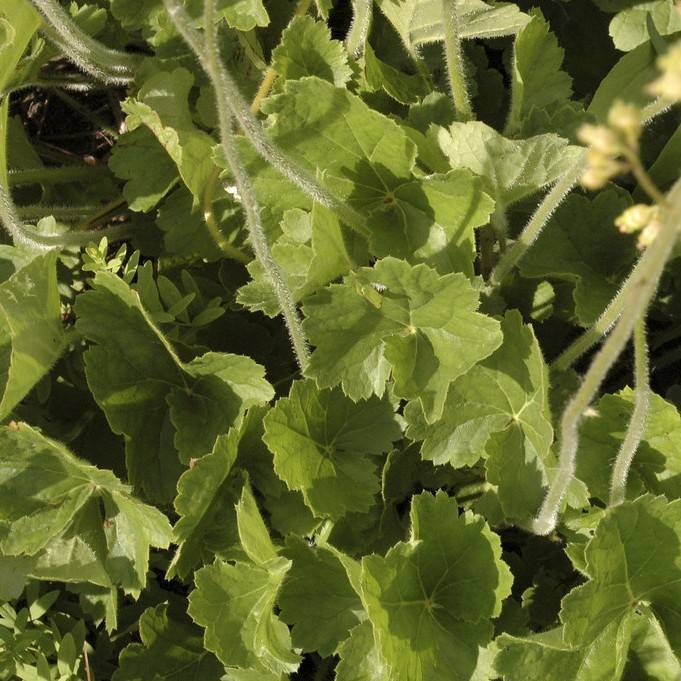
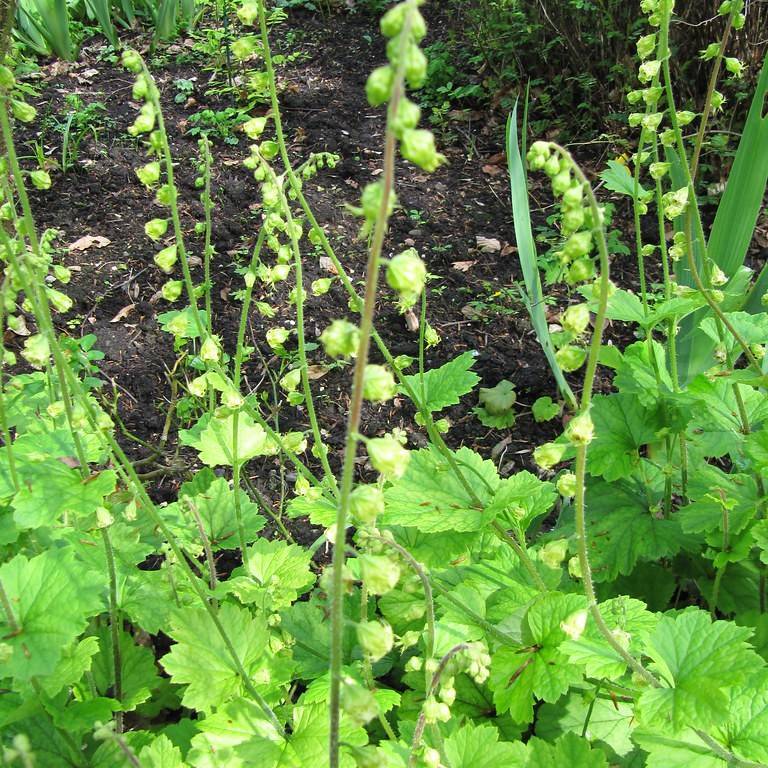
Fringe Cup is a hardy herbaceous perennial native to damp, shaded forest floors and stream banks of the Pacific Northwest. It forms low rosettes of rounded, softly hairy evergreen foliage that stay green year-round in mild climates, sending up slender 1-3 foot flower spikes in mid to late spring. The small, bell-shaped flowers have distinct fringed petals that fade from pale white to soft pink as they age, attracting native bees and hummingbirds to the garden. It spreads slowly via rhizomes to form gentle, non-invasive clumps that work well as ground cover in shaded areas.
Care Guide
Watering
Fringe Cup prefers consistently moist, well-drained soil and should be watered regularly to keep the root zone from drying out completely, especially during hot, dry periods. Avoid overwatering or allowing soil to become waterlogged, as this can lead to root rot in poorly drained sites. In its native woodland habitat, it receives regular seasonal rainfall, so replicating this moisture level supports optimal growth and flowering.
Light
This plant thrives in partial to full shade, making it ideal for understory plantings under deciduous trees or north-facing garden beds. It can tolerate small amounts of dappled morning sun, but intense midday or afternoon direct sun will scorch its delicate foliage, causing leaf burn and stunted growth. In cooler, cooler climates, it may tolerate more sun if kept consistently moist.
Soil
Fringe Cup grows best in rich, loamy, humus-rich soil with a slightly acidic to neutral pH range of 5.5 to 7.0. It prefers soil that retains moisture well but drains effectively, so amending heavy clay or sandy soils with organic matter such as compost or leaf mold will improve growing conditions. It can tolerate occasional wet soil, making it suitable for planting near rain gardens or stream edges.
Fertilizer
Fringe Cup has low fertilizer needs and typically thrives in nutrient-rich native soil, with no additional feeding required if planted in humus-amended garden beds. If grown in poor soil, apply a balanced, slow-release all-purpose fertilizer in early spring before new growth emerges to support healthy foliage and flowering. Avoid over-fertilizing, as this can lead to lush foliage growth and reduce flower production.
Temperature
This hardy perennial is adapted to cool, temperate climates and is cold hardy in USDA zones 4 through 8, tolerating winter temperatures as low as -30°F (-34°C). It prefers cool summer temperatures between 50 to 75°F (10 to 24°C) and may struggle in extended periods of heat above 85°F (29°C) without adequate shade and moisture. In warmer regions, provide extra shade and regular watering to help it cope with high temperatures.
Pruning
Fringe Cup requires minimal pruning; simply remove spent flower spikes after blooming to encourage tidy up the plant and prevent unwanted self-seeding if desired. Cut back any damaged or yellowed foliage in early spring before new growth emerges to keep the clump looking neat and promote healthy new leaf growth. It does not require heavy pruning, as its evergreen foliage provides year-round interest in mild climates.
Propagation
Fringe Cup is most easily propagated by division in early spring or late fall, when the root clumps into smaller sections and replanting immediately in prepared soil. It can also be grown from seed sown directly in the garden in fall, or started indoors in cold frames in spring after a 30-day cold stratification period to improve germination rates. Self-sown seedlings are common in ideal growing conditions, often producing new plants that can be transplanted when young.
Humidity
Fringe Cup prefers moderate to high humidity levels between 40% to 70%, similar to its native woodland habitat, thriving in the moist, humid air of shaded forest environments. It tolerates average household humidity if grown as a houseplant, but may benefit from occasional misting during dry winter months to prevent leaf browning. In very dry climates, group it with other moisture-loving plants to increase ambient humidity around the foliage.
Repotting
If grown in containers, repot Fringe Cup every 2 to 3 years in early spring before new growth begins, using a rich, well-draining potting mix amended with organic matter. Choose a pot with adequate drainage holes to prevent waterlogging, and only upgrade to a pot one size larger than the current one if the root system has become pot-bound. Avoid repotting during the active growing season to minimize stress on the plant.
Uses & Symbolism
Fringe Cup is a popular choice for shaded woodland gardens, rain gardens, and moist shaded borders, where it provides soft spring color and evergreen ground cover. It is frequently used in native plant gardens to support local pollinators, including native bees and hummingbirds, which are drawn to its nectar-rich flowers. Its cut flower spikes can also be used in fresh in cut flower arrangements, adding delicate, adding a delicate, wildflower touch to bouquets.
Diseases & Pests
Fringe Cup is relatively pest and disease resistant, but may be susceptible to aphids and slugs, especially in damp, shaded conditions, which can feed on young foliage and flower buds. Powdery mildew may occur if the plant is grown in overly crowded conditions with poor air circulation, especially in warm, humid weather. Root rot can develop if the soil is consistently waterlogged, so ensure proper drainage to prevent this fungal issue.
Related plants
Other plants you might like if you grow Fringe Cup.