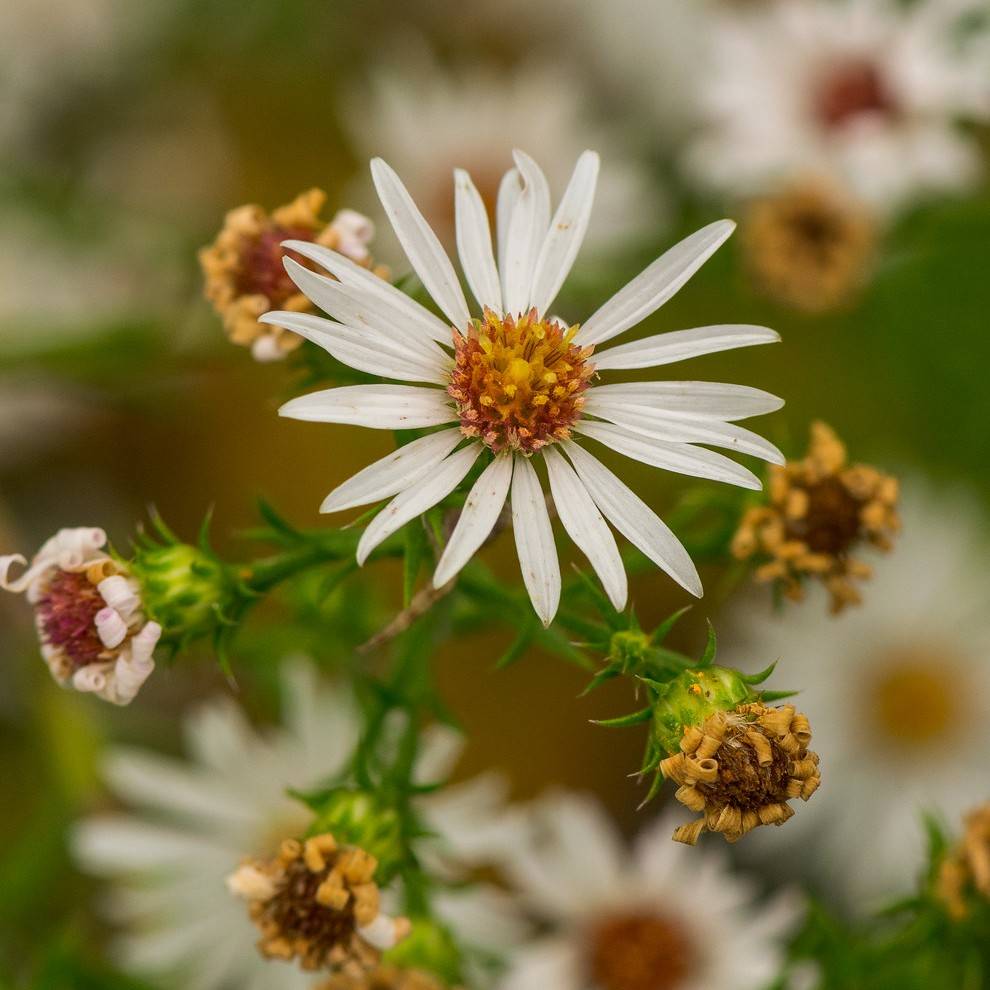
Hairy Aster
Symphyotrichum pilosum
Overview
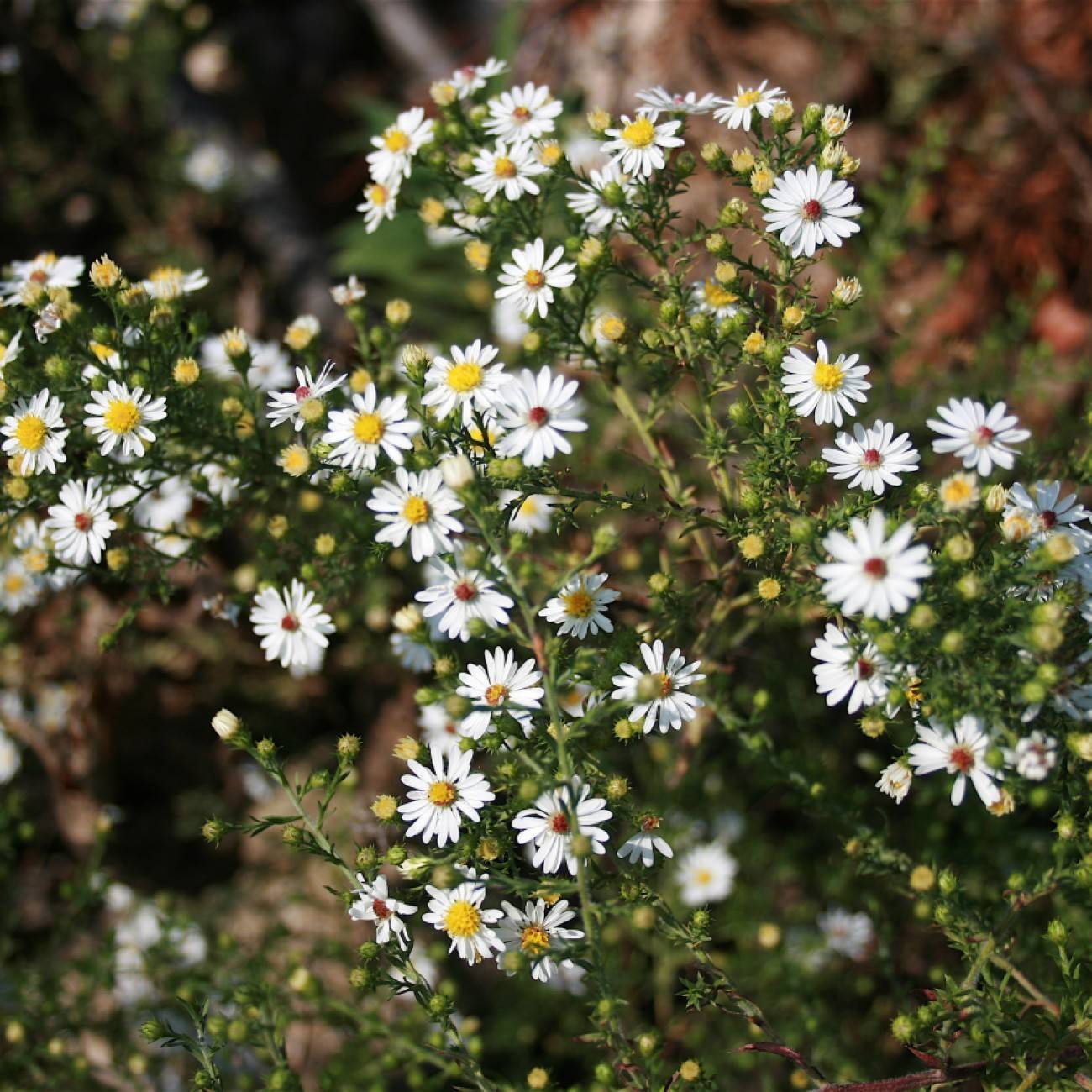
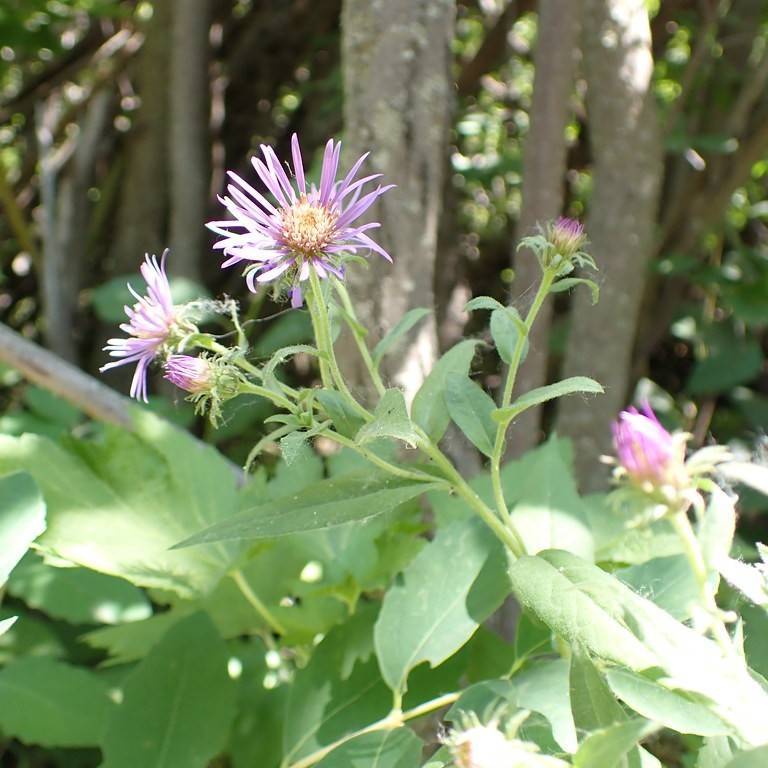
Hairy aster, formerly classified in the genus Aster, gets its common name from the fine, downy hairs covering its stems, leaves, and flower bracts, which give the plant a soft, gray-green appearance. It naturally grows in prairies, meadows, open woodlands, and roadside edges, thriving in disturbed and undisturbed habitats alike. Its prolific late-season blooms provide critical nectar for migrating monarch butterflies, native bees, and other pollinators when few other flowering plants are active.
Care Guide
Watering
Hairy aster is highly drought-tolerant once established, requiring only occasional deep watering during extended periods of no rainfall; overwatering or consistently soggy soil will lead to root rot. Newly planted specimens need regular, light watering for the first 2 to 3 months to help them develop a strong, deep root system. It is well-adapted to dry to medium moisture levels, making it suitable for low-water or xeriscape gardens.
Light
This species grows best in full sun, receiving a minimum of 6 hours of direct unfiltered sunlight per day, which promotes robust, upright growth and maximum flower production. It can tolerate partial shade, but plants grown in shadier conditions will become leggy, produce fewer blooms, and may require staking to support floppy stems. Full sun exposure also reduces the risk of foliar fungal diseases by improving air circulation around the foliage.
Soil
Hairy aster tolerates a wide range of soil types, including poor, dry, sandy, gravelly, and clay soils, as long as the site has good drainage. It adapts to acidic, neutral, and slightly alkaline pH levels, and does not require rich or heavily amended soil to thrive. Heavy, waterlogged soils are the only unsuitable growing medium, as they will quickly cause root rot and plant death.
Fertilizer
This plant is adapted to low-nutrient soils and rarely requires supplemental fertilization, which can cause excessive, leggy leaf growth at the expense of flower production. If grown in extremely poor, depleted soil, a light application of balanced, slow-release granular fertilizer in early spring is sufficient to support healthy growth. Avoid high-nitrogen fertilizers entirely, as they will weaken stems and reduce bloom density.
Temperature
Hairy aster is extremely cold-hardy, thriving in USDA hardiness zones 3 through 8, and can tolerate winter temperatures as low as -40°F (-40°C). It withstands high summer temperatures and humidity common across its native range, as long as it is planted in well-drained soil and receives adequate sunlight. It will die back completely to the ground after the first hard fall frost, and regrow from its root system the following spring.
Pruning
Prune back dead, frost-killed stems to ground level in late winter or early spring before new growth emerges to keep the planting area tidy and reduce overwintering pest and disease spores. For bushier, more compact growth and reduced need for staking, pinch back the top 1 to 2 inches of stem tips in late spring when plants are 6 to 8 inches tall. Deadheading spent flowers throughout the bloom season will encourage additional flowering and prevent excessive self-seeding if desired.
Propagation
Hairy aster is most easily propagated by division in early spring or late fall, when clumps are dug up, split into smaller sections with healthy roots and growing points, and replanted immediately. It can also be grown from seed, which can be directly sown outdoors in fall for cold stratification, or started indoors 6 to 8 weeks before the last expected spring frost after a 30-day cold stratification period. Stem cuttings taken from soft, new growth in late spring or early summer will also root readily in moist, well-drained potting mix.
Humidity
This species tolerates a wide range of humidity levels, from dry continental climates to humid subtropical regions across its native range. High humidity combined with poor air circulation and low light can increase the risk of foliar fungal diseases, so ensure plants are spaced properly to allow airflow between specimens. No supplemental humidity is required for indoor or outdoor plants, as it is well-adapted to natural ambient humidity levels.
Repotting
Hairy aster is rarely grown in containers, but if potted, it will need to be repotted every 2 to 3 years in early spring, or when roots begin to grow through the drainage holes of the pot. Use a well-drained, general-purpose potting mix with added perlite or coarse sand to improve drainage, and select a pot that is 1 to 2 inches larger in diameter than the current container. After repotting, water lightly and place the pot in a full sun location to encourage new root establishment.
Uses & Symbolism
Hairy aster is a popular addition to native wildflower gardens, pollinator habitats, meadow plantings, and roadside restoration projects, where its abundant late-season blooms support a wide range of beneficial insects. Its compact, clumping growth habit and soft gray-green foliage make it suitable for low-maintenance landscape borders, rock gardens, and xeriscapes where drought-tolerant plants are preferred. It provides valuable late-season forage for bees, butterflies, and other pollinators, and its seed heads offer food for songbirds throughout the winter months.
Diseases & Pests
Hairy aster is relatively pest and disease resistant, but can be susceptible to powdery mildew, rust, and leaf spot fungal diseases in conditions of high humidity, poor air circulation, or excessive shade. Aphids, spider mites, and aster leafhoppers may occasionally infest foliage, but can be controlled with insecticidal soap, neem oil, or by encouraging natural predators such as ladybugs and lacewings. Root rot is the most serious common issue, which occurs when plants are grown in poorly drained, waterlogged soil.
Related plants
Other plants you might like if you grow Hairy Aster.