India Hawthorn
Rhaphiolepis indica
Overview
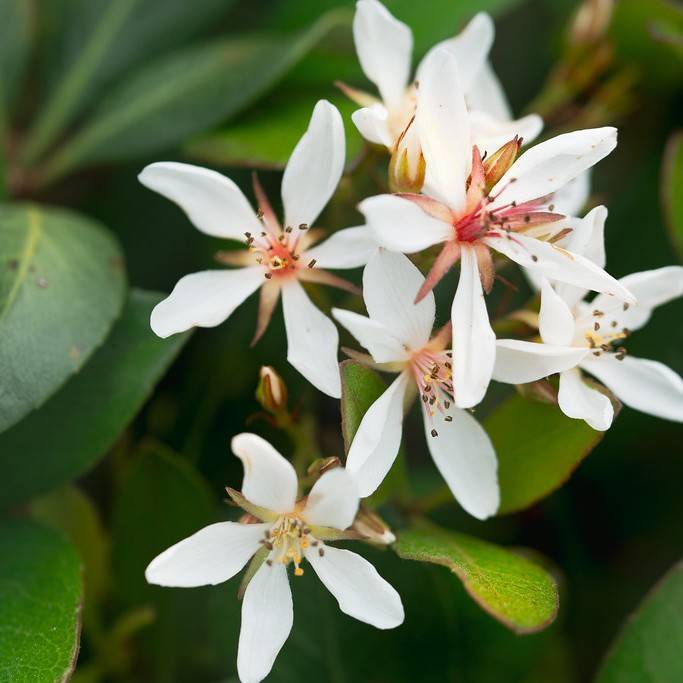
India Hawthorn is a compact, rounded evergreen shrub with dark, leathery serrated leaves that retain their rich green color year-round. In spring, it produces clusters of small, fragrant five-petaled flowers in shades of white or soft pink, followed by small, dark blue-purple edible berries that persist into winter. It is widely cultivated as a low-maintenance ornamental for landscapes, hedges, and container plantings, valued for its high tolerance to salt spray, pollution, and drought once established.
Care Guide
Watering
Water newly planted India Hawthorn regularly to keep the soil evenly moist but not waterlogged for the first growing season, helping roots establish deeply. Once established, it is highly drought-tolerant, requiring only occasional watering during prolonged dry spells, and is sensitive to overwatering that can cause root rot. Reduce watering frequency in winter when growth slows, allowing the top 2-3 inches of soil to dry out between applications.
Light
Thrives in full sun to partial shade, with at least 4-6 hours of direct sunlight daily to encourage abundant flowering and dense, compact growth. It can tolerate deeper shade but will produce fewer blooms and develop a more open, leggy growth habit over time. In extremely hot climates, it benefits from light afternoon shade to prevent leaf scorch during the hottest summer months.
Soil
Prefers well-drained, loamy or sandy soil with a slightly acidic to neutral pH range of 5.5 to 7.0, though it adapts to a wide range of soil types including clay, as long as drainage is adequate. It is highly tolerant of poor, nutrient-deficient soils and coastal saline conditions, making it suitable for seaside landscapes. Avoid heavy, waterlogged soils, as standing water will quickly lead to root rot and plant decline.
Fertilizer
Fertilize lightly once a year in early spring before new growth emerges using a balanced, slow-release granular fertilizer formulated for woody shrubs or landscape plants. Avoid over-fertilizing, as excessive nitrogen can lead to lush, weak growth that is more susceptible to pest damage and reduces flowering. Container-grown specimens may benefit from a second light application of diluted liquid fertilizer in mid-summer if growth appears stunted or foliage is pale.
Temperature
Grows best in mild to warm climates, with a preferred temperature range of 60-85°F (15-29°C), and is hardy in USDA zones 8 through 11. Mature plants can tolerate brief dips down to 10°F (-12°C), though extended freezing temperatures will cause leaf damage or dieback, requiring protective mulching in colder edge zones. It tolerates high summer heat and humidity well, as long as adequate air circulation is provided around the foliage.
Pruning
Prune immediately after flowering has finished in late spring to maintain a compact, rounded shape and remove any spent flower clusters to encourage a tidier appearance. Remove dead, damaged, or diseased branches at any time of year to improve air circulation and reduce the risk of fungal issues. Avoid heavy pruning, as this can reduce flowering the following year and stress the plant; only remove up to one-third of the total growth in a single season.
Propagation
Most commonly propagated from semi-hardwood cuttings taken in late summer or early fall, using 4-6 inch stem sections with mature leaves, dipped in rooting hormone and planted in a well-drained propagation mix under high humidity. It can also be grown from fresh seed collected from ripe berries in fall, though seed-grown plants may take 2-3 years to reach flowering size and may not retain the exact characteristics of the parent cultivar. Root division is not recommended for established shrubs, as their deep, woody root systems do not tolerate disturbance well.
Humidity
Tolerates a wide range of humidity levels, from dry inland conditions to the high humidity of coastal and subtropical regions, with no special humidity requirements for healthy growth. In areas with consistently high humidity, ensure the plant is spaced to allow good air circulation around the foliage to prevent fungal leaf spot diseases. It does not require misting or supplemental humidity when grown indoors or in dry climates, as its thick, waxy leaves retain moisture effectively.
Repotting
Container-grown India Hawthorn should be repotted every 2-3 years in early spring before new growth begins, moving to a pot only one size larger than the current container to avoid excess soil moisture retention. Use a well-drained potting mix with added perlite or coarse sand to improve drainage, and ensure the pot has ample drainage holes to prevent standing water. Mature specimens can be top-dressed with fresh compost annually instead of repotting to refresh nutrients and reduce root disturbance.
Uses & Symbolism
India Hawthorn is most widely used as a low ornamental hedge, foundation planting, or mass landscape groundcover in residential and commercial gardens, valued for its compact size and year-round foliage. Its small, tart berries are edible, often used to make jams, jellies, or herbal teas, and provide a food source for birds and other wildlife through fall and winter. It is also grown in large containers for patios and entryways, and is a popular choice for coastal gardens due to its high salt spray tolerance.
Diseases & Pests
The most common disease affecting India Hawthorn is entomosporium leaf spot, a fungal infection that causes red or purple spots on foliage, leading to premature leaf drop in wet, humid conditions with poor air circulation. It is also susceptible to fire blight, a bacterial disease that causes blackened, wilted shoot tips, particularly in warm, wet spring weather. Common pests include aphids, scale insects, and spider mites, which feed on sap and can cause leaf curling or stunted growth, though infestations are rarely severe in healthy, well-maintained plants.
Related plants
Other plants you might like if you grow India Hawthorn.
%22%2F%3E%0A%20%20%20%20%20%20%3Ccircle%20cx%3D%22920%22%20cy%3D%22180%22%20r%3D%2290%22%20fill%3D%22%23cfe8d5%22%2F%3E%0A%20%20%20%20%20%20%3Cpath%20d%3D%22M600%20590c-90-180-215-255-310-280%200%20165%20118%20296%20270%20296h40z%22%20fill%3D%22%2379b88e%22%2F%3E%0A%20%20%20%20%20%20%3Cpath%20d%3D%22M600%20590c80-150%20198-212%20302-228-8%20142-123%20255-270%20255h-32z%22%20fill%3D%22%235c9f73%22%2F%3E%0A%20%20%20%20%20%20%3Cpath%20d%3D%22M600%20610V360%22%20stroke%3D%22%234f8c64%22%20stroke-width%3D%2218%22%20stroke-linecap%3D%22round%22%2F%3E%0A%20%20%20%20%20%20%3Ctext%20x%3D%22600%22%20y%3D%22700%22%20text-anchor%3D%22middle%22%20font-family%3D%22Arial%2C%20sans-serif%22%20font-size%3D%2244%22%20fill%3D%22%23365c45%22%3E%0A%20%20%20%20%20%20%20%20Plant%20image%20coming%20soon%0A%20%20%20%20%20%20%3C%2Ftext%3E%0A%20%20%20%20%3C%2Fsvg%3E%0A%20%20)