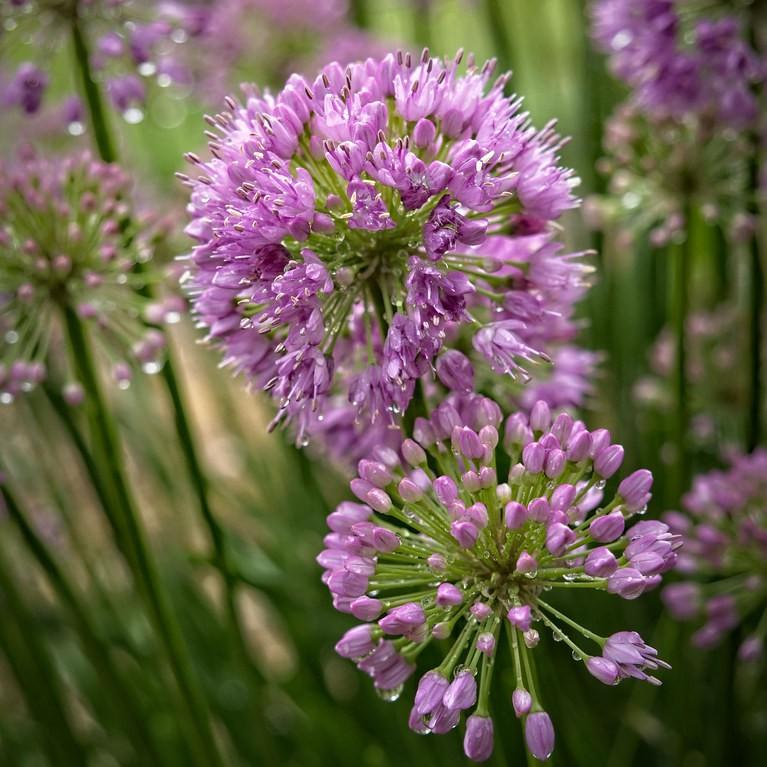
Hybrid Ornamental Onion
Allium × hybridum
Overview
Hybrid ornamental onion is a man-made cross of wild Allium species, bred for large, long-lasting flower heads and improved garden performance. Its blooms, which can measure 2 to 10 inches across, rise above clumps of strappy, green foliage that dies back as flowers open. This pollinator-friendly plant is deer and rabbit resistant, making it a popular choice for low-effort landscape designs.
Care Guide
Watering
Water newly planted bulbs deeply once a week during their first growing season to establish strong root systems, reducing frequency once established. Mature plants are drought tolerant, requiring supplemental water only during extended dry periods, as overwatering leads to bulb rot. Avoid wetting foliage unnecessarily to minimize fungal disease risk.
Light
Plant hybrid ornamental onion in full sun, which means a minimum of 6 hours of direct, unfiltered sunlight per day for the most abundant and sturdy blooms. Plants grown in partial shade will produce weaker, lanky stems that are prone to flopping, and may have smaller, less vibrant flower heads. Avoid heavily shaded locations entirely, as they will cause poor flowering and increased risk of bulb rot.
Soil
Grow hybrid ornamental onion in well-drained, sandy or loamy soil with a neutral to slightly alkaline pH between 6.0 and 7.5 for optimal growth. Heavy clay soils that hold standing water will cause bulbs to rot quickly, so amend these sites with compost, perlite, or coarse sand to improve drainage prior to planting. Avoid overly rich, organic soils that retain too much moisture, as they shorten the lifespan of the bulbs.
Fertilizer
Apply a balanced, slow-release 10-10-10 granular fertilizer in early spring as new foliage emerges, working it lightly into the top inch of soil around the base of the plants. Avoid high-nitrogen fertilizers, as they encourage excessive leaf growth at the expense of flower production and can weaken bulb structure. No additional fertilization is needed during the flowering or dormant periods for established plants.
Temperature
Hybrid ornamental onion thrives in USDA hardiness zones 4 through 9, tolerating winter lows as low as -30°F (-34°C) when bulbs are planted at the correct depth. Summer temperatures between 65°F and 85°F (18°C to 29°C) are ideal for growth and flowering, though mature plants can tolerate short periods of heat above 90°F (32°C) if soil moisture is adequate. Bulbs require a 10 to 12 week period of cold temperatures below 50°F (10°C) in winter to trigger proper spring growth and flowering.
Pruning
Remove spent flower heads after blooming if you wish to prevent self-seeding and redirect the plant’s energy back to bulb storage for the following year. Allow the green foliage to die back completely and turn yellow or brown in late summer before trimming it to the ground, as the leaves photosynthesize to build energy reserves in the bulb. Remove any damaged or diseased foliage immediately throughout the growing season to prevent the spread of pathogens.
Propagation
Hybrid ornamental onion is most commonly propagated by dividing mature bulb clumps every 3 to 4 years in late summer or early fall, after the foliage has fully died back. Dig up the entire clump, gently separate the small offset bulbs from the parent bulb, and replant them at a depth 2 to 3 times the height of the bulb, spaced 6 to 12 inches apart. While the plant produces seeds, hybrid cultivars will not grow true from seed, so division is the only reliable method to preserve the parent plant’s characteristics.
Humidity
Hybrid ornamental onion adapts well to a wide range of humidity levels, thriving in average garden humidity between 30% and 60% without additional intervention. High humidity combined with poor air circulation and wet soil increases the risk of fungal diseases like downy mildew and bulb rot, so ensure plants are spaced properly to allow airflow around foliage. Extremely low humidity rarely causes issues for this drought-tolerant plant, as long as soil moisture is sufficient during active growth.
Repotting
If grown in containers, repot hybrid ornamental onion every 2 to 3 years in late fall during dormancy, replacing the potting medium entirely to refresh nutrients and improve drainage. Select a pot with multiple drainage holes that is at least 12 inches deep to accommodate the bulb’s root system, using a fast-draining cactus or succulent potting mix to avoid waterlogged conditions. When repotting, separate any offset bulbs from the parent bulb to prevent overcrowding, which reduces flowering and increases rot risk.
Uses & Symbolism
Hybrid ornamental onion is a popular addition to perennial borders, rock gardens, cutting gardens, and pollinator gardens, where its large, spherical blooms add vertical interest and attract bees, butterflies, and other beneficial insects. Its long-lasting, sturdy flower stems make it an excellent cut flower for fresh or dried floral arrangements, with dried blooms retaining their shape and color for up to a year. It is also used as a natural pest deterrent in vegetable gardens, as its strong scent repels aphids, Japanese beetles, and other common garden pests.
Diseases & Pests
Hybrid ornamental onion is relatively pest and disease resistant, but can be affected by bulb rot if grown in poorly drained, waterlogged soil, which causes bulbs to turn soft, mushy, and foul-smelling. Fungal diseases like downy mildew and rust may appear on foliage during periods of high humidity and poor air circulation, causing yellow, brown, or orange spots on leaves that can spread and cause premature dieback. Onion thrips and aphids may occasionally feed on young foliage, sucking sap and causing stunted growth, which can be controlled with insecticidal soap or neem oil sprays applied at the first sign of infestation.
Related plants
Other plants you might like if you grow Hybrid Ornamental Onion.