Blue Oat Grass
Helictotrichon sempervirens
Overview
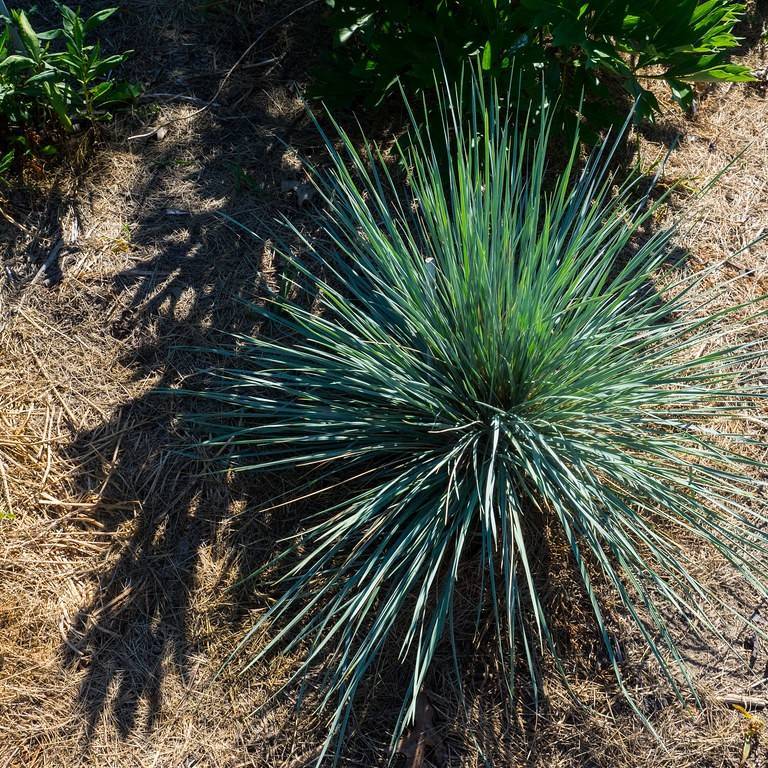
Blue Oat Grass is a semi-evergreen ornamental grass that forms neat, rounded mounds of stiff, narrow, bristle-like foliage in a vivid silvery-blue hue that retains its color through most of the year in mild climates. In late spring to early summer, it produces tall, arching stems topped with delicate, oat-like tan flower panicles that rise 1 to 2 feet above the foliage, adding soft texture and vertical interest to garden beds. It is drought-tolerant once established and highly resistant to deer and rabbit browsing, making it a popular low-maintenance choice for xeriscapes, rock gardens, and border edging.
Care Guide
Watering
Water newly planted Blue Oat Grass regularly for the first growing season to help it establish a deep, extensive root system, keeping the soil consistently moist but not waterlogged. Once established, it is highly drought-tolerant, requiring only occasional watering during extended periods of hot, dry weather; overwatering or poorly drained soil will quickly lead to root rot. Reduce watering significantly in fall and winter to prevent soggy soil around the plant’s crown during cool, dormant months.
Light
Blue Oat Grass thrives in full sun, requiring a minimum of 6 hours of direct, unfiltered sunlight daily to maintain its vibrant blue foliage color and compact, upright clumping habit. It can tolerate very light partial shade, but plants grown in shadier conditions will develop looser, floppier growth and lose much of their characteristic blue hue, fading to a dull gray-green. In regions with extremely intense, scorching summer sun, it will benefit from a small amount of afternoon shade to prevent foliage scorch, though full sun is still preferred for optimal performance.
Soil
This grass grows best in well-drained, sandy or loamy soil with a neutral to slightly alkaline pH, and it will not tolerate heavy, clay-rich soil that holds excess moisture around its roots. It is highly adaptable to poor, rocky, or low-nutrient soils where many other ornamental plants struggle, making it ideal for rock gardens and sloped sites with quick drainage. Before planting, amend heavy soil with coarse sand or gravel to improve drainage, and avoid adding overly rich organic matter that can hold too much moisture around the crown.
Fertilizer
Blue Oat Grass has very low nutrient requirements, and over-fertilizing will lead to lanky, floppy growth and a loss of its characteristic compact form and blue foliage color. A single light application of a balanced, slow-release granular fertilizer in early spring, just as new growth begins to emerge, is sufficient for the entire growing season. Avoid fertilizing in late summer or fall, as this can encourage tender new growth that will be damaged by the first frost, and never use high-nitrogen liquid fertilizers that promote rapid, weak growth.
Temperature
Blue Oat Grass is a cool-season grass that thrives in temperatures between 60 and 75°F (15 and 24°C), and it is winter hardy in USDA zones 4 through 8, tolerating winter lows down to -30°F (-34°C) when planted in well-drained soil. It can tolerate short periods of summer heat above 90°F (32°C), but prolonged high temperatures combined with high humidity may cause it to go partially dormant and lose some foliage color, though it will recover when cool weather returns. In regions with very wet, mild winters, it is prone to crown rot if exposed to extended periods of soggy, cold soil, so raised planting beds are recommended for these climates.
Pruning
Prune Blue Oat Grass once annually in late winter or early spring, just before new growth begins to emerge, cutting back the entire clump to 3 to 4 inches (7.5 to 10 cm) above the soil line to remove dead, brown foliage and make way for fresh new growth. If the flower panicles become untidy or faded after blooming, you can deadhead them by cutting back the flowering stems to the base of the foliage if you prefer a neater appearance, though leaving the seed heads in place adds winter interest and provides food for small songbirds. Avoid pruning in fall, as the intact foliage helps protect the plant’s crown from winter damage and excess moisture accumulation.
Propagation
Blue Oat Grass is most commonly propagated by division, which is best done in early spring just as new growth starts, or in early fall at least 6 weeks before the first expected frost to give new divisions time to establish before winter. To divide, dig up the entire mature clump, carefully separate it into smaller sections using a sharp knife or garden spade, ensuring each section has a healthy portion of roots and foliage, then replant the divisions at the same depth they were growing originally, spacing them 1 to 2 feet apart. It can also be grown from seed, though seed-grown plants may not retain the exact foliage color and growth habit of the parent plant, so division is preferred for consistent ornamental characteristics.
Humidity
Blue Oat Grass prefers low to moderate humidity levels, and it struggles in areas with high, consistent humidity, especially combined with warm temperatures, which can increase the risk of foliar fungal diseases and crown rot. To minimize humidity-related issues, ensure plants are spaced far enough apart to allow for good air circulation around the foliage, and avoid watering from overhead, which can leave moisture sitting on the leaves for extended periods. It is highly tolerant of dry air, making it well-suited to arid and semi-arid climates where many other ornamental grasses fail to thrive.
Repotting
If grown in containers, Blue Oat Grass should be repotted every 2 to 3 years in early spring, before new growth begins, to refresh the soil and prevent the plant from becoming root-bound. Choose a container with multiple drainage holes, and use a fast-draining, sandy potting mix amended with gravel or perlite to ensure excess water drains quickly; avoid using potting mixes with high amounts of peat moss or compost that hold moisture for too long. When repotting, gently loosen the root ball, trim any damaged or rotting roots, and plant at the same depth it was growing in its previous container, then water lightly to settle the soil around the roots.
Uses & Symbolism
Blue Oat Grass is widely used as an ornamental plant in landscape design, planted en masse as a groundcover, as edging along borders and walkways, in rock gardens, xeriscapes, and coastal gardens, or as a specimen plant to add vibrant blue color and textural contrast to perennial beds. Its dried flower panicles are often cut and used in dried flower arrangements, wreaths, and other craft projects, as they retain their shape and light tan color for months after harvesting. It is also planted on slopes and erosion-prone sites to stabilize soil, as its deep, fibrous root system holds soil in place effectively even on steep, rocky terrain.
Diseases & Pests
Blue Oat Grass is relatively pest and disease resistant when grown in proper conditions, but it is highly susceptible to root rot and crown rot if planted in poorly drained soil or overwatered, especially during cool, wet weather. In high-humidity climates, it may occasionally develop foliar fungal diseases such as rust or leaf spot, which can be prevented by ensuring good air circulation around plants and avoiding overhead watering that leaves moisture on the foliage. Rarely, it may be affected by aphids or spider mites, which can be treated with a strong spray of water to dislodge the pests, or with insecticidal soap for severe infestations.
Related plants
Other plants you might like if you grow Blue Oat Grass.