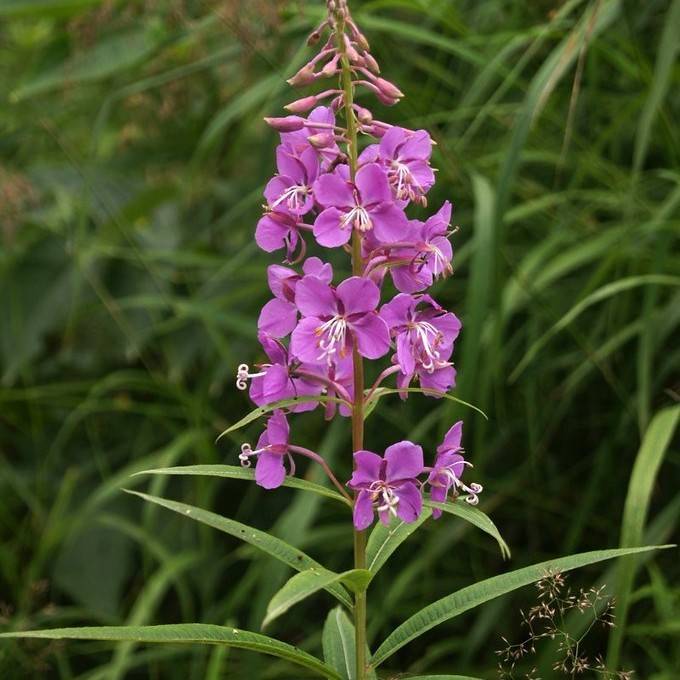
Hybrid Fireweed
Chamerion angustifolium 'Album' or interspecific Chamerion hybrids
Overview
Hybrid Fireweed is a cultivated variant of the widespread wild fireweed, bred for more controlled growth and diverse flower colors including white, pink, and magenta. It retains the wild species’ hardy, adaptive nature while producing more consistent, floriferous blooms through the summer. Named for its tendency to colonize recently burned landscapes, hybrid cultivars are popular for low-maintenance naturalized plantings and habitat restoration projects.
Care Guide
Watering
Water deeply once per week during active growth, allowing the top 2 inches of soil to dry out between waterings. Reduce watering frequency in fall and winter once foliage begins to die back, as the plant enters dormancy and requires very little moisture. Avoid overwatering, as soggy soil can cause root rot in established plants.
Light
Grow in full sun for the most abundant blooms, with at least 6 hours of direct sunlight per day. It can tolerate partial shade, though flowering may be reduced and stems may become leggy as they stretch toward light. In extremely hot, arid climates, provide light afternoon shade to prevent leaf scorch.
Soil
Adaptable to a wide range of soil types, including poor, rocky, or sandy soils, as long as drainage is good. It tolerates slightly acidic to slightly alkaline pH levels, with a preferred range of 5.5 to 7.5. Amending heavy clay soils with organic matter will improve drainage and support healthier root growth.
Fertilizer
Fertilize once in early spring with a balanced, slow-release 10-10-10 fertilizer to support new growth. Avoid over-fertilizing, as this can lead to excessive leaf growth at the expense of flowering and weak stems that require staking. Additional fertilization is not needed for plants growing in moderately fertile soil.
Temperature
Thrives in temperate climates, with a preferred temperature range of 60–80°F (15–27°C) during the growing season. It is extremely cold hardy, tolerating winter temperatures down to -40°F (-40°C) when dormant, making it suitable for USDA hardiness zones 2 through 9. High summer temperatures above 90°F (32°C) may cause temporary wilting, which resolves with adequate watering.
Pruning
Deadhead spent flower spikes regularly to encourage reblooming and prevent unwanted self-seeding, as the plant can spread aggressively in ideal conditions. Cut back all stems to ground level in late fall or early spring before new growth emerges to keep the planting tidy and reduce overwintering pest habitat. Thin out crowded clumps every 2–3 years to improve air circulation and reduce disease risk.
Propagation
Easily propagated by division in early spring before new growth starts, by digging up mature clumps and separating them into smaller sections with healthy roots and growing points. It can also be grown from seed sown directly outdoors in fall or started indoors 6–8 weeks before the last expected frost. Stem cuttings taken from soft new growth in late spring will root reliably in moist, well-drained potting mix.
Humidity
Tolerates a wide range of humidity levels, from dry continental climates to more humid coastal regions, with no specific humidity requirements. Average ambient humidity of 30–60% is sufficient for healthy growth. Excessively high humidity combined with poor air circulation may increase the risk of foliar fungal diseases.
Repotting
Hybrid Fireweed is primarily grown in landscape plantings, but if grown in containers, repot every 1–2 years in early spring before new growth emerges. Use a well-draining all-purpose potting mix and select a container with drainage holes that is 2 inches larger in diameter than the current pot. Root-bound plants may require division at repotting time to prevent overcrowding and maintain healthy growth.
Uses & Symbolism
Hybrid Fireweed is widely planted in pollinator gardens, meadowscapes, and restoration projects, as its nectar-rich blooms attract bees, butterflies, and hummingbirds throughout the summer. It is a popular cut flower, with long-lasting spires that add vertical interest to fresh floral arrangements. Young shoots and leaves of non-ornamental hybrid variants are edible, with a mild, asparagus-like flavor, while dried leaves can be brewed into a herbal tea.
Diseases & Pests
Hybrid Fireweed is largely pest and disease resistant, though it may occasionally be affected by powdery mildew and rust in areas with high humidity and poor air circulation. Aphids and spider mites may infest new growth, particularly on plants grown in dry, dusty conditions, and can be controlled with insecticidal soap or a strong jet of water. Root rot may occur in poorly drained, waterlogged soils, which can be prevented by amending heavy soils before planting and avoiding overwatering.
Related plants
Other plants you might like if you grow Hybrid Fireweed.

%22%2F%3E%0A%20%20%20%20%20%20%3Ccircle%20cx%3D%22920%22%20cy%3D%22180%22%20r%3D%2290%22%20fill%3D%22%23cfe8d5%22%2F%3E%0A%20%20%20%20%20%20%3Cpath%20d%3D%22M600%20590c-90-180-215-255-310-280%200%20165%20118%20296%20270%20296h40z%22%20fill%3D%22%2379b88e%22%2F%3E%0A%20%20%20%20%20%20%3Cpath%20d%3D%22M600%20590c80-150%20198-212%20302-228-8%20142-123%20255-270%20255h-32z%22%20fill%3D%22%235c9f73%22%2F%3E%0A%20%20%20%20%20%20%3Cpath%20d%3D%22M600%20610V360%22%20stroke%3D%22%234f8c64%22%20stroke-width%3D%2218%22%20stroke-linecap%3D%22round%22%2F%3E%0A%20%20%20%20%20%20%3Ctext%20x%3D%22600%22%20y%3D%22700%22%20text-anchor%3D%22middle%22%20font-family%3D%22Arial%2C%20sans-serif%22%20font-size%3D%2244%22%20fill%3D%22%23365c45%22%3E%0A%20%20%20%20%20%20%20%20Plant%20image%20coming%20soon%0A%20%20%20%20%20%20%3C%2Ftext%3E%0A%20%20%20%20%3C%2Fsvg%3E%0A%20%20)