Hybrid Barrenwort
Epimedium × versicolor
Overview
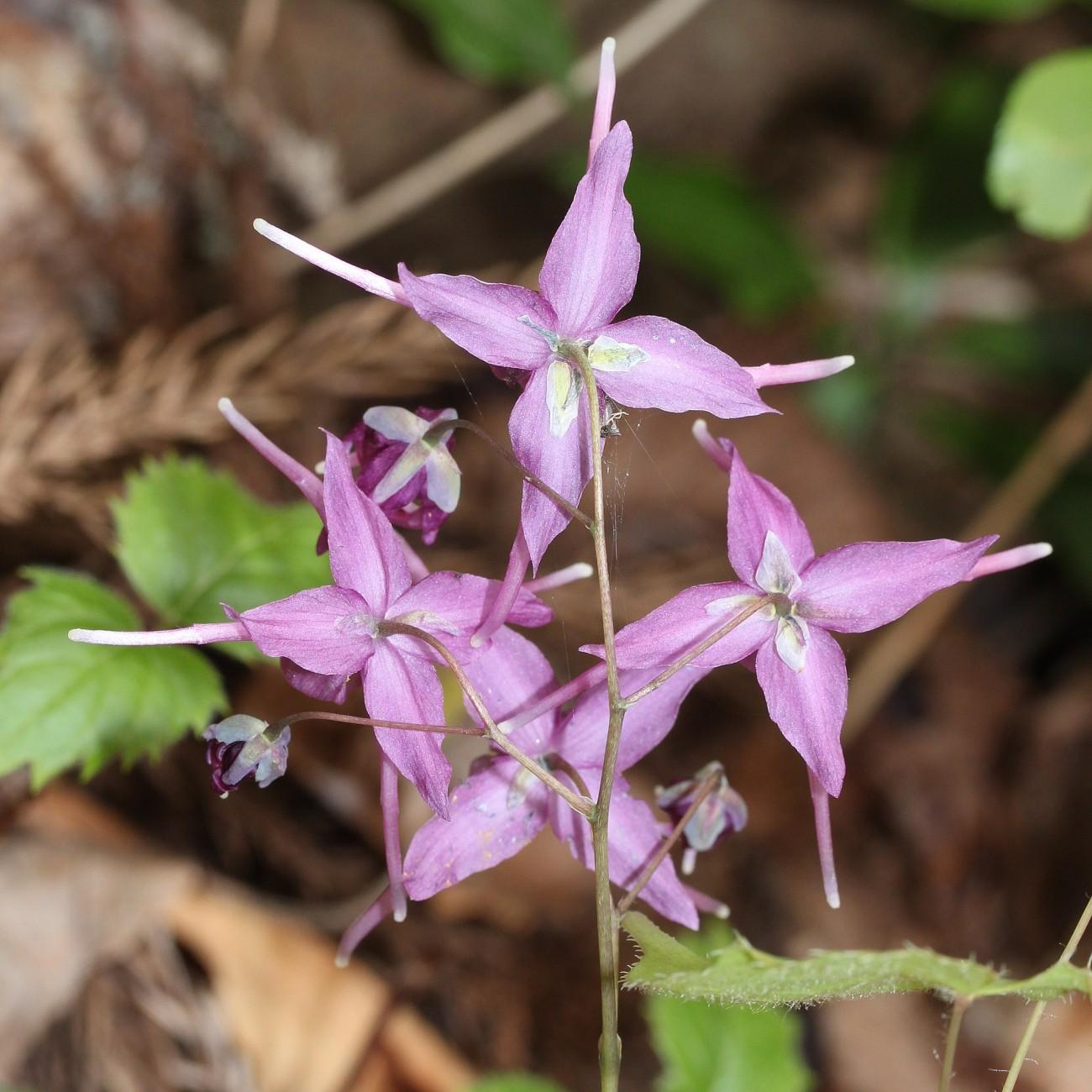
Hybrid barrenwort is a cross between Epimedium grandiflorum and Epimedium pinnatum subsp. colchicum, bred for its hardiness, attractive foliage, and profuse blooms. Its delicate, spurred flowers appear in early spring in shades of pink, purple, yellow, or bicolor, rising above foliage that emerges tinged with red or bronze before maturing to deep green. This low, clumping plant spreads slowly via rhizomes, forming dense, weed-suppressing mats ideal for shaded, low-traffic areas.
Care Guide
Watering
Water regularly during the first growing season to establish a deep root system, keeping soil consistently moist but not waterlogged. Once established, hybrid barrenwort is highly drought-tolerant, requiring only occasional watering during extended dry periods, making it ideal for low-maintenance landscapes. Overwatering or prolonged soggy soil can lead to root rot, so avoid excessive irrigation in poorly draining sites.
Light
Thrives in partial to full shade, making it an excellent choice for underplanting trees or shaded border edges. It can tolerate dappled morning sun, but harsh midday or afternoon direct sunlight will scorch its delicate foliage, causing brown leaf edges and stunted growth. In cooler climate zones, it may handle more sun exposure if kept consistently moist.
Soil
Prefers rich, well-draining, humus-rich soil with a slightly acidic to neutral pH, though it adapts well to average garden soil as long as drainage is adequate. It tolerates dry, rocky, or low-nutrient soils once established, making it suitable for challenging shaded sites where other ground covers struggle. Heavy clay soils should be amended with compost or leaf mold to improve drainage before planting.
Fertilizer
Apply a balanced, slow-release fertilizer in early spring just as new growth emerges to support healthy foliage and abundant blooms. Alternatively, top-dress with a 1-2 inch layer of compost or well-rotted leaf mold each fall, which will slowly feed the plant as it decomposes and improve soil structure over time. Fertilizer is rarely needed for mature plants growing in organically rich soil, as over-fertilization can lead to lush, weak growth prone to pest damage.
Temperature
Hardy in USDA zones 4 to 9, tolerating winter temperatures as low as -30°F (-34°C) without significant damage. It prefers cool summer temperatures, and in warmer zones, it benefits from extra shade and mulch to keep root zones cool during hot summer months. Late spring frosts may damage new emerging foliage, but plants will quickly produce new leaves if damaged.
Pruning
In late winter or early spring, before new growth emerges, cut back any old, tattered foliage to the ground to make way for fresh leaves and blooms, improving the plant’s appearance and air circulation. No regular pruning is required during the growing season, though spent flower stems can be trimmed back after blooming if desired for a neater look. Avoid cutting back foliage during the summer, as the leaves provide shade for the root zone and remain attractive through most of the growing season.
Propagation
The most reliable method of propagation is division, carried out in early spring just as new growth begins or in early fall after flowering has finished. Dig up mature clumps, carefully separate the rhizomes into sections with at least 2-3 growth buds each, and replant immediately at the same depth as the original plant. Hybrid barrenwort does not grow true from seed, so seed propagation is not recommended for retaining the parent plant’s desirable traits.
Humidity
Adaptable to average outdoor humidity levels, requiring no special humidity adjustments to thrive in most temperate climates. It tolerates mild dry air well, though prolonged periods of very low humidity combined with high heat may cause leaf browning at the edges, which can be mitigated with occasional watering and mulch to retain soil moisture. In very humid climates, ensure good air circulation around plants to prevent fungal leaf spot issues.
Repotting
Hybrid barrenwort is primarily grown outdoors in garden beds, but if cultivated in containers, repot every 2-3 years in early spring before new growth emerges, using a rich, well-draining potting mix. Choose a pot with drainage holes to prevent waterlogging, and increase the pot size by 1-2 inches each time you repot to accommodate the slow-growing rhizome spread. Outdoor plants rarely need lifting and replanting unless clumps become overcrowded or you wish to divide them for propagation.
Uses & Symbolism
Hybrid barrenwort is primarily used as a low-maintenance ground cover for shaded woodland gardens, under tree canopies, and along shaded border edges, where its dense foliage suppresses weeds and reduces erosion. Its delicate spring blooms and attractive, semi-evergreen foliage make it a popular choice for rock gardens, shade containers, and as an edging plant for shady paths. In traditional East Asian medicine, related Epimedium species are used for their purported health benefits, though the hybrid is not typically cultivated for medicinal use.
Diseases & Pests
Hybrid barrenwort is relatively pest and disease resistant, with no major recurring issues when grown in appropriate conditions. Overly wet, poorly draining soil can lead to root rot, while poor air circulation in very humid climates may cause minor fungal leaf spot, which can be managed by removing affected foliage and improving spacing between plants. Slugs and snails may occasionally feed on young, tender new growth in spring, especially in damp, shaded sites, and can be controlled with bait, traps, or diatomaceous earth applied around the base of plants.
Related plants
Other plants you might like if you grow Hybrid Barrenwort.