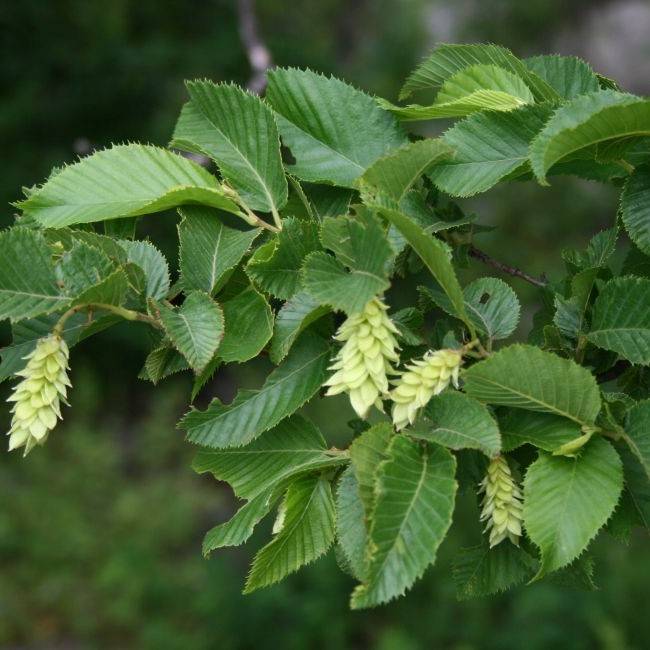
Hop Hornbeam
Ostrya virginiana
Overview
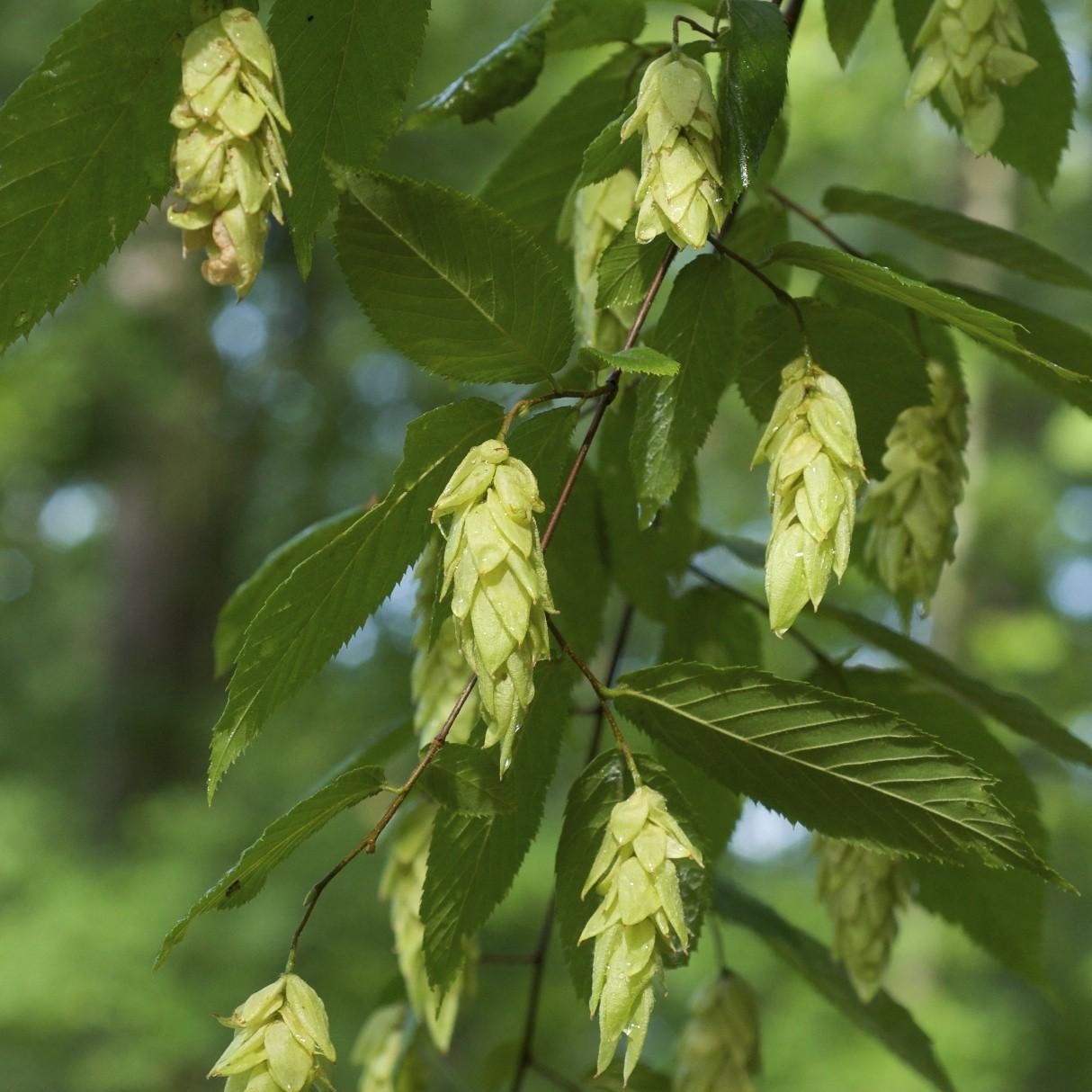
Hop hornbeam, also called ironwood, is a slow-growing deciduous tree native to eastern North American woodlands, often found as an understory species in well-drained, upland sites. Its common name comes from its clustered, papery fruit structures that closely resemble the cones of common hop plants, while its dense, extremely hard wood earned it the ironwood moniker. The tree’s serrated, oval leaves turn a soft yellow in fall, and its peeling, gray-brown shaggy bark provides year-round visual interest in landscape settings.
Care Guide
Watering
Hop hornbeam prefers consistent, moderate moisture in its first few years of establishment, tolerating occasional short dry spells once its deep root system is fully developed. Avoid overwatering or planting in waterlogged sites, as prolonged saturation can cause root rot and stunted growth. During extended periods of summer drought, a deep, monthly watering will support healthy foliage and prevent premature leaf drop.
Light
It thrives in full sun to partial shade, with optimal growth occurring in locations that receive at least four hours of direct sunlight daily. Young saplings tolerate heavier shade as understory plants, but mature specimens produce more abundant fruit and denser foliage when grown in brighter conditions. In regions with very hot, intense summer sun, partial afternoon shade will prevent leaf scorch on younger trees.
Soil
This adaptable tree grows best in well-drained, loamy or sandy soils with a slightly acidic to neutral pH, though it tolerates poor, rocky, and dry upland soils that many other hardwood species cannot. It does not perform well in heavy, compacted clay or constantly saturated soils, as these restrict root development and increase disease risk. Amending heavy planting sites with organic matter prior to installation will improve drainage and support faster establishment.
Fertilizer
Hop hornbeam has low nutrient requirements, rarely needing supplemental fertilization when grown in average garden or woodland soils. Young, newly planted trees benefit from a light application of balanced, slow-release fertilizer in early spring for the first 2 to 3 years to support root and foliage growth. Mature specimens only require fertilization if they show signs of nutrient deficiency, such as yellowing leaves or stunted new growth.
Temperature
It is well-adapted to USDA hardiness zones 3 through 9, tolerating winter temperatures as low as -40°F (-40°C) and hot summer temperatures up to 100°F (38°C) without damage. The tree is highly tolerant of temperature fluctuations common in its native range, including sudden spring frosts and extended winter cold snaps. Young saplings may benefit from a layer of mulch around the base in their first 2 winters to insulate roots from extreme temperature swings.
Pruning
Pruning is rarely required for hop hornbeam, as it naturally develops a strong, upright, rounded crown with even branching as it matures. Only remove dead, damaged, or crossing branches in late winter, when the tree is dormant, to maintain structural integrity and prevent disease entry. Avoid heavy pruning, as the tree’s slow growth rate means it will take many years to regrow removed sections.
Propagation
Hop hornbeam is most commonly propagated from seed, which requires 3 to 4 months of cold stratification to break dormancy before sowing in spring. Collect ripe seed clusters in late summer or early fall, separate the seeds from the papery bracts, and store them in moist, cool conditions until stratification is complete. Softwood cuttings taken in early summer can also root successfully with the use of rooting hormone and consistent moisture, though this method has a lower success rate than seed propagation.
Humidity
It tolerates a wide range of humidity levels, thriving in the moderate to high humidity of its native eastern North American range and adapting well to drier conditions in the western parts of its growing range. Average household or outdoor ambient humidity is sufficient for healthy growth, with no special misting or humidity adjustments required. Extended periods of extremely low humidity may cause minor leaf browning on young saplings, but mature trees are unaffected.
Repotting
Hop hornbeam is rarely grown in containers long-term, as it develops a deep taproot and quickly outgrows even large pots. Young saplings intended for landscape planting can be kept in containers for 1 to 2 years, repotting in early spring before new growth emerges if roots begin to exit the drainage holes. When repotting, use a well-drained, loamy potting mix and avoid disturbing the root ball as much as possible to prevent transplant shock.
Uses & Symbolism
Hop hornbeam is widely planted as a low-maintenance landscape tree for yards, parks, and woodland gardens, valued for its attractive bark, fall foliage, and wildlife-friendly fruit that feeds songbirds, squirrels, and small mammals. Its extremely hard, dense, decay-resistant wood is used for tool handles, fence posts, mallets, and other items requiring high strength and durability. It is also a popular choice for bonsai cultivation due to its small leaves, textured bark, and slow growth habit that allows for easy shaping.
Diseases & Pests
Hop hornbeam is largely resistant to most common hardwood pests and diseases, with only occasional infestations of aphids, scale insects, or two-lined chestnut borers, which usually only affect stressed or weakened trees. Fungal issues such as leaf spot, canker, or root rot may occur in overly wet, poorly drained sites, but these are easily prevented by planting in well-drained soil and avoiding overwatering. It is also highly resistant to deer browse, making it a reliable choice for landscapes in areas with high deer populations.
Related plants
Other plants you might like if you grow Hop Hornbeam.