American Elder
Sambucus canadensis
Overview
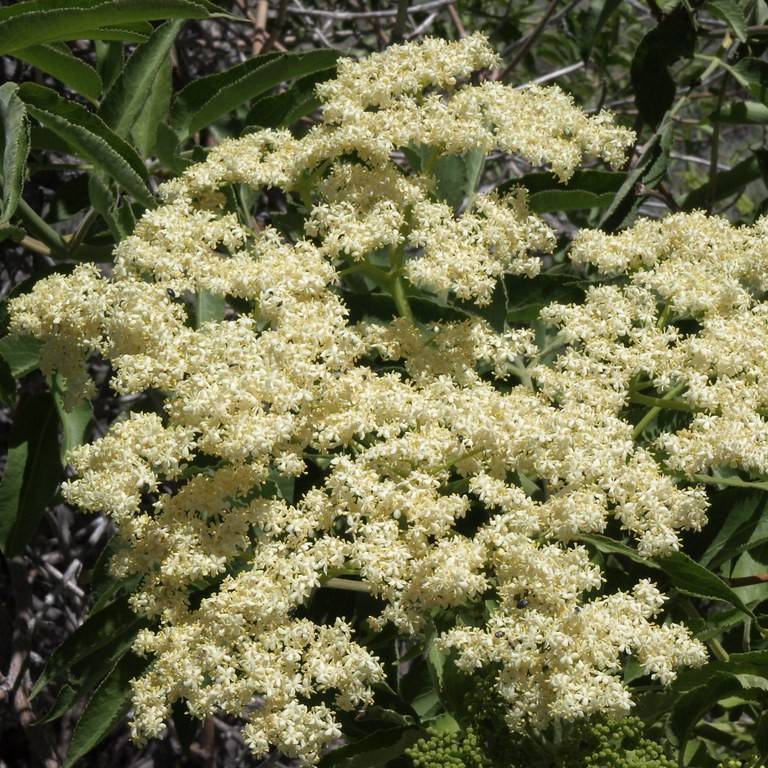
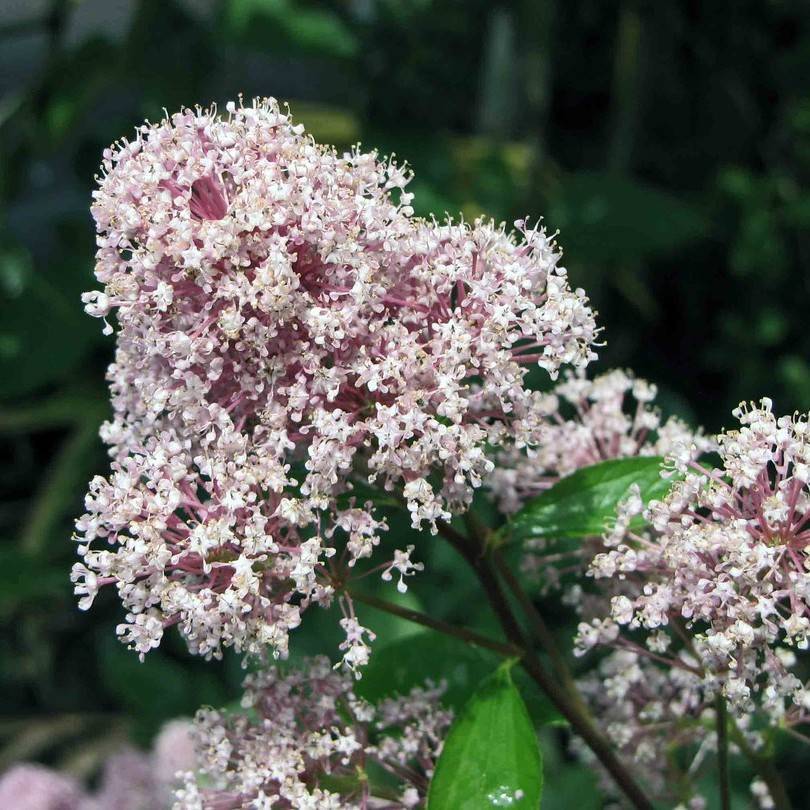
American Elder, also called common elderberry, is a suckering deciduous shrub that forms dense, multi-stemmed thickets in its native wetland, meadow, and woodland edge habitats. It produces large, flat clusters of tiny, creamy-white flowers in summer, followed by drooping bunches of small, dark purple-black berries in late summer to early fall. The shrub supports a wide range of native wildlife, including pollinators that feed on its nectar and birds that eat its berries.
Care Guide
Watering
American Elder prefers consistently moist, well-drained soil, and requires regular watering during its first growing season to establish a deep root system. Once established, it has moderate drought tolerance but will produce more abundant flowers and fruit with weekly watering during dry periods. Avoid overwatering or letting the plant sit in saturated soil for extended periods to prevent root rot.
Light
This shrub grows best in full sun, which encourages maximum flower and fruit production and a dense, compact growth habit. It can tolerate partial shade, though shaded plants may produce fewer blooms and berries, and have a looser, more sprawling form. Avoid planting in full deep shade, as this will severely limit growth and fruiting.
Soil
American Elder adapts to a wide range of soil types, including loam, sand, clay, and even poor, compacted soils, as long as drainage is adequate. It prefers slightly acidic to neutral soil with a pH between 5.5 and 7.0, but can tolerate mildly alkaline conditions as well. Adding organic matter such as compost or well-rotted manure at planting time will improve soil structure and support healthy growth.
Fertilizer
Young American Elder shrubs benefit from a balanced, slow-release 10-10-10 fertilizer applied in early spring each year to support new growth. Mature, established plants only require fertilization every 2-3 years, as excessive nitrogen can lead to lush foliage growth at the expense of flower and fruit production. Avoid fertilizing after mid-summer, as this can stimulate tender new growth that is vulnerable to frost damage.
Temperature
American Elder is highly cold-hardy, thriving in USDA zones 3 through 9, and can tolerate winter temperatures as low as -40°F (-40°C). It prefers warm summer temperatures between 65 and 85°F (18-29°C) for optimal growth and fruiting. Late spring frosts can damage new flower buds, so planting in a sheltered location away from low-lying frost pockets is recommended in cooler regions.
Pruning
Prune American Elder in late winter or early spring while the plant is dormant to remove dead, damaged, or crossing branches and maintain an open, productive shape. Since the shrub produces the most fruit on 2- to 3-year-old stems, remove older, woody stems at the base every 3-4 years to encourage new, productive growth. You can also cut the entire shrub back to 1-2 feet (30-60 cm) above ground every few years to control size and rejuvenate overgrown plants.
Propagation
American Elder is most easily propagated from softwood cuttings taken in early summer, which root readily in moist potting mix with bottom heat. It can also be propagated from seed, though seeds require 3-4 months of cold stratification to germinate, and seed-grown plants may not retain the exact characteristics of the parent plant. The shrub also produces underground suckers that can be dug up and transplanted in early spring or late fall to create new plants.
Humidity
American Elder adapts well to average ambient humidity levels in its native range, tolerating both moderate summer humidity and drier conditions in parts of its central North American habitat. It does not require extra humidity when grown outdoors, though very dry, arid conditions may cause leaf edge browning and reduce fruit set. When grown temporarily indoors as a potted specimen, misting the leaves occasionally can help prevent excessive dryness.
Repotting
American Elder is primarily grown outdoors in the landscape, but can be grown in large containers for a few years before needing to be transplanted to the ground. Container-grown specimens should be repotted every 2-3 years in early spring, using a large, well-draining pot with a nutrient-rich potting mix amended with compost. Once the shrub reaches 6 feet (180 cm) or larger, it is best to transplant it to a permanent outdoor location to accommodate its extensive root system.
Uses & Symbolism
Cooked ripe American Elder berries are widely used to make jams, jellies, pies, syrups, and wines, valued for their tart, earthy flavor and high vitamin C and antioxidant content. The large flower clusters are edible as well, and can be battered and fried to make elderflower fritters, or steeped to make tea and cordials. Ecologically, the shrub is planted for native wildlife habitat, erosion control, and riparian restoration projects, and its flowers are a valuable nectar source for native bees and butterflies.
Diseases & Pests
American Elder is relatively pest and disease resistant, but can be susceptible to aphids, spider mites, and elderberry borer larvae that feed on foliage and bore into stems. Common fungal diseases include powdery mildew, leaf spot, and root rot, which occur most frequently in humid conditions with poor air circulation or overly saturated soil. Ensuring proper spacing between plants for air flow, avoiding overhead watering, and removing infected foliage can prevent most disease issues.
Related plants
Other plants you might like if you grow American Elder.