Hooker's Balsamroot
Balsamorhiza hookeri
Overview
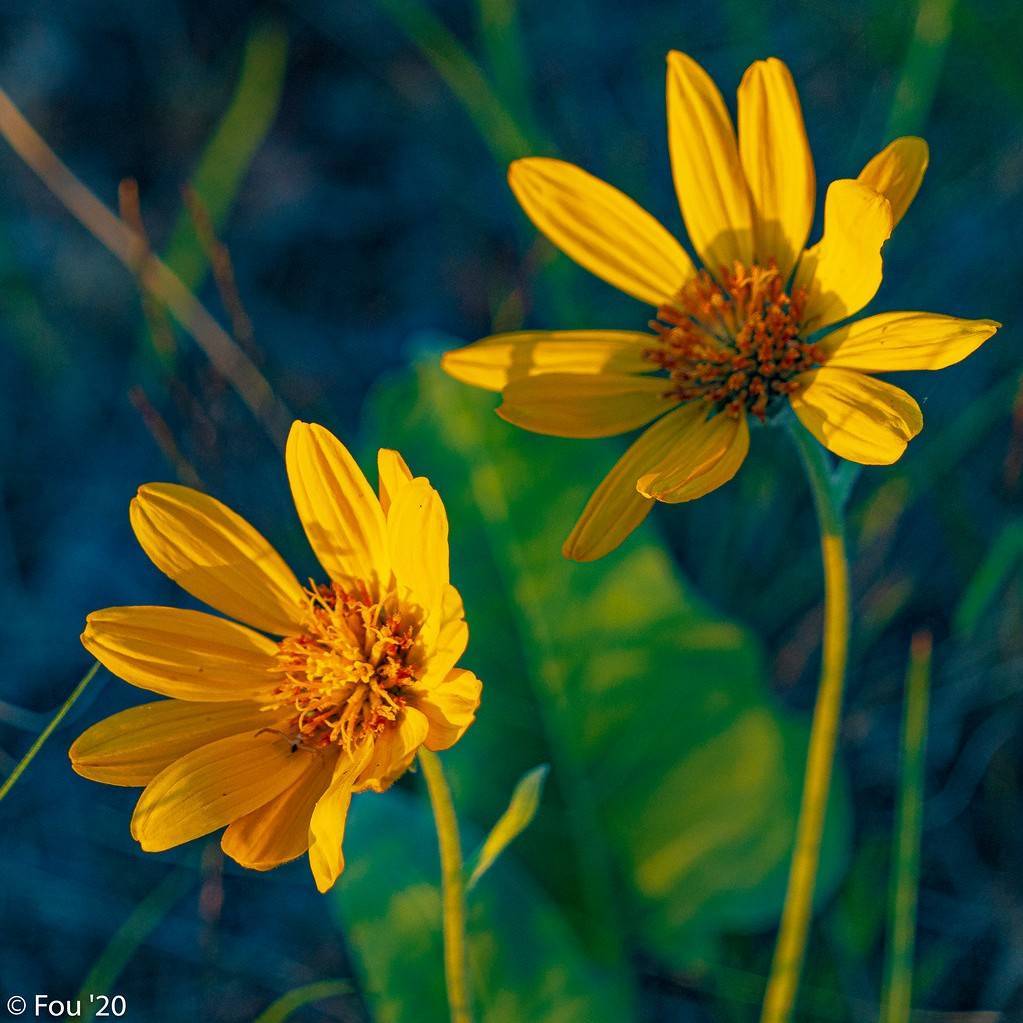
Hooker's Balsamroot is a herbaceous perennial adapted to dry, open habitats including sagebrush steppe, rocky slopes, and pine forest clearings. It forms a low rosette of fuzzy, gray-green, deeply lobed leaves that lie close to the ground before sending up upright flower stalks in mid-spring. Each stalk bears a single, vibrant yellow, sunflower-shaped bloom 2 to 3 inches wide, which attracts native bees, butterflies, and other pollinators. Its deep, woody taproot allows it to thrive in low-moisture conditions where many other plants cannot survive.
Care Guide
Watering
This drought-tolerant species requires minimal moisture once established, only needing supplemental water during extended periods of extreme drought. Water deeply but infrequently during its first growing season to help its taproot establish, avoiding overwatering that can cause root rot. Cease regular watering completely after the plant goes dormant in late summer, as wet soil during dormancy is highly damaging.
Light
Hooker's Balsamroot requires full, direct sunlight for at least 6 hours per day to produce abundant blooms and maintain healthy foliage. It cannot tolerate shaded conditions, which will lead to sparse growth, leggy stems, and reduced or absent flowering. Plant it in an open, unobstructed location with no overhead canopy for best results.
Soil
It thrives in well-drained, sandy, loamy, or rocky soils with low to moderate nutrient content, avoiding heavy clay soils that retain excess moisture. The ideal soil pH ranges from neutral to slightly alkaline, though it can adapt to mildly acidic conditions as long as drainage is excellent. Amending heavy soils with coarse sand or gravel before planting will improve drainage and prevent root rot.
Fertilizer
This wildflower is adapted to low-nutrient soils and rarely requires fertilization, as excess nutrients will encourage lush foliage growth at the expense of blooms and reduce its drought tolerance. If planted in extremely poor, barren soil, a light application of balanced, slow-release fertilizer in early spring once every 2 to 3 years is sufficient. Avoid using high-nitrogen fertilizers entirely, as they can harm the plant's long-term health.
Temperature
Hooker's Balsamroot is extremely cold-hardy, tolerating winter temperatures as low as -30°F (-34°C) and thriving in USDA hardiness zones 4 through 8. It prefers warm, dry summer conditions and can withstand high temperatures above 100°F (38°C) as long as it is not overwatered. It is well-adapted to the wide diurnal temperature fluctuations common in its native western North American habitats.
Pruning
Pruning requirements are minimal; spent flower stalks can be cut back to the base of the plant after blooming finishes to maintain a tidy appearance, though leaving seed heads intact will provide food for native birds. Once the foliage dies back naturally in late summer, you can remove the dried leaves to keep the planting area clean, though this is not required for the plant's health. Avoid cutting back green, actively growing foliage, as this will reduce the plant's ability to store energy in its taproot for the next growing season.
Propagation
Hooker's Balsamroot is most reliably propagated from seed, which requires a 30 to 90 day period of cold stratification to break dormancy before sowing. Sow seeds directly outdoors in late fall to allow natural winter stratification, or stratify seeds in a refrigerator in moist sand before sowing in early spring. It does not transplant well due to its long, fragile taproot, so direct sowing in the permanent growing location is strongly recommended; division of established plants is rarely successful and not advised.
Humidity
This species prefers low to moderate humidity levels, typical of its native arid and semi-arid western North American habitats. It does not tolerate high humidity combined with warm temperatures, as this increases the risk of foliar fungal diseases and root rot. Ensure the plant has good air circulation around its foliage to reduce moisture buildup in more humid growing areas.
Repotting
Hooker's Balsamroot is almost exclusively grown outdoors in garden beds or naturalized areas, as its deep taproot makes container cultivation extremely difficult. If grown temporarily in a pot before planting out, transplant it to its permanent location as soon as possible to avoid damaging the developing taproot. Mature plants should never be repotted or transplanted, as disturbance to their taproot will almost always kill the plant.
Uses & Symbolism
Hooker's Balsamroot is a popular choice for xeriscape gardens, native plant landscapes, and pollinator gardens, as it provides a reliable spring nectar source for native bees and butterflies. Historically, Indigenous peoples of western North America used all parts of the plant for food and medicine: the starchy taproot was roasted or boiled for eating, the young leaves were eaten raw or cooked, and preparations of the root were used to treat wounds, coughs, and stomach ailments. It is also used for habitat restoration projects in dry regions, as it stabilizes soil on slopes and provides cover and food for small wildlife and birds.
Diseases & Pests
Hooker's Balsamroot has very few pest or disease issues when grown in well-drained soil and full sun. Overwatering or poorly drained soil will quickly lead to root rot, the most common cause of death for cultivated plants. In high-humidity conditions, it may occasionally develop powdery mildew or rust on its foliage, which can be prevented by ensuring good air circulation around the plant and avoiding watering the leaves. Aphids and leafhoppers may rarely feed on young foliage, but they rarely cause significant damage and can be controlled with a strong spray of water if populations become large.
Related plants
Other plants you might like if you grow Hooker's Balsamroot.
%22%2F%3E%0A%20%20%20%20%20%20%3Ccircle%20cx%3D%22920%22%20cy%3D%22180%22%20r%3D%2290%22%20fill%3D%22%23cfe8d5%22%2F%3E%0A%20%20%20%20%20%20%3Cpath%20d%3D%22M600%20590c-90-180-215-255-310-280%200%20165%20118%20296%20270%20296h40z%22%20fill%3D%22%2379b88e%22%2F%3E%0A%20%20%20%20%20%20%3Cpath%20d%3D%22M600%20590c80-150%20198-212%20302-228-8%20142-123%20255-270%20255h-32z%22%20fill%3D%22%235c9f73%22%2F%3E%0A%20%20%20%20%20%20%3Cpath%20d%3D%22M600%20610V360%22%20stroke%3D%22%234f8c64%22%20stroke-width%3D%2218%22%20stroke-linecap%3D%22round%22%2F%3E%0A%20%20%20%20%20%20%3Ctext%20x%3D%22600%22%20y%3D%22700%22%20text-anchor%3D%22middle%22%20font-family%3D%22Arial%2C%20sans-serif%22%20font-size%3D%2244%22%20fill%3D%22%23365c45%22%3E%0A%20%20%20%20%20%20%20%20Plant%20image%20coming%20soon%0A%20%20%20%20%20%20%3C%2Ftext%3E%0A%20%20%20%20%3C%2Fsvg%3E%0A%20%20)