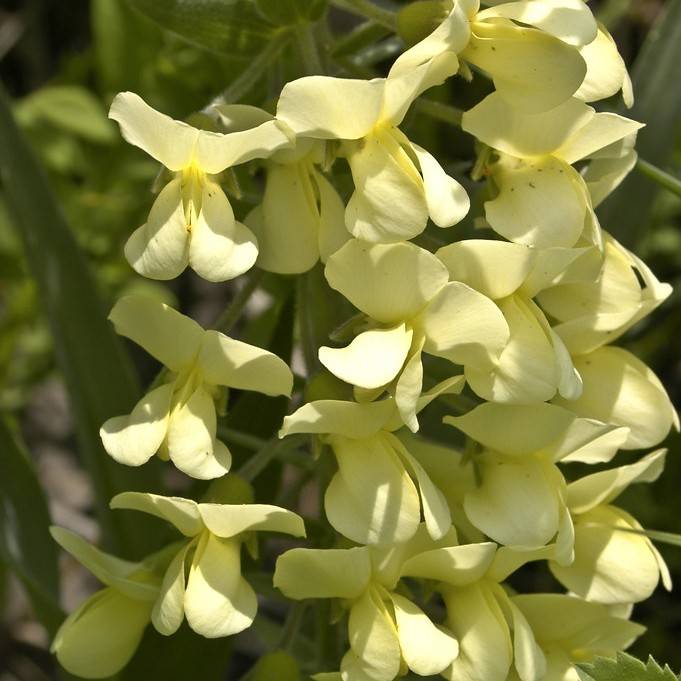
Cream Wild Indigo
Baptisia bracteata
Overview
Cream Wild Indigo, also called long-bract wild indigo, is a clump-forming perennial that thrives in prairies, open woodlands, and meadows across its native range. It produces cascading spikes of pale creamy-yellow pea-like flowers in mid to late spring, followed by inflated, dark seed pods that persist through fall and winter for visual interest. Its deep taproot makes it extremely drought-tolerant once established, and it supports a range of native pollinators including bumblebees and specialized specialist bee species.
Care Guide
Watering
Water newly planted specimens regularly for the first growing season to help the taproot establish, providing approximately 1 inch of water per week during dry spells. Once established, Cream Wild Indigo is highly drought-tolerant and only requires supplemental watering during extended periods of extreme heat or drought, as overwatering can lead to root rot. Avoid wet, poorly drained conditions to prevent fungal issues.
Light
Grow in full sun for the most robust growth and abundant flowering, as it requires a minimum of 6 hours of direct sunlight daily. It can tolerate light partial shade, though plants in shadier spots may become leggy, produce fewer flowers, and be more prone to flopping. Avoid heavy full shade, as this will severely inhibit growth and may cause the plant to decline over time.
Soil
Thrives in average, well-drained soil with a neutral to slightly acidic pH, though it is highly adaptable to poor, rocky, sandy, or clay soils as long as drainage is adequate. It does not tolerate wet, waterlogged soil, which will quickly cause root rot and kill the plant. Its deep taproot allows it to access nutrients and moisture from lower soil layers, so it does not require rich, fertile growing conditions.
Fertilizer
Cream Wild Indigo is a nitrogen-fixing legume, so it does not require regular nitrogen fertilizer applications, as it produces its own nitrogen supply through symbiotic root bacteria. A light application of balanced, slow-release fertilizer in early spring can be beneficial for plants growing in extremely poor, nutrient-depleted soil, but it is generally unnecessary. Avoid overfertilizing, especially with high-nitrogen products, as this can lead to excessive foliage growth at the expense of flowers and increased flopping.
Temperature
Is extremely cold-hardy, adapted to USDA hardiness zones 3 through 8, and can tolerate winter temperatures as low as -40°F (-40°C) without protection. It tolerates high summer temperatures up to 100°F (38°C) as long as it has adequate root drainage, and is well-adapted to the variable temperature conditions of the North American prairie. It requires a period of cold winter dormancy to thrive, so it is not suitable for tropical or warm winter climates without seasonal cold.
Pruning
Requires very little pruning; spent flower spikes can be trimmed back after flowering if you do not want the plant to self-seed, though the dark, inflated seed pods add ornamental interest through fall and winter and provide food for small birds. Cut back dead, brown foliage to the ground in late winter or early spring before new growth emerges to keep the planting looking tidy. Avoid cutting into the woody crown of the plant, as this can damage the taproot and lead to dieback.
Propagation
Most easily propagated from seed, which requires a period of cold stratification for 30-60 days, or scarification to break the hard seed coat, to improve germination rates. Sowing fresh seed directly outdoors in fall will naturally provide the required cold stratification for germination the following spring. Division is not recommended, as the deep, fragile taproot is easily damaged during transplanting, and mature plants do not tolerate disturbance well.
Humidity
Adaptable to a wide range of humidity levels, thriving in the moderate to dry humidity of its native prairie and open woodland habitats. It tolerates high summer humidity as long as it is planted in well-drained soil and has good air circulation around the foliage to prevent fungal diseases. It does not require additional humidity, and overly moist, stagnant air conditions can lead to powdery mildew or leaf spot issues.
Repotting
Cream Wild Indigo is almost exclusively grown in outdoor garden beds rather than containers, as its deep taproot requires a large amount of root space to develop properly. If grown in a container for its first season before transplanting, use a deep, large pot to accommodate root growth, and transplant it to its permanent location as soon as possible to avoid taproot damage. Mature plants should never be repotted or transplanted, as disturbance to the deep taproot will usually kill the plant.
Uses & Symbolism
Cream Wild Indigo is widely used in native plant gardens, pollinator gardens, prairie restorations, and xeriscapes for its low-maintenance nature, drought tolerance, and ability to support native bumblebees, specialist bees, and butterfly larvae. Its persistent seed pods are used in dried flower arrangements for their unique shape and dark, textured appearance. Historically, Native American communities used small quantities of the plant for medicinal purposes to treat ailments such as colds and skin issues, though its toxicity makes modern medicinal use not recommended.
Diseases & Pests
Cream Wild Indigo is relatively pest and disease resistant, though it can be susceptible to powdery mildew, leaf spot, and rust fungal diseases if grown in poorly drained soil, excessive shade, or areas with poor air circulation. It may occasionally be targeted by weevils that feed on the seed pods, reducing seed production, though this rarely causes significant damage to the overall health of the plant. Root rot is the most serious issue, which occurs rapidly if the plant is grown in waterlogged, heavy soil.
Related plants
Other plants you might like if you grow Cream Wild Indigo.