Hoary Vervain
Verbena stricta
Overview
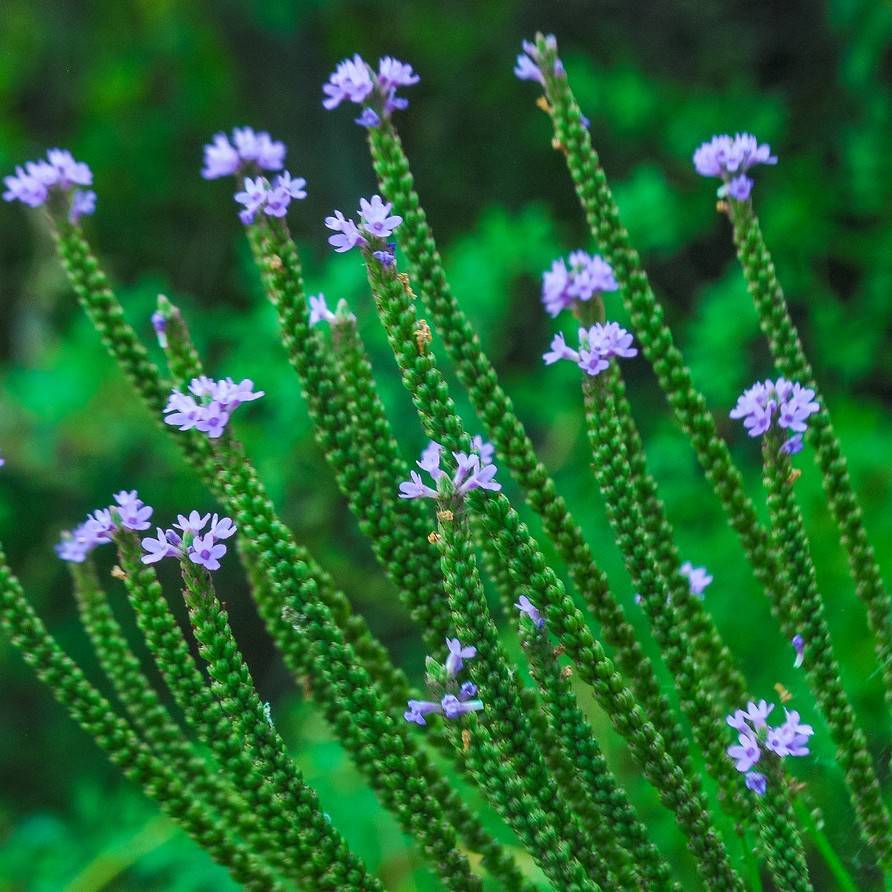
Hoary vervain is a rugged wildflower distinguished by its soft, woolly (hoary) gray-green leaves and sturdy, upright stems topped with dense, elongated spikes of small, lavender-purple blooms that open gradually from the bottom up. It thrives in disturbed sites, prairies, and dry meadows, where its deep taproot allows it to withstand extended periods of drought and poor soil conditions. A favorite of native bees, butterflies, and hummingbirds, it also serves as a host plant for the common buckeye butterfly, making it a staple in pollinator and native plant gardens.
Care Guide
Watering
Hoary vervain is highly drought-tolerant once established, requiring only occasional deep watering during prolonged dry spells; overwatering can lead to root rot, so allow the soil to dry out completely between irrigation sessions. Newly planted specimens need regular, light watering for the first 2-3 months to help their root systems establish, after which they can survive almost entirely on natural rainfall in most temperate regions.
Light
This species requires full sun, meaning a minimum of 6 hours of direct, unfiltered sunlight per day to produce abundant blooms and maintain a sturdy, upright growth habit. It will struggle in partial shade, becoming leggy, flopping over, and producing far fewer flowers, so avoid planting it in shaded or partially shaded locations.
Soil
Hoary vervain adapts to a wide range of soil types, including sandy, loamy, clay, and rocky soils, as long as drainage is excellent; it tolerates poor, low-nutrient soils that many other ornamental plants cannot survive in. It prefers a neutral to slightly alkaline soil pH between 6.5 and 8.0, and will not survive in waterlogged or consistently soggy soil conditions.
Fertilizer
This wildflower does not require regular fertilization, as it thrives in low-nutrient soils; applying fertilizer can cause excessive, leggy foliage growth at the expense of flower production. If grown in extremely depleted soil, a single application of a balanced, slow-release 10-10-10 fertilizer in early spring is sufficient, though even this is often unnecessary.
Temperature
Hoary vervain is cold-hardy in USDA zones 3 through 8, tolerating winter temperatures as low as -40°F (-40°C) without protection. It thrives in warm summer temperatures up to 100°F (38°C), and its deep taproot makes it highly resistant to heat stress and drought once established.
Pruning
Deadhead spent flower spikes throughout the blooming season to encourage additional flowering and prevent unwanted self-seeding if you wish to limit spread. In late fall or early spring, cut back the entire plant to 2-3 inches above the soil line to remove dead foliage and make way for new spring growth.
Propagation
Hoary vervain is most easily propagated from seed, which can be sown directly outdoors in fall (to allow for natural cold stratification over winter) or stratified in the refrigerator for 30 days before sowing indoors in early spring. It can also be propagated by root cuttings taken in late fall or early spring, though division of established plants is not recommended due to its deep, fragile taproot.
Humidity
This species is adapted to dry to moderate humidity levels, and tolerates the low humidity of prairie and grassland habitats perfectly. It will struggle in consistently high humidity, especially if paired with poor air circulation or wet soil, as these conditions increase the risk of fungal leaf spot and powdery mildew.
Repotting
Hoary vervain is rarely grown in containers, as its deep taproot requires a large, deep pot to accommodate its growth, and it is best suited to in-ground planting. If grown in a pot, repot every 2-3 years in early spring, using a well-draining, sandy potting mix and selecting a container that is at least 12 inches deep to give the taproot room to expand.
Uses & Symbolism
Hoary vervain is a popular addition to native plant gardens, pollinator habitats, rain gardens, and xeriscapes, where its drought tolerance and ability to thrive in poor soil make it a low-maintenance, ecologically valuable planting choice. Historically, Indigenous peoples used parts of the plant to make herbal remedies for a range of ailments, including respiratory issues, headaches, and topical wounds, though modern medicinal use is limited. It also provides seed for songbirds in late summer and fall, adding further wildlife value to garden spaces.
Diseases & Pests
Hoary vervain is relatively pest and disease resistant, though it can develop powdery mildew or fungal leaf spot in conditions of high humidity, poor air circulation, or consistent overhead watering. Aphids and spider mites may occasionally infest stressed plants, though these can be controlled with a strong spray of water or insecticidal soap, and rarely cause significant long-term damage.
Related plants
Other plants you might like if you grow Hoary Vervain.