Hairy Beardtongue
Penstemon hirsutus
Overview
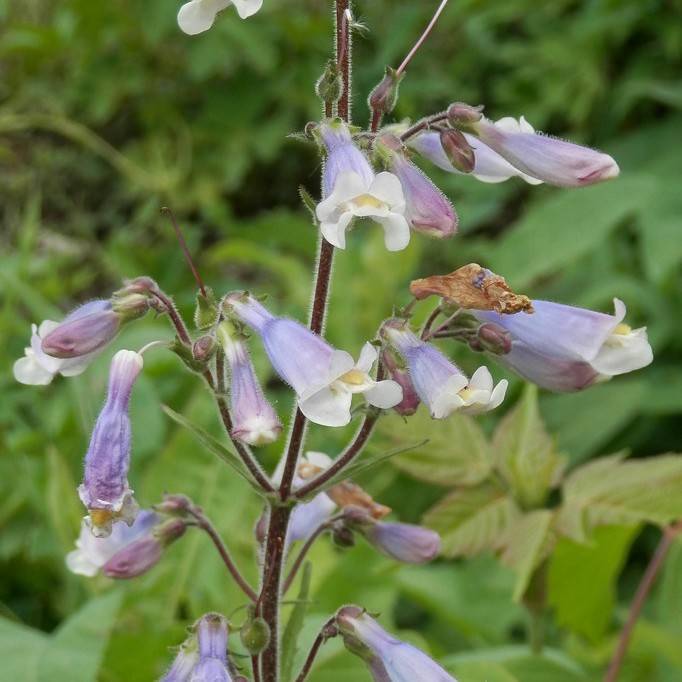
Hairy Beardtongue is a hardy, adaptable wildflower named for the fine, soft hairs covering its stems, foliage, and the staminode (sterile stamen) inside its tubular blooms. It naturally occurs in dry prairies, open woodlands, and rocky slopes, making it well-suited to low-maintenance landscapes. The plant’s upright, branching stems hold clusters of pale lavender to purplish flowers that bloom from late spring to early summer, drawing a wide range of beneficial pollinators.
Care Guide
Watering
Hairy Beardtongue is drought-tolerant once established, requiring only occasional deep watering during extended periods of no rainfall. Overwatering or poorly drained soil will lead to root rot, so allow the top 2 to 3 inches of soil to dry out completely between waterings. Newly planted specimens need regular, light watering for the first 2 to 3 months to help establish a strong root system.
Light
This species thrives in full sun, which encourages the most abundant flowering and sturdy, upright growth that does not require staking. It can tolerate partial shade, though plants grown in shadier conditions may become leggy and produce fewer blooms. In extremely hot, southern climates, light afternoon shade can help prevent foliage scorch.
Soil
Hairy Beardtongue prefers well-drained, sandy, loamy, or rocky soil with a neutral to slightly acidic pH between 6.0 and 7.5. It can tolerate poor, low-nutrient soils, including dry, gravelly sites that most other perennials struggle in. Heavy clay soils that hold moisture after rainfall are unsuitable, so amend with coarse sand or gravel to improve drainage before planting if needed.
Fertilizer
This plant is adapted to low-nutrient environments and rarely requires supplemental fertilization. Over-fertilizing will lead to excessive, leggy foliage growth at the expense of flowers, so only apply a thin layer of compost around the base of plants in early spring if soil is extremely poor. Avoid high-nitrogen synthetic fertilizers entirely, as they can damage the plant’s root system and reduce its lifespan.
Temperature
Hairy Beardtongue is cold-hardy in USDA zones 3 through 8, tolerating winter temperatures as low as -40°F (-40°C) without extra protection. It thrives in summer temperatures between 60°F and 85°F (15°C to 29°C) and can withstand short periods of high heat above 90°F (32°C) if soil is well-drained. Extreme, prolonged humidity may increase the risk of foliar fungal diseases, so ensure plants have good air circulation.
Pruning
After flowering finishes in mid-summer, cut back spent flower stems by one-third to encourage a possible second, smaller flush of blooms later in the season. In late fall or early spring, cut back all dead, brown foliage to ground level to make room for new spring growth and reduce overwintering sites for pests and fungal spores. Remove any damaged or yellowed foliage throughout the growing season to keep the plant healthy and neat.
Propagation
Hairy Beardtongue can be easily propagated from seed sown directly outdoors in fall, as the seeds require a 60-day period of cold stratification to germinate successfully. For spring sowing, refrigerate seeds in moist sand for 2 months before planting to mimic natural winter conditions. Mature clumps can also be divided every 3 to 4 years in early spring before new growth emerges, replanting divisions at the same depth they were originally growing.
Humidity
This species prefers average to low humidity levels between 30% and 60%, matching its native dry prairie and open woodland habitat. It can tolerate occasional higher humidity, but prolonged moist air combined with poor air circulation increases the risk of powdery mildew and other foliar fungal issues. Avoid misting the foliage, as this creates excess moisture on leaf surfaces that encourages disease development.
Repotting
Hairy Beardtongue is rarely grown in containers, but if potted, repot every 2 to 3 years in early spring before new growth starts. Use a well-drained, sandy potting mix and a container with multiple drainage holes to prevent waterlogging, as standing water will quickly kill the plant’s shallow root system. When repotting, gently loosen tangled roots and divide overcrowded clumps if desired to create new plants.
Uses & Symbolism
Hairy Beardtongue is a popular addition to native wildflower gardens, pollinator gardens, rock gardens, and xeriscapes, as it supports native bees, bumblebees, hummingbirds, and butterflies while requiring very little maintenance. It is also used for roadside erosion control and habitat restoration projects, as its deep root system stabilizes dry, sloped soils and provides food for local wildlife. Historically, some Indigenous peoples of North America used small amounts of the plant’s root to treat minor ailments, though it has no widespread modern medicinal use.
Diseases & Pests
Hairy Beardtongue is largely pest and disease resistant when grown in suitable conditions, with root rot being the most common issue caused by overwatering or poorly drained soil. Foliar diseases like powdery mildew and leaf spot may occur in humid, poorly ventilated areas, but can be prevented by spacing plants properly to allow air flow and avoiding overhead watering. Occasional pests include aphids and spider mites, which can be controlled with a strong spray of water or insecticidal soap if infestations become severe.
Related plants
Other plants you might like if you grow Hairy Beardtongue.