Hooded Pitcher Plant
Sarracenia minor
Overview
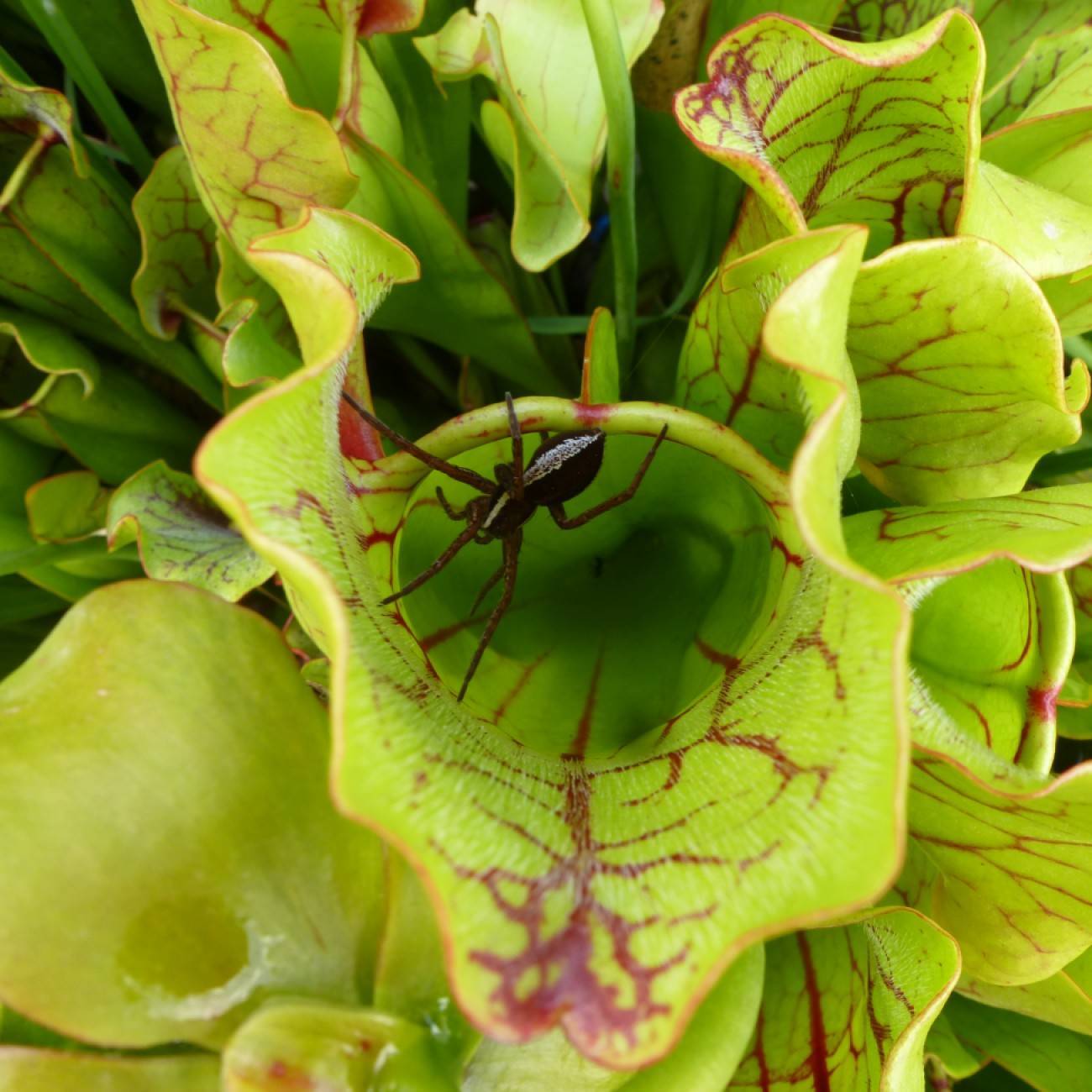
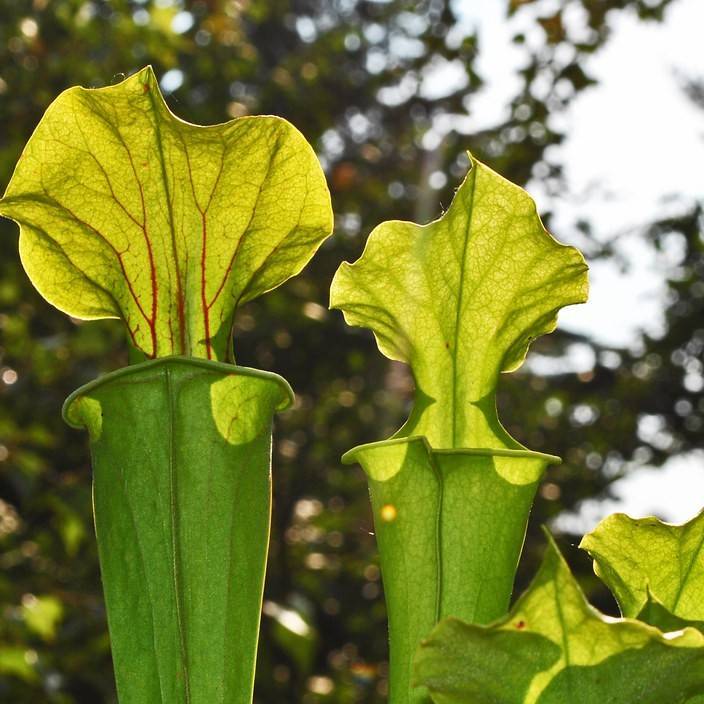
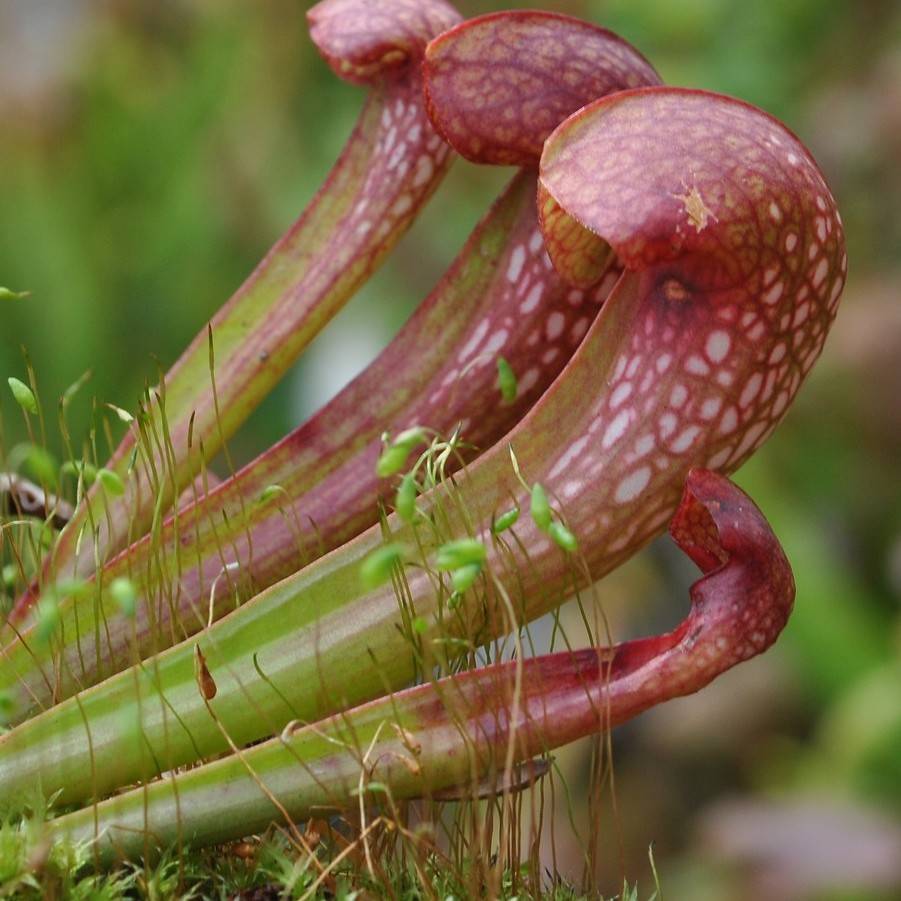
The hooded pitcher plant is a carnivorous species native to the acidic bog habitats of the southeastern U.S. Its modified leaves form upright, tube-shaped pitchers topped with a curved, overhanging hood that prevents rain from diluting the digestive fluid inside, while attracting insects with bright coloration and sweet nectar secretions. Insects that slip into the pitcher drown in the enzyme-rich fluid, where their nutrients are absorbed to support growth in low-nitrogen wetland soils. In spring, it produces nodding, yellow, five-petaled flowers on tall stalks above the pitcher foliage to avoid trapping potential pollinators.
Care Guide
Watering
Keep soil consistently saturated year-round using distilled water, rainwater, or reverse-osmosis water, as tap water with high mineral content will damage the sensitive root system. During the active growing season from spring to fall, maintain a 1-2 inch (2.5-5 cm) layer of standing water in the plant’s tray to replicate its natural bog habitat. Reduce watering slightly during winter dormancy, keeping soil damp but not fully submerged to prevent root rot.
Light
Thrives in full, direct sunlight, requiring a minimum of 6-8 hours of unfiltered sun per day to develop vibrant pitcher coloration and robust growth. Indoor-grown specimens should be placed in a south-facing window or under high-output grow lights to meet their light requirements, as insufficient light will cause weak, pale pitchers and stunted development. Partial shade may be tolerated only in extremely hot, arid climates where midday sun could scorch foliage.
Soil
Plant in a well-draining, nutrient-free acidic medium with a pH between 4.0 and 5.5, formulated to replicate bog conditions. A standard mix of 1 part sphagnum peat moss and 1 part perlite or horticultural sand works best, as it retains moisture while preventing compaction and maintains the required low pH. Never use potting soil, compost, or fertilizer-amended mixes, as these contain high nutrient levels that will burn the plant’s roots and kill it.
Fertilizer
Fertilizer is not required, as the hooded pitcher plant obtains all necessary nutrients by capturing and digesting insects in its pitcher traps. Outdoor plants will catch enough prey naturally to thrive, while indoor specimens can be fed 1-2 small, live insects (such as gnats or fruit flies) per pitcher once every 2-3 months during the growing season if prey is scarce. Never apply conventional liquid or granular fertilizer to the soil, as the high nutrient content will fatally damage the root system.
Temperature
Prefers warm growing-season temperatures between 70-90°F (21-32°C), consistent with its native southeastern U.S. habitat. It requires a 3-4 month winter dormancy period with temperatures between 35-50°F (2-7°C) to rest and support healthy regrowth the following spring; extended exposure to temperatures below 20°F (-7°C) may damage rhizomes without winter mulch protection. Avoid placing indoor specimens near heating vents or drafty windows during winter, as extreme temperature fluctuations can stress the plant.
Pruning
Trim away any brown, withered pitchers or dead foliage at the base of the plant as they occur to improve air circulation and reduce the risk of fungal growth. After the winter dormancy period ends in early spring, cut back all dead foliage from the previous year to make room for new pitcher growth. Spent flower stalks can be removed after blooming if you do not wish to collect seeds, though leaving them intact will not harm the plant.
Propagation
The most reliable method for home growers is division of mature rhizomes, performed during late winter or early spring just before new growth emerges; carefully separate the rhizome into sections with at least one growing point each, and repot each section in fresh carnivorous plant soil. It can also be grown from seed, though seeds require a 4-6 week cold stratification period to germinate, and plants grown from seed will take 3-5 years to reach mature size. Leaf cuttings are possible but have a lower success rate, requiring high humidity and consistent moisture to root successfully.
Humidity
Thrives in high humidity levels between 50-70%, consistent with its native bog environment, to prevent pitcher tips from drying out and browning. Indoor-grown specimens may require a humidity tray or regular misting with distilled water if the surrounding air is dry, especially during winter when indoor heating reduces ambient humidity. Ensure adequate air circulation even in high-humidity conditions to prevent fungal and bacterial growth on foliage.
Repotting
Repot every 2-3 years in early spring, right as the plant exits dormancy, to refresh the acidic growing medium and prevent peat moss from breaking down and compacting. Choose a pot that is 2-3 inches (5-7.5 cm) larger than the root ball, with drainage holes to allow for consistent moisture levels, and avoid disturbing the root system more than necessary during the repotting process. After repotting, water thoroughly and keep the plant in slightly shadier conditions for 1-2 weeks to allow it to acclimate to the new medium.
Uses & Symbolism
The hooded pitcher plant is widely grown as an ornamental specimen in bog gardens, water features, and carnivorous plant collections, valued for its unique pitcher shape, vibrant coloration, and insect-trapping ability. In its native range, it is planted in wetland restoration projects to support ecosystem health and provide habitat for specialized pollinators and bog-dwelling wildlife. It has no traditional edible or medicinal uses, as its digestive fluid contains mild enzymes that can cause skin irritation in sensitive individuals.
Diseases & Pests
The most common issues are root rot and crown rot, caused by overwatering during dormancy, poorly draining soil, or use of mineral-rich tap water. Fungal leaf spot and powdery mildew may occur in conditions with high humidity and poor air circulation, which can be prevented by spacing plants appropriately and removing dead foliage regularly. Common pests include aphids, scale insects, and thrips, which can be treated with insecticidal soap or neem oil, avoiding chemical pesticides that may damage the plant’s sensitive foliage.
Related plants
Other plants you might like if you grow Hooded Pitcher Plant.