Himalayan Balsam
Impatiens glandulifera
Overview
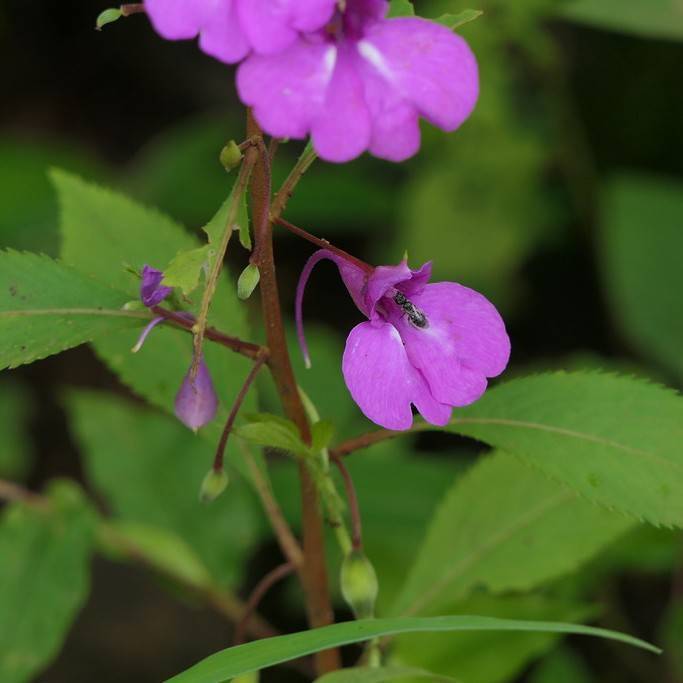
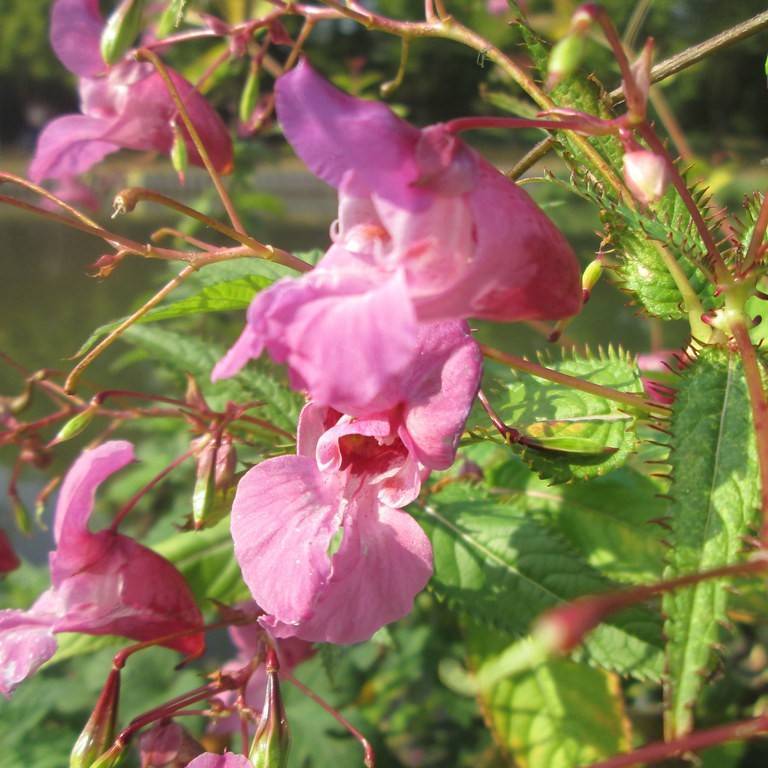
Himalayan Balsam, sometimes called policeman's helmet for its distinct flower shape, is a robust annual that thrives in damp, riparian habitats. It produces clusters of nectar-rich pink, purple, or white blooms from mid-summer to early fall, attracting pollinators like bumblebees and hummingbirds. Outside its native Himalayan range, it is classified as a highly invasive species in parts of Europe, North America, and New Zealand, where it outcompetes native riparian vegetation and increases bank erosion.
Care Guide
Watering
Himalayan Balsam prefers consistently moist, well-watered soil, as it naturally grows along stream banks and wet meadows. It does not tolerate drought, so water regularly during dry periods to keep the root zone evenly damp, avoiding waterlogged conditions that can cause root rot. In its invasive range, intentional watering is not recommended to prevent unwanted spread.
Light
This species grows best in full sun to partial shade, with optimal flowering occurring in locations that receive 4-6 hours of direct sunlight daily. It can tolerate deeper shaded areas, though growth may be leggier and flower production reduced. In hot climates, partial afternoon shade helps prevent foliage scorch.
Soil
Himalayan Balsam adapts to a wide range of soil types, but thrives in nutrient-rich, loamy, well-drained soil with a neutral to slightly acidic pH between 6.0 and 7.5. It can tolerate poorly drained, damp soils better than many other annual species, making it well-suited to riparian and low-lying wet areas. It will grow in poorer quality soils, though growth will be less vigorous.
Fertilizer
In fertile native or garden soils, Himalayan Balsam requires no supplemental fertilizer to grow vigorously. If planted in poor, low-nutrient soil, a single application of balanced, slow-release 10-10-10 fertilizer in early spring can support robust growth. Avoid over-fertilizing, as this can lead to excessive foliage growth at the expense of flowering and increase the risk of the plant spreading beyond intended bounds.
Temperature
Himalayan Balsam grows best in cool to moderate temperate climates, with ideal temperatures between 60-75°F (15-24°C). It can tolerate light frosts, but hard freezes will kill the plant entirely, consistent with its annual lifecycle. It does not thrive in prolonged high heat above 85°F (29°C), which can cause wilting and reduced flowering.
Pruning
Pruning is generally not required for Himalayan Balsam, though in areas where it is invasive, removing entire plants before seed pods mature is critical to prevent self-seeding and uncontrolled spread. If grown intentionally in a contained garden, pinching back the main stem in early summer can encourage bushier growth and more abundant flowering. Always dispose of pulled plants carefully, as mature seed pods can explode and disperse seeds even after the plant is uprooted.
Propagation
Himalayan Balsam propagates exclusively from seed, which is dispersed explosively when mature seed pods are disturbed, sending seeds up to 23 feet (7 m) away from the parent plant. To propagate intentionally, collect seed pods just before they ripen in late summer, store them in a cool, dry place over winter, and sow directly outdoors in early spring after the last frost date. Seeds require no stratification and germinate readily in moist, warm soil within 7-14 days.
Humidity
This species prefers moderate to high humidity levels between 50-70%, consistent with its native damp Himalayan foothill and riparian habitats. It can tolerate average household humidity if grown as a container plant, but may require occasional misting during very dry periods to prevent leaf tip browning. It does not perform well in extremely arid conditions, where foliage will wilt and drop prematurely.
Repotting
As a fast-growing annual, Himalayan Balsam is rarely repotted, as it completes its entire lifecycle in a single growing season. If grown in a container, use a large pot at least 12 inches (30 cm) in diameter at planting time to accommodate its extensive root system and tall mature height. There is no need to repot mid-season, as the plant will die back after flowering and seed production is complete.
Uses & Symbolism
In its native Himalayan range, Himalayan Balsam has traditional medicinal uses for treating ailments like rheumatism, snakebites, and skin irritation, and its young shoots and seed pods are occasionally eaten as a cooked vegetable. Its nectar-rich flowers are a valuable food source for native pollinators, including bumblebees and solitary bees, in its natural habitat. It is sometimes grown as an ornamental annual in contained garden settings for its showy, long-lasting pink flowers and tall, architectural growth habit, though cultivation is banned in many regions due to its invasive potential.
Diseases & Pests
Himalayan Balsam is relatively resistant to most pests and diseases, though it can be susceptible to powdery mildew in humid, poorly ventilated conditions, which appears as a white powdery coating on foliage. Aphids and spider mites may occasionally infest plants, particularly when grown in dry, warm conditions, sucking sap from leaves and causing stunted growth and yellowing foliage. Root rot can occur in waterlogged, poorly drained soils, leading to wilting and sudden plant death.
Related plants
Other plants you might like if you grow Himalayan Balsam.