Cardinal Climber
Ipomoea × multifida
Overview
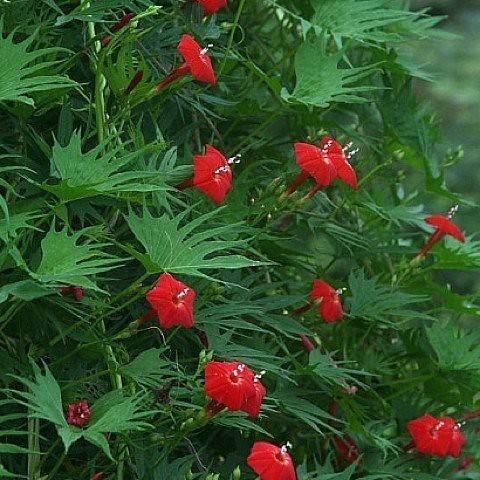
Cardinal climber is a sterile interspecific hybrid between Ipomoea quamoclit (cypress vine) and Ipomoea coccinea (red morning glory), developed for its prolific, vivid blooms and vigorous climbing habit. Its deeply lobed, lacy green foliage provides a delicate contrast to the 1-2 inch wide, nectar-rich red flowers that open from early summer until the first frost. As a sterile cultivar, it does not self-seed aggressively like many other morning glory relatives, reducing risk of unwanted spread in garden settings.
Care Guide
Watering
Water cardinal climber regularly, providing 1 inch of water per week, and allow the top 1-2 inches of soil to dry out between waterings to prevent root rot. Established plants have mild drought tolerance, but consistent moisture supports steady growth and abundant blooming, while prolonged soggy soil will cause foliage yellowing and stunted development. Avoid overhead watering to reduce fungal disease risk, directing water at the base of the plant instead.
Light
Grow cardinal climber in full sun, defined as at least 6 hours of direct, unfiltered sunlight per day, to maximize flower production and promote strong, sturdy growth. Plants grown in partial shade will produce fewer blooms, develop leggy, weak stems that struggle to support climbing, and are more susceptible to pest infestations. In extremely hot, arid climates, light afternoon shade can prevent foliage scorch without significantly reducing flowering.
Soil
Cardinal climber adapts to most well-drained garden soil types, but thrives in loamy, fertile soil with a neutral to slightly acidic pH between 6.0 and 7.0. Heavy clay soils that retain excess moisture should be amended with compost, perlite, or aged manure to improve drainage before planting, as standing water will quickly damage the plant’s shallow root system. Poor, sandy soils can be amended with organic matter to boost nutrient content and support faster establishment.
Fertilizer
Fertilize cardinal climber once per month during the active growing season with a balanced, water-soluble 10-10-10 fertilizer diluted to half strength to avoid overfeeding. Avoid high-nitrogen fertilizers, as these will promote lush foliage growth at the expense of flower production, reducing the plant’s ornamental value. Cease fertilization entirely in late summer as the plant begins to wind down growth in preparation for fall frost.
Temperature
Cardinal climber is a warm-season annual that grows best in temperatures between 65°F and 85°F (18°C and 29°C), and will not tolerate frost or prolonged temperatures below 50°F (10°C). Plant seedlings outdoors only after all risk of spring frost has passed, as even a light freeze will kill young plants instantly. In regions with short growing seasons, start seeds indoors 4-6 weeks before the last expected frost date to give the vine a head start on growth.
Pruning
Cardinal climber requires minimal pruning, but you can trim back overgrown, leggy stems in mid-summer to encourage bushier, more compact growth and stimulate additional flower production. Remove any yellowed, diseased, or damaged foliage as soon as it appears to improve air circulation around the plant and reduce the risk of pest and disease spread. At the end of the growing season, pull up and discard the entire plant after frost kills the foliage, as it will not regrow the following year.
Propagation
Cardinal climber is propagated exclusively from seed, as it is a sterile hybrid that does not produce viable offshoots or root easily from cuttings. Nick the hard outer seed coat with a file or soak seeds in warm water for 24 hours before planting to improve germination rates, then sow seeds 1/4 inch deep in moist soil either directly outdoors after frost or in indoor seed trays. Germination typically occurs within 7-14 days when soil temperatures are kept between 70°F and 75°F (21°C and 24°C).
Humidity
Cardinal climber tolerates a wide range of humidity levels, growing well in average outdoor humidity between 40% and 70% with no special adjustments required. High humidity combined with poor air circulation can increase the risk of fungal leaf spots and powdery mildew, so ensure plants are spaced properly and have access to consistent airflow. Very low humidity below 30% may cause leaf edges to brown, though mature plants usually recover quickly once moisture levels return to normal.
Repotting
Cardinal climber is rarely grown in containers long-term, but if planted in pots, repotting is typically unnecessary for its single growing season, as annuals complete their lifecycle within one year. If roots begin growing out of the drainage holes or the plant becomes root-bound mid-season, transplant to a container one size larger using fresh, well-drained potting mix, taking care not to damage the delicate root system during the process. At the end of the growing season, discard the potted plant and refresh the soil for use the following year.
Uses & Symbolism
Cardinal climber is primarily grown as an ornamental vine to cover trellises, arbors, fences, and garden obelisks, adding vertical interest and vibrant seasonal color to landscape designs. Its nectar-rich flowers are highly attractive to hummingbirds, butterflies, and native pollinators, making it a popular addition to pollinator gardens and wildlife-friendly landscapes. The vine can also be grown in large containers with a supporting trellis for use on patios, balconies, or other small outdoor spaces where in-ground planting is not possible.
Diseases & Pests
Cardinal climber is relatively pest-resistant, but may be affected by common garden pests including aphids, spider mites, and whiteflies, which can be controlled with insecticidal soap or neem oil sprays applied at the first sign of infestation. Fungal diseases such as powdery mildew and leaf spot may occur in high-humidity conditions or when foliage remains wet for extended periods, and can be prevented by ensuring proper air circulation and avoiding overhead watering. Root rot is a common issue in poorly drained, soggy soil, so amending heavy soil before planting and following appropriate watering schedules is critical to preventing this fatal condition.
Related plants
Other plants you might like if you grow Cardinal Climber.