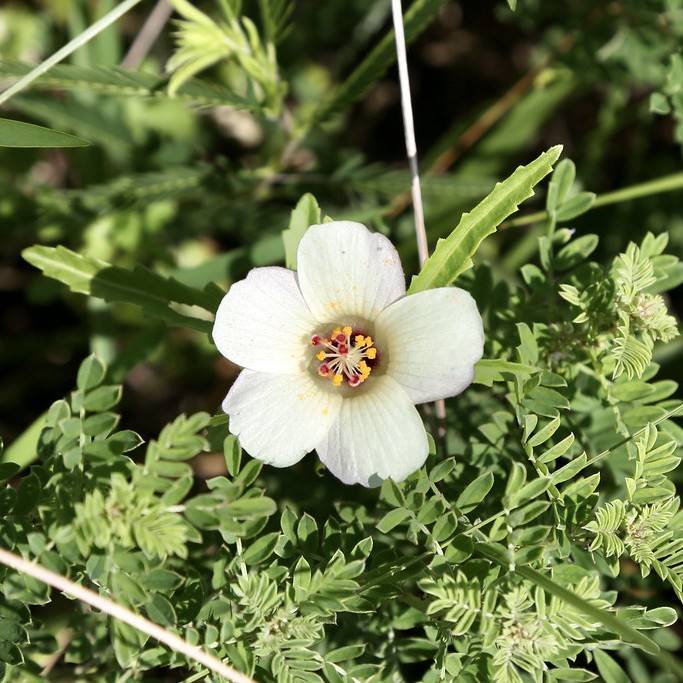
Flower Of An Hour
Hibiscus trionum
Overview
Flower of an hour, also called bladder hibiscus, gets its common name from its short-lived, cup-shaped flowers that open for just a single day, typically in bright morning sun. It forms a compact, bushy habit with lobed, slightly fuzzy green foliage, and after blooming, develops swollen, translucent seed pods that resemble small bladders, adding ornamental interest long after flowers fade. It self-seeds readily in favorable conditions, often naturalizing in disturbed areas and garden edges without becoming invasive.
Care Guide
Watering
Water flower of an hour regularly to keep soil evenly moist but not waterlogged, especially during hot, dry periods; established plants have mild drought tolerance, but consistent moisture supports better blooming. Avoid overhead watering to reduce risk of foliar fungal issues, directing water to the base of the plant instead. Reduce watering once seed pods begin to form, as the plant nears the end of its annual lifecycle.
Light
Grow flower of an hour in full sun, which encourages maximum bloom production and a compact, sturdy growth habit; it will tolerate partial shade, but flowering will be reduced and stems may become leggy. Choose a location that receives at least 6 hours of direct, unfiltered sunlight per day for optimal performance. Morning sun is particularly beneficial, as it dries dew from foliage quickly to prevent disease.
Soil
Flower of an hour adapts well to a wide range of well-drained soil types, from sandy loam to average garden soil, with a preferred neutral to slightly alkaline pH between 6.0 and 7.5. It tolerates poor, low-nutrient soil better than many ornamental annuals, but will grow more vigorously in moderately fertile soil. Avoid heavy, clay-heavy soils that retain standing water, as this can cause root rot in young plants.
Fertilizer
Fertilize sparingly, as excessive nitrogen will promote lush foliage growth at the expense of flowers; a light application of balanced, all-purpose granular fertilizer at planting time is usually sufficient for the entire growing season. If grown in very poor, nutrient-depleted soil, apply a diluted liquid bloom-booster fertilizer once at the start of the flowering period. Do not fertilize after mid-summer, as this can delay seed pod development and reduce the plant’s natural self-seeding ability.
Temperature
Flower of an hour thrives in warm summer temperatures between 65 and 85°F (18 and 29°C), and is highly tolerant of high heat and humidity once established. It is frost-sensitive, and will die back immediately if exposed to temperatures below 32°F (0°C), so plant outdoors only after all risk of spring frost has passed. It can tolerate cool spring temperatures as low as 50°F (10°C) during its early seedling stage, but growth will be slow until conditions warm.
Pruning
Pruning is rarely required for flower of an hour, though you can pinch back young seedlings by 1/3 when they reach 4 inches tall to encourage bushier, more branched growth and more flower buds. Deadhead spent blooms regularly if you want to prevent self-seeding, or leave spent flowers in place to allow decorative seed pods to develop. At the end of the growing season, pull up and discard entire plants once they have died back from frost to keep garden beds tidy.
Propagation
Flower of an hour is most easily propagated from seed, which can be sown directly outdoors in prepared garden soil after the last frost, or started indoors 4 to 6 weeks before the last expected frost for earlier blooms. Seeds do not require stratification, but soaking them in warm water for 24 hours before sowing will speed up germination, which typically occurs in 7 to 14 days at temperatures between 70 and 75°F (21 and 24°C). Self-sown seedlings will often emerge in the same location year after year, and can be easily transplanted when small to desired garden spots.
Humidity
Flower of an hour tolerates a wide range of humidity levels, from dry inland climates to humid coastal regions, with no special humidity requirements for healthy growth. High humidity combined with poor air circulation can increase risk of fungal leaf spots, so space plants 12 to 18 inches apart to allow for good airflow around foliage. It does not require misting or supplemental humidity, even in very dry environments.
Repotting
As an annual plant, flower of an hour is rarely repotted; if grown in containers, plant it in its final pot at the start of the growing season to avoid disturbing its root system mid-growth. Choose a container with drainage holes that is at least 6 inches deep to accommodate its taproot, and use a well-drained potting mix. Container-grown plants will complete their entire lifecycle in one growing season, and can be discarded after frost kills the foliage.
Uses & Symbolism
Flower of an hour is commonly grown as a low-maintenance ornamental annual in cottage gardens, border edges, wildflower meadows, and container displays, valued for its delicate short-lived blooms and unique papery seed pods. Its dried seed pods are often used in cut flower arrangements and crafts for their unusual, translucent texture and rounded shape. Historically, the plant has been used in traditional folk medicine in its native range to treat minor skin irritations and digestive complaints, though it is not widely used medicinally today.
Diseases & Pests
Flower of an hour is relatively pest and disease resistant, but may be susceptible to common hibiscus pests including aphids, whiteflies, and spider mites, which can be controlled with insecticidal soap or neem oil sprays. Fungal diseases such as leaf spot and rust may occur in overly wet, poorly ventilated conditions, which can be prevented by avoiding overhead watering and providing adequate spacing between plants. Root rot may develop in heavy, waterlogged soil, so ensure proper drainage at planting time to avoid this issue.
Related plants
Other plants you might like if you grow Flower Of An Hour.