Common Sunflower
Helianthus annuus
Overview
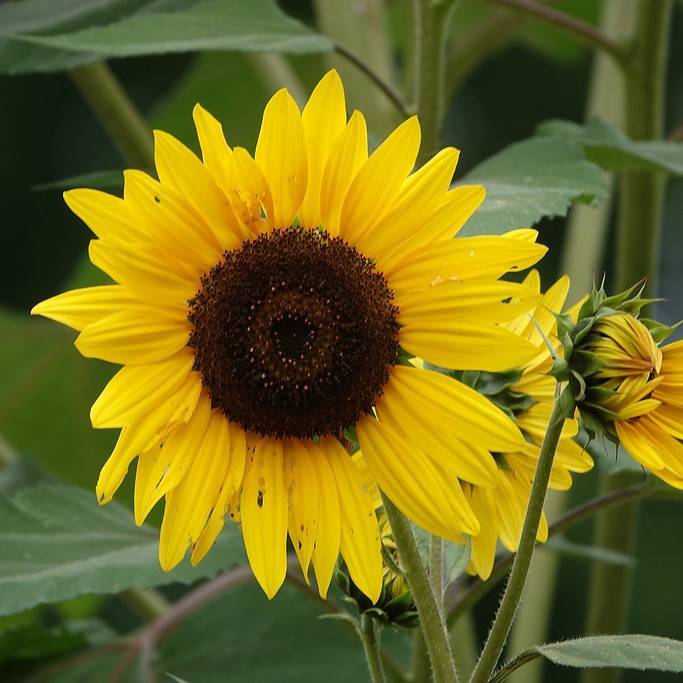
The common sunflower is a globally cultivated annual native to North America, recognizable by its broad, rough-textured leaves and iconic daisy-like flower heads with yellow ray petals surrounding a dark central disk of tiny florets. Young flower heads exhibit heliotropism, tracking the sun across the sky from east to west before fixing in an east-facing position as they mature. Cultivated varieties are grown for edible seeds, oil production, ornamental use, and as a pollinator support plant in gardens and agricultural landscapes.
Care Guide
Watering
Water sunflowers deeply once per week, providing 1 to 1.5 inches of water to encourage robust root development that supports their tall, heavy stems. Reduce watering frequency once flower heads form, as excess moisture can cause root rot or weaken stems in windy conditions. Avoid overhead watering to minimize the risk of foliar fungal diseases.
Light
Common sunflowers require full, direct sunlight for a minimum of 6 to 8 hours per day to thrive and produce large, healthy flower heads. Insufficient light will lead to stunted growth, weak stems, and small, underdeveloped blooms. Plant them in a location with unobstructed southern exposure for best results.
Soil
Sunflowers adapt to most well-drained soil types, but perform best in loamy, nutrient-rich soil with a pH between 6.0 and 7.5. They tolerate poor, sandy or clay soils as long as standing water is not present, as waterlogged conditions will quickly cause root rot. Amend heavy or low-nutrient soil with compost or well-rotted manure before planting to boost fertility.
Fertilizer
Fertilize sunflowers sparingly at planting time with a balanced, slow-release fertilizer mixed into the top 6 inches of soil. Avoid high-nitrogen fertilizers, as they will encourage excessive leaf growth at the expense of flower and seed production. Potted dwarf varieties may benefit from a diluted liquid phosphorus-rich fertilizer once per month during the growing season.
Temperature
Common sunflowers thrive in warm temperatures between 70 and 78°F (21 and 26°C), and can tolerate daytime highs up to 90°F (32°C) as long as soil moisture is adequate. They are frost-sensitive, and seeds will not germinate until soil temperatures reach a minimum of 55°F (13°C). Mature plants can survive light, short-duration frosts, but hard freezes will kill the foliage and stop seed development.
Pruning
Pruning is generally unnecessary for standard sunflower varieties, but you can remove damaged or yellowing lower leaves to improve air circulation and reduce disease risk. For branching ornamental varieties, pinch back the main growing tip when the plant is 1 to 2 feet tall to encourage more side shoots and a greater number of smaller flower heads. After blooms fade, you can cut spent flower heads to encourage additional blooming in branching types, or leave them intact to allow seeds to mature for harvest or wildlife food.
Propagation
Common sunflowers are almost exclusively propagated from direct-sown seed, as their long taproots make transplanting difficult and often stunt growth. Sow seeds 1 to 2 inches deep in prepared soil after all danger of frost has passed, spacing seeds 6 to 12 inches apart for dwarf varieties and 18 to 36 inches apart for tall, standard varieties. Seeds will germinate in 7 to 10 days under warm, moist conditions, and no pre-treatment is required for good germination rates.
Humidity
Common sunflowers tolerate a wide range of humidity levels, growing well in both arid and moderately humid climates as long as air circulation is good. High humidity combined with warm temperatures and poor air flow increases the risk of powdery mildew and other fungal foliar diseases. They do not require supplemental humidity, even when grown as short-term potted houseplants.
Repotting
Repotting is rarely needed for sunflowers, as most varieties grow best when directly sown in the ground. If growing dwarf varieties in containers, start them in a pot at least 12 inches deep to accommodate their taproot, and avoid repotting once the plant is 6 inches tall to prevent root damage. If you must transplant a potted sunflower, do so carefully to keep the root ball intact, and water thoroughly after transplanting to reduce shock.
Uses & Symbolism
Common sunflowers are commercially cultivated for their edible seeds, which are eaten raw, roasted, or pressed to produce sunflower oil, a popular cooking oil high in unsaturated fats. Ornamental varieties, including dwarf and multi-colored cultivars, are grown in gardens for their bright blooms, cut flower arrangements, and to support pollinators such as bees and butterflies. Farmers also plant sunflowers as cover crops to improve soil health, reduce erosion, and provide forage for livestock and wild birds.
Diseases & Pests
Common sunflowers are susceptible to fungal diseases including powdery mildew, downy mildew, and rust, which thrive in wet, humid conditions with poor air circulation. Common pests include aphids, sunflower beetles, and caterpillars, which feed on leaves and flower heads, while birds and squirrels often target maturing seed heads. Root rot can occur in waterlogged soil, especially in heavy clay soils with poor drainage.
Related plants
Other plants you might like if you grow Common Sunflower.