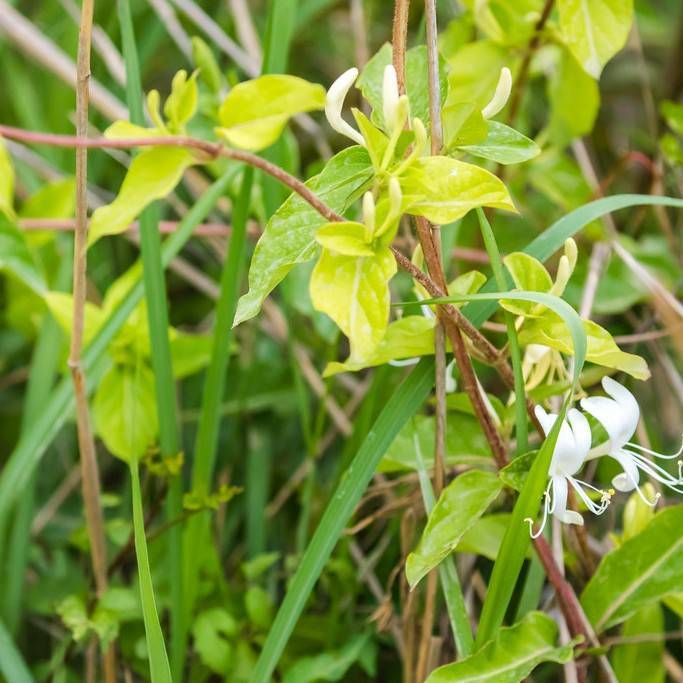
Hedge Bindweed
Calystegia sepium
Overview
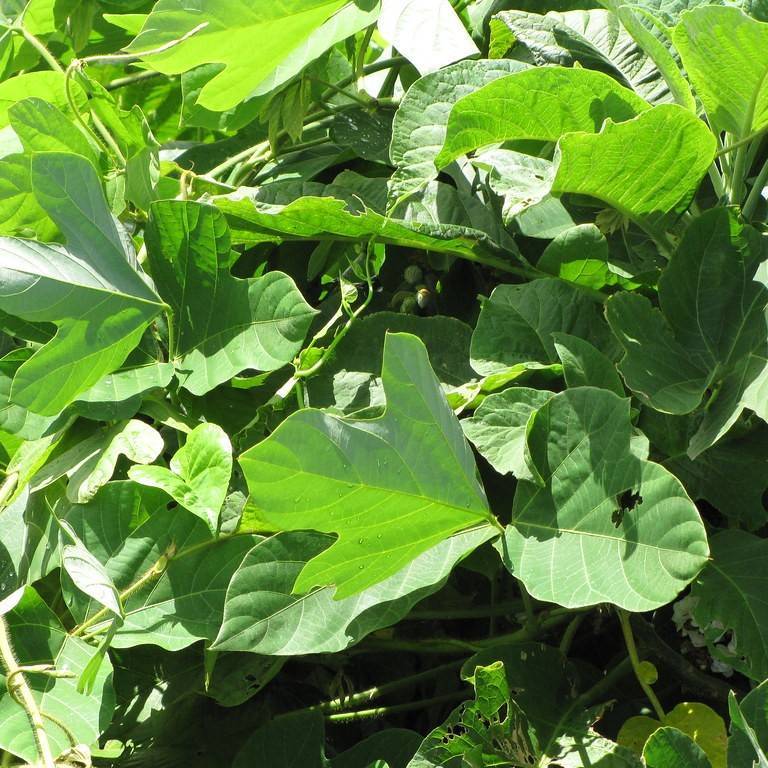
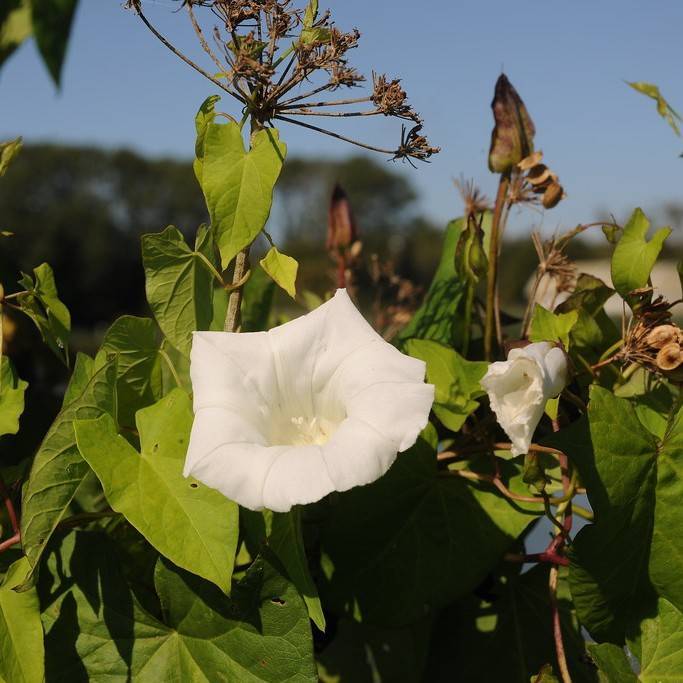
Hedge Bindweed, sometimes confused with field bindweed, is a twining herbaceous perennial that climbs over shrubs, fences, and other vegetation using its coiling stems. It produces large, showy white or pale pink trumpet-shaped flowers that open in the morning and close by late afternoon, blooming from early summer to early fall. While frequently classified as an invasive weed in agricultural and garden settings due to its aggressive rhizomatous spread, it provides a valuable nectar source for bees, butterflies, and hummingbirds in naturalized areas.
Care Guide
Watering
Hedge Bindweed is highly drought-tolerant once established, thriving in average rainfall conditions without supplemental irrigation in its native range. It can survive extended dry periods, though consistent moisture will support more vigorous growth and abundant flowering. Overwatering or waterlogged soil can cause root rot, so it is best to avoid poorly drained sites.
Light
This plant grows best in full sun, where it produces the most abundant flowers and sturdiest growth. It can tolerate partial shade, but flowering will be reduced and stems may become leggy as they stretch toward brighter light. It will grow in deeply shaded areas but will rarely bloom and spread more slowly.
Soil
Hedge Bindweed adapts to nearly any soil type, from sandy and gravelly to heavy clay, as long as drainage is adequate. It prefers a neutral to slightly alkaline pH but can tolerate mildly acidic conditions as well. It is often found in disturbed soils, roadsides, field edges, and riparian areas, demonstrating its low soil quality tolerance.
Fertilizer
This species does not require fertilization, as it thrives in low-nutrient soils and excessive nitrogen will only encourage faster, more aggressive vegetative spread that can outcompete neighboring plants. If grown intentionally in a controlled landscape, a single light application of balanced, slow-release fertilizer in early spring is sufficient to support growth. Avoid fertilizing areas where it is growing as a weed, as this will make eradication more difficult.
Temperature
Hedge Bindweed is cold-hardy in USDA zones 3 through 9, tolerating winter temperatures as low as -40°F (-40°C) as its underground rhizomes go dormant during cold months. It grows actively when air temperatures are between 60°F and 85°F (15°C and 29°C), and foliage will die back to the ground after the first hard frost in fall. It can withstand high summer temperatures above 90°F (32°C) as long as it has access to some moisture.
Pruning
If grown intentionally, prune back sprawling stems in late fall after foliage dies back to keep the vine contained to its intended support structure. Regular trimming of new growth during the growing season will prevent it from spreading to adjacent plants or areas where it is unwanted. To eradicate it as a weed, repeatedly cut stems to the ground to deplete rhizome energy reserves, as pulling stems often leaves broken rhizome fragments that regrow.
Propagation
Hedge Bindweed propagates primarily through its extensive, deep rhizome system, with small fragments of rhizome as short as 1 inch able to produce new plants. It also produces seed pods after flowering, with seeds that can remain viable in soil for up to 30 years before germinating. For intentional propagation, divide rhizomes in early spring before new growth emerges, and plant segments at the desired location at a depth of 2 to 3 inches.
Humidity
This vine tolerates a wide range of humidity levels, from dry continental climates to humid coastal environments, with no specific humidity requirements. It grows equally well in arid regions with average humidity below 40% and in humid areas with summer humidity above 70%, as long as soil drainage is good. High humidity combined with poor air circulation can increase the risk of fungal leaf spots, though this is rarely a serious issue for the hardy plant.
Repotting
Hedge Bindweed is rarely grown in containers due to its aggressive spreading root system, but if potted, it will require repotting every 1 to 2 years in early spring to prevent roots from becoming pot-bound. Use a standard all-purpose potting mix with added perlite for drainage, and choose a deep container to accommodate its long rhizomes. When repotting, trim back excess rhizome growth to keep the plant contained and prevent it from outgrowing its pot quickly.
Uses & Symbolism
In wild and naturalized landscapes, Hedge Bindweed provides a valuable nectar source for native pollinators including bumblebees, solitary bees, and hummingbirds, supporting local ecosystem health. Historically, some Indigenous North American communities used small, prepared doses of the plant medicinally as a laxative and to treat urinary tract issues, though its toxicity makes internal use unsafe without expert preparation. Its fast-growing twining vines can be used as a temporary, fast-spreading ground cover for erosion control on disturbed, unused sites where other plants struggle to establish.
Diseases & Pests
Hedge Bindweed is relatively resistant to most pests and diseases, though it can occasionally be affected by fungal leaf spots and powdery mildew in conditions of high humidity and poor air circulation. Common garden pests including aphids and spider mites may feed on young foliage, but infestations are rarely severe enough to cause significant damage to the vigorous plant. The bindweed gall mite, Aceria malherbae, is sometimes used as a biological control agent to reduce invasive bindweed populations, as it causes gall formation on stems and buds that stunts growth and reduces flowering.
Related plants
Other plants you might like if you grow Hedge Bindweed.