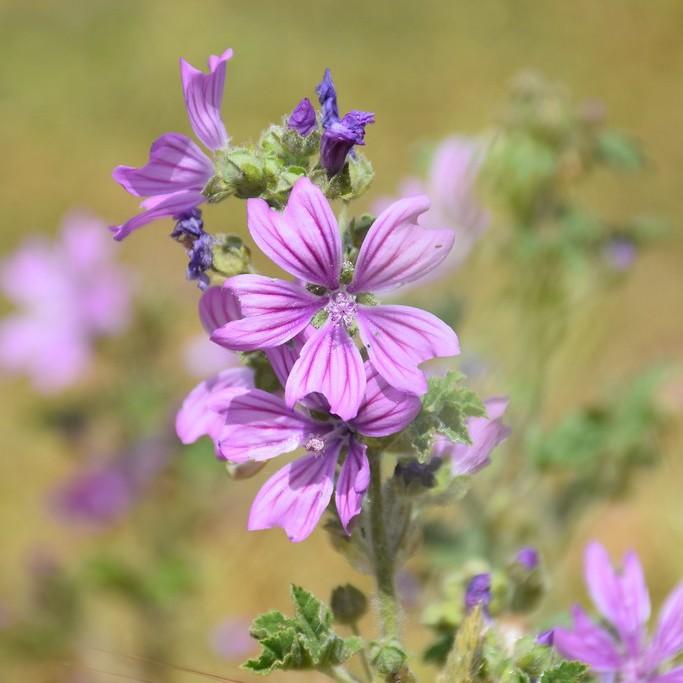
High Mallow
Malva sylvestris
Overview
High mallow, also called common mallow, is a vigorous upright biennial that produces clusters of 5-petaled, mauve to deep purple flowers marked with darker veins from early summer to early fall. Its rounded, lobed leaves have a soft, fuzzy texture, and the plant self-seeds readily, often naturalizing in meadows, roadsides, and cottage garden borders. It has a long history of use in herbalism, with all parts of the plant harvested for their soothing, anti-inflammatory properties.
Care Guide
Watering
Water high mallow regularly during its first growing season to keep the soil consistently moist but not waterlogged, helping it establish a strong root system. Once established, it is moderately drought tolerant, only requiring supplemental water during extended periods of hot, dry weather. Avoid overhead watering to reduce the risk of fungal leaf spots, directing water at the base of the plant instead.
Light
High mallow thrives in full sun, which encourages the most abundant flowering and sturdy, upright growth that does not require staking. It can tolerate partial shade, though plants grown in shadier conditions may become leggy and produce fewer blooms. In regions with extremely hot summer sun, light afternoon shade can prevent leaf scorch and extend the flowering period.
Soil
This adaptable plant grows well in most well-drained soil types, including loam, sandy soil, and even poor, compacted soil that other plants struggle in. It prefers a neutral to slightly alkaline pH between 6.0 and 8.0, but can tolerate mildly acidic conditions as well. Amending heavy clay soil with compost or sand to improve drainage will prevent root rot, the most common issue with poorly drained growing medium.
Fertilizer
High mallow does not require heavy fertilization, as overly rich soil can lead to excessive foliage growth at the expense of flowers. A light application of balanced, all-purpose granular fertilizer in early spring, as new growth emerges, is sufficient for the entire growing season. If growing in very poor soil, you can apply a diluted liquid fertilizer once mid-summer to support continued blooming, but avoid fertilizing after late summer to prevent tender new growth that is vulnerable to frost damage.
Temperature
High mallow is cold hardy in USDA zones 4 through 8, tolerating winter temperatures as low as -30°F (-34°C) when established. It prefers moderate growing temperatures between 60°F and 80°F (15°C to 27°C), and will go dormant and die back to the ground after the first hard frost in fall. In regions with very hot, humid summers, it may stop blooming temporarily during the hottest months, resuming flowering once temperatures cool in early fall.
Pruning
Deadhead spent flower clusters regularly throughout the blooming season to encourage continuous flower production and prevent unwanted self-seeding if you wish to limit its spread. At the end of the growing season, cut back the entire plant to 2-3 inches above the soil line after it dies back from frost, to tidy the garden and reduce overwintering pest habitat. If plants become leggy mid-season, you can cut them back by one-third to promote bushier, more compact growth.
Propagation
High mallow is most easily propagated from seed, which can be sown directly outdoors in fall for spring germination, or started indoors 6-8 weeks before the last expected frost date. Seeds require no stratification, and will germinate in 10-21 days when kept at temperatures between 65°F and 75°F (18°C to 24°C). You can also take softwood cuttings from young, healthy stems in late spring, rooting them in moist potting mix under indirect light for 3-4 weeks before transplanting.
Humidity
High mallow is adaptable to a wide range of humidity levels, thriving in the moderate humidity of its native temperate range without extra intervention. It can tolerate low humidity conditions as long as its water needs are met, and also handles high humidity well, as long as it is planted in well-drained soil and has good air circulation around its foliage. Prolonged periods of very high humidity combined with poor air flow can increase the risk of fungal diseases, so space plants 18-24 inches apart to allow for ventilation.
Repotting
High mallow is rarely grown in containers long-term, as it develops a deep taproot that requires ample space to grow. If growing in a pot, choose a deep container at least 12 inches wide and deep to accommodate its root system, and use a well-drained potting mix. Repot only if the plant becomes root bound, which is indicated by roots growing out of the drainage holes or stunted growth, moving it to a container one size larger in early spring before new growth begins.
Uses & Symbolism
High mallow is a popular addition to cottage gardens, wildflower meadows, and pollinator gardens, as its nectar-rich flowers attract bees, butterflies, and hummingbirds throughout the blooming season. All parts of the plant are edible: the young leaves can be added to salads or cooked like spinach, the flowers are used as a decorative garnish, and the roots, leaves, and flowers are used in herbal remedies to soothe sore throats, reduce inflammation, and treat minor skin irritations. It is also sometimes planted as a low-maintenance ground cover on slopes or in disturbed areas, as its deep root system helps prevent soil erosion.
Diseases & Pests
High mallow is relatively pest and disease resistant, though it can be susceptible to fungal issues like rust, leaf spot, and powdery mildew in conditions of high humidity and poor air circulation. Common pests include aphids, spider mites, and Japanese beetles, which feed on the leaves and flower buds; these can be controlled with insecticidal soap, neem oil, or by introducing beneficial predators like ladybugs. Root rot can occur if the plant is grown in heavy, poorly drained soil, so ensuring proper drainage is the best prevention for this issue.
Related plants
Other plants you might like if you grow High Mallow.