Common Evening Primrose
Oenothera biennis
Overview
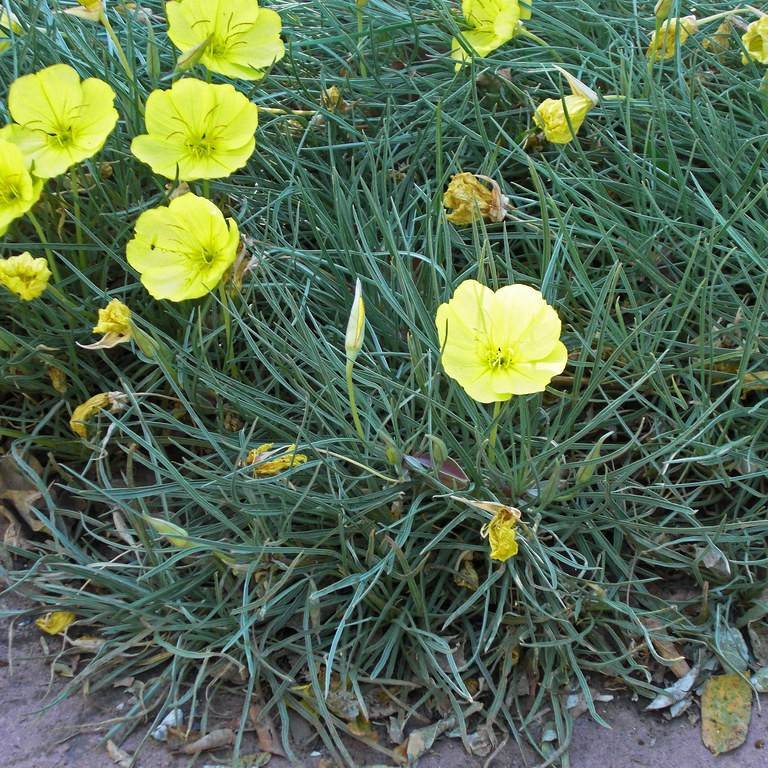
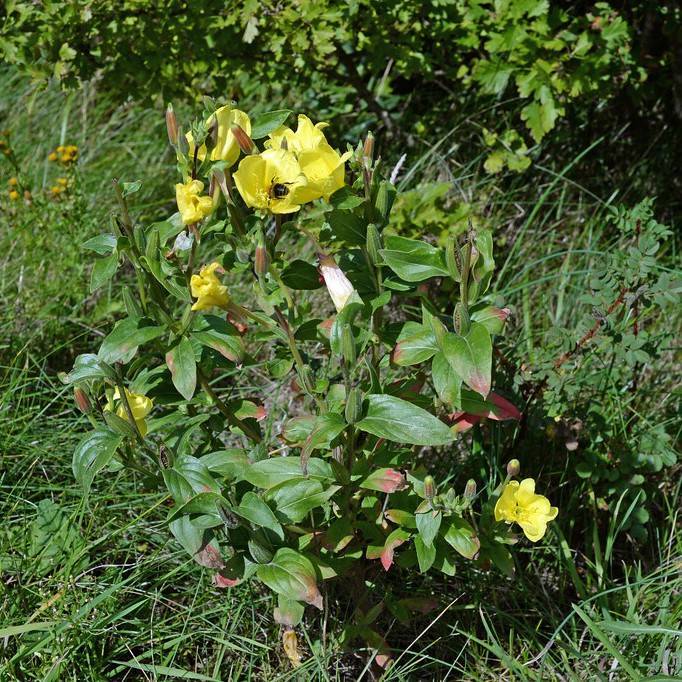
Common evening primrose is a recognizable biennial that forms a low rosette of fuzzy, lance-shaped leaves in its first year, then sends up a tall, branching flower stalk in its second growing season. Its cup-shaped, lemon-scented yellow flowers unfurl rapidly at dusk, attracting nocturnal pollinators like moths, and close by midday the following day. The plant naturalizes readily in disturbed areas, meadows, and roadside verges, and has become naturalized in parts of Europe, Asia, and Australia beyond its native North American range.
Care Guide
Watering
Water young plants regularly to keep soil consistently moist but not waterlogged, as established plants are highly drought-tolerant and only require supplemental water during extended periods of extreme heat or dryness. Avoid overhead watering to reduce risk of foliar diseases, directing water at the base of the plant instead. Reduce watering frequency in the fall as the plant prepares to go dormant in its first year, or as seed production concludes in its second year.
Light
Common evening primrose thrives in full, direct sunlight, requiring a minimum of 6 hours of unobstructed sun per day to produce abundant blooms and sturdy, upright stalks. It can tolerate partial shade, but plants grown in shadier conditions will have weaker, leggy growth and produce significantly fewer flowers. Ensure it is planted in an open, unshaded spot to support its full growth potential.
Soil
This adaptable plant grows well in a wide range of soil types, including sandy, loamy, and even poor, gravelly soils, as long as the site has excellent drainage. It prefers a neutral to slightly acidic soil pH between 6.0 and 7.5, but can tolerate slightly alkaline conditions as well. Heavy, waterlogged clay soils will cause root rot, so amend heavy sites with sand or organic matter to improve drainage before planting.
Fertilizer
Common evening primrose rarely requires fertilization, as it thrives in low-nutrient soils and excessive nitrogen will lead to lush foliage growth at the expense of flowers. If planted in extremely poor, nutrient-depleted soil, apply a balanced, slow-release 10-10-10 fertilizer sparingly in early spring of the plant’s second year, just as the flower stalk begins to emerge. Avoid high-nitrogen fertilizers entirely to prevent weak, floppy growth.
Temperature
It is hardy in USDA zones 3 through 9, tolerating winter temperatures as low as -40°F (-40°C) in its first-year rosette stage. It grows best in average summer temperatures between 65°F and 85°F (18°C to 29°C), and can tolerate short periods of extreme heat above 95°F (35°C) if soil moisture is adequate. Frost will kill back second-year plants after they have produced seed, while first-year rosettes are fully cold-hardy and will overwinter successfully.
Pruning
Pruning is generally minimal for common evening primrose; spent flowers can be deadheaded regularly to encourage additional blooming throughout the summer and prevent unwanted self-seeding. If self-seeding is not desired, cut back the entire flower stalk to the ground after blooming concludes in late summer, before seed pods mature and split open to release their seeds. Remove any damaged or yellowed leaves from the first-year rosette in late fall to reduce overwintering pest and disease habitat.
Propagation
Common evening primrose is most easily propagated from seed, which can be sown directly outdoors in fall or early spring, as the seeds require a period of cold stratification to germinate successfully. Surface-sow seeds, as they need light to germinate, and keep the soil moist until seedlings emerge, which typically takes 2 to 4 weeks at temperatures between 60°F and 70°F (15°C to 21°C). It self-seeds prolifically in ideal conditions, so volunteer seedlings can be transplanted to new locations in early spring before they become established.
Humidity
This plant is highly adaptable to a wide range of humidity levels, thriving in both dry and moderately humid climates with no special humidity requirements. It does not tolerate persistently high, stagnant humidity, which can increase the risk of fungal leaf spots and powdery mildew on foliage. Ensure plants are spaced 1 to 2 feet apart to promote good air circulation, which reduces humidity around the leaves and prevents disease development.
Repotting
Common evening primrose is almost exclusively grown outdoors in garden beds, so repotting is rarely necessary for landscape plants. If grown in containers, use a well-draining potting mix and a pot with ample drainage holes, and repot only if the first-year rosette outgrows its current container before the second growing season. Second-year plants will die back after seeding, so they do not require repotting in their second year of growth.
Uses & Symbolism
Common evening primrose is widely planted in wildflower gardens, pollinator gardens, and naturalized meadows to support nocturnal moths, bees, and hummingbird moths, and its dried seed heads provide food for small songbirds in fall and winter. Its pressed seed oil is a popular herbal supplement rich in gamma-linolenic acid (GLA), used to support skin health, reduce premenstrual symptoms, and ease inflammation. The young leaves and roots are edible, with a mild, peppery flavor, and can be consumed raw in salads or cooked as a potherb.
Diseases & Pests
Common evening primrose is relatively pest and disease resistant, but can be susceptible to fungal diseases like powdery mildew and leaf spot in humid, poorly ventilated conditions, which can be prevented by ensuring proper spacing and avoiding overhead watering. Aphids and spider mites may occasionally infest new growth, particularly in dry, hot weather, and can be controlled with a strong spray of water or insecticidal soap. Root rot may occur in heavy, poorly draining soils, so amending planting sites to improve drainage is critical to prevent this fatal condition.
Related plants
Other plants you might like if you grow Common Evening Primrose.