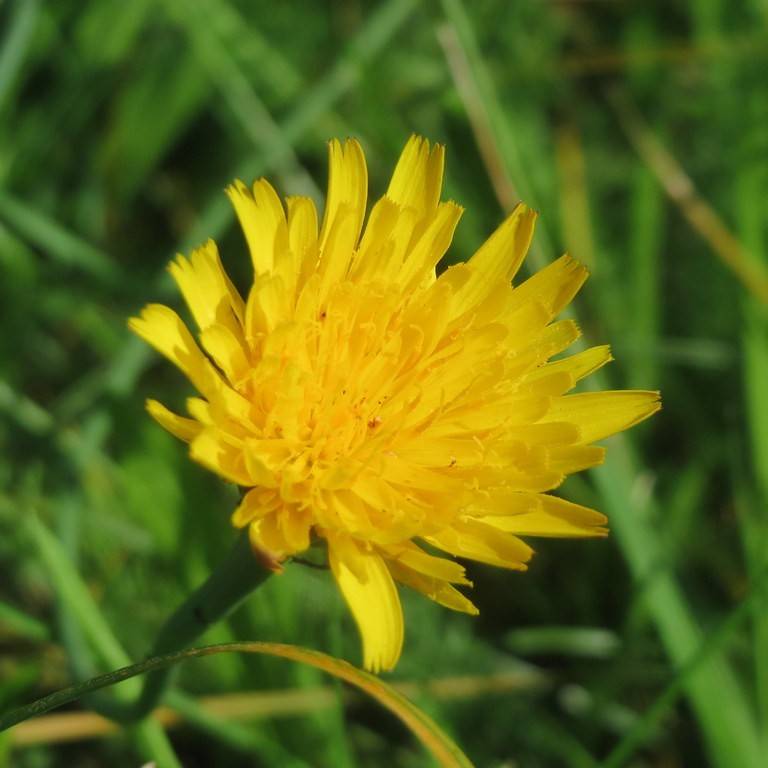
False Dandelion
Hypochaeris radicata
Overview
False dandelion, also called hairy cat's ear, is distinguished from true dandelion by its fuzzy, lobed basal leaves and branching, leafless flower stalks that bear multiple bright yellow composite blooms. It has naturalized across North America, Australia, and parts of South America, where it thrives in full-sun, disturbed soils. Though often classified as a weed, it supports native pollinators including bees and butterflies throughout its growing season.
Care Guide
Watering
False dandelion is highly drought-tolerant, requiring only occasional rainfall or irrigation in well-drained soils; overwatering can lead to root rot, especially in compacted or poorly draining sites. It survives extended dry periods by storing moisture in its deep taproot, and rarely needs supplemental watering in regions with regular seasonal precipitation. Avoid overwatering container-grown specimens, allowing the top 2 inches of soil to dry out fully between waterings.
Light
This species thrives in full, direct sunlight, requiring a minimum of 6 hours of unfiltered light daily to produce abundant blooms and healthy foliage. It can tolerate partial shade, but will produce fewer flowers and develop leggy, stretched growth in low-light conditions. For indoor cultivation, place it in a south-facing window or under grow lights that provide full-spectrum illumination for 8 to 10 hours per day.
Soil
False dandelion adapts to nearly any well-drained soil type, including sandy, loam, clay, and nutrient-poor disturbed soils such as those found in construction sites or roadside edges. It prefers a neutral to slightly acidic pH range between 6.0 and 7.5, but can tolerate slightly alkaline conditions as well. Heavy, waterlogged soils are the only unsuitable growing medium, as they cause rapid decay of the plant's deep taproot.
Fertilizer
This low-maintenance plant rarely requires fertilization, as it extracts sufficient nutrients from even poor-quality soils. If grown in a container for ornamental or culinary use, apply a balanced, all-purpose liquid fertilizer diluted to half strength once every 4 to 6 weeks during the active growing season. Avoid over-fertilizing, as this will promote excessive leaf growth at the expense of flower production, and may reduce the plant's natural hardiness.
Temperature
False dandelion grows best in temperate climates with average temperatures between 60 and 80°F (15 and 27°C) during its active spring and summer growing period. It is winter-hardy in USDA zones 3 through 9, dying back to the ground after hard frosts and re-sprouting from its taproot the following spring. Prolonged temperatures above 90°F (32°C) may cause temporary wilting, but the plant will recover once cooler conditions return, provided its root zone remains intact.
Pruning
Pruning is rarely required for false dandelion, though you can remove spent flower stalks after blooming to prevent unwanted self-seeding if you wish to limit its spread in garden beds. To remove the plant entirely, dig up the entire taproot, as broken root segments left in the soil will re-grow into new plants. If grown for edible foliage, harvest outer leaves regularly to encourage the production of new, tender growth at the center of the rosette.
Propagation
False dandelion propagates readily from seed, which is dispersed by wind after flowers mature and develop fluffy, dandelion-like seed heads. Collect seeds from dried flower heads in late summer or early fall, and sow them directly onto the surface of prepared soil in fall or early spring, as light is required for germination. It can also be propagated by root division in early spring, carefully cutting the taproot into 2-inch segments and planting each segment 1 inch deep in well-drained soil.
Humidity
This adaptable plant tolerates a wide range of humidity levels, from the dry air of arid regions to the high humidity of coastal temperate zones. It has no specific humidity requirements, and will thrive in average ambient humidity levels between 30 and 70 percent. Indoor-grown specimens do not require misting or additional humidity adjustments, even in heated or air-conditioned spaces.
Repotting
Container-grown false dandelion rarely needs frequent repotting, as its deep taproot prefers to be slightly root-bound. Repot only once every 2 to 3 years, moving the plant to a container that is 2 inches deeper and wider than its current pot to accommodate the taproot's downward growth. Use a well-drained, general-purpose potting mix, and avoid disturbing the root ball as much as possible during repotting to prevent transplant shock.
Uses & Symbolism
The young, tender leaves of false dandelion are edible, with a mild, slightly bitter flavor similar to true dandelion, and can be eaten raw in salads, sautéed as a green, or steeped to make herbal tea. Its deep taproot breaks up compacted soil and draws nutrients from deep in the subsoil, making it a useful dynamic accumulator in permaculture and no-till garden systems. It is also planted in pollinator gardens to provide a long-blooming nectar source for bees, butterflies, and other beneficial insects from spring through early fall.
Diseases & Pests
False dandelion is highly resistant to most pests and diseases, though it may occasionally be affected by powdery mildew in humid, poorly ventilated conditions, which presents as a white, fuzzy coating on the leaves. Root rot can occur in waterlogged, compacted soils, causing yellowing foliage and wilting that can kill the plant if drainage is not improved. Aphids and whiteflies may feed on young foliage in dense plantings, but can be controlled with a strong spray of water or insecticidal soap, and rarely cause significant long-term damage.
Related plants
Other plants you might like if you grow False Dandelion.