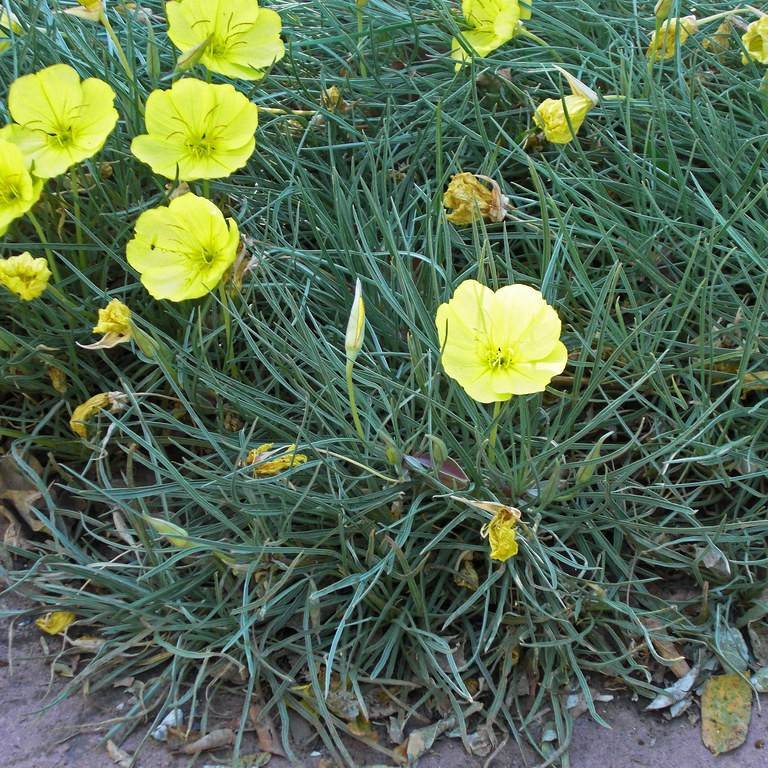
Evening Primrose
Oenothera biennis
Overview
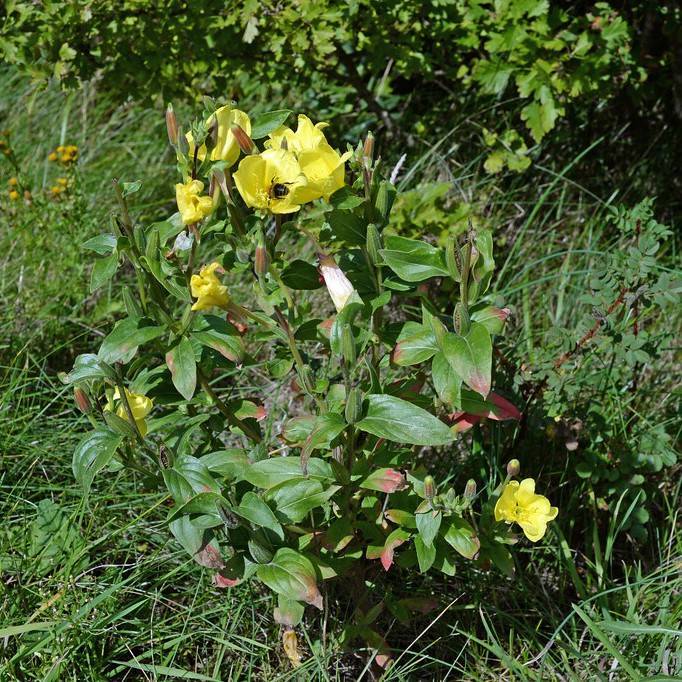
Evening primrose is a biennial plant that forms a low rosette of fuzzy, lance-shaped leaves in its first growing season, then sends up a tall, branching flower stalk in its second year. Its cup-shaped, soft yellow flowers open rapidly at dusk and close by midday the following day, releasing a sweet, heady fragrance that attracts nocturnal pollinators such as moths. The plant produces elongated, pod-like seed capsules that split open when mature to release hundreds of tiny, oil-rich seeds.
Care Guide
Watering
Evening primrose is highly drought-tolerant once established, requiring only occasional deep watering during extended periods of no rainfall; overwatering can lead to root rot, so allow the top several inches of soil to dry out completely between waterings. Young seedlings need consistent, light moisture to become established, but reduce watering frequency once the plant has developed a strong root system. Avoid wetting the foliage when watering to minimize the risk of fungal leaf diseases.
Light
This plant thrives in full, direct sunlight, requiring a minimum of 6 hours of unobstructed sun per day to produce abundant blooms and strong, upright stalks that do not require staking. It can tolerate partial shade, but flowering will be reduced, and stalks may become leggy and prone to flopping as they stretch toward available light. Plant in an open, south-facing location for best performance in temperate climates.
Soil
Evening primrose adapts to a wide range of soil types, including poor, sandy, or gravelly soils that are low in nutrients, as long as the site has excellent drainage. It prefers neutral to slightly acidic soil pH between 6.0 and 7.0, but can tolerate mildly alkaline conditions as well. Heavy, compacted clay soils that hold standing water will cause root rot, so amend clay sites with sand or grit to improve drainage before planting.
Fertilizer
This plant does not require regular fertilization, and excessive nitrogen will lead to lush foliage growth at the expense of flower production. If planted in extremely poor, nutrient-depleted soil, apply a thin layer of compost around the base of the plant in early spring of its second year to support stalk and flower development. Avoid synthetic high-nitrogen fertilizers entirely, as they will weaken the plant’s structure and reduce bloom output.
Temperature
Evening primrose is hardy in USDA zones 3 through 9, tolerating winter temperatures as low as -40°F (-40°C) in its rosette stage during the first year. It grows best in moderate summer temperatures between 65°F and 85°F (18°C and 29°C), but can tolerate short periods of heat above 90°F (32°C) if provided with adequate drainage. The plant does not thrive in tropical or subtropical climates with consistent high humidity and warm winter temperatures.
Pruning
Minimal pruning is required for evening primrose; spent flower stalks can be cut back to the base after blooming ends in late summer if you wish to prevent self-seeding. If you want the plant to spread naturally, leave the seed pods on the stalks to mature and release seeds for new plants the following spring. Remove any yellowed or damaged leaves from the first-year rosette in late fall to reduce overwintering pest habitat.
Propagation
Evening primrose is most easily propagated from seed, which can be sown directly outdoors in fall or early spring, as the seeds require a period of cold stratification to germinate successfully. Scatter seeds on the surface of prepared soil and press lightly into the ground, as they need light to germinate; do not cover them with a thick layer of soil. The plant self-seeds readily in ideal conditions, and volunteer seedlings can be transplanted to new locations in early spring before they develop deep taproots.
Humidity
Evening primrose prefers low to moderate humidity levels between 30% and 60%, which are typical of its native prairie and open woodland habitats. It does not tolerate high, constant humidity above 70% for extended periods, as this increases the risk of fungal leaf spots and powdery mildew on foliage. Ensure good air circulation around plants by spacing them 1 to 2 feet apart at planting time to reduce humidity buildup around leaves.
Repotting
Evening primrose is rarely grown in containers, as it develops a long, deep taproot that requires ample space to grow, and it typically performs best when planted directly in the ground. If growing in a pot, use a deep container at least 12 inches deep to accommodate the taproot, and use a well-draining, sandy potting mix. Repotting is rarely needed, as the plant completes its lifecycle in two years and does not require a larger container once established.
Uses & Symbolism
Evening primrose is widely planted in wildflower gardens, pollinator gardens, and naturalized areas for its fragrant dusk-blooming flowers that support nocturnal moths and bees that forage early in the morning. Cold-pressed oil from its seeds is a popular herbal supplement used to treat a range of conditions including premenstrual syndrome, eczema, and inflammatory issues, though clinical evidence for some uses is limited. Young first-year leaves and roots are edible when cooked, and were traditionally used as a food source by Indigenous peoples of North America.
Diseases & Pests
Evening primrose is relatively pest and disease resistant, but can develop powdery mildew or fungal leaf spots in conditions of high humidity, poor air circulation, or excessive overhead watering. Aphids and spider mites may occasionally feed on new growth, particularly on plants growing in shaded, stressed conditions, but these can be controlled with a strong spray of water or insecticidal soap. Root rot is the most serious issue, which occurs when plants are grown in poorly draining, waterlogged soil.
Related plants
Other plants you might like if you grow Evening Primrose.