Broom Tea Tree
Leptospermum scoparium
Overview
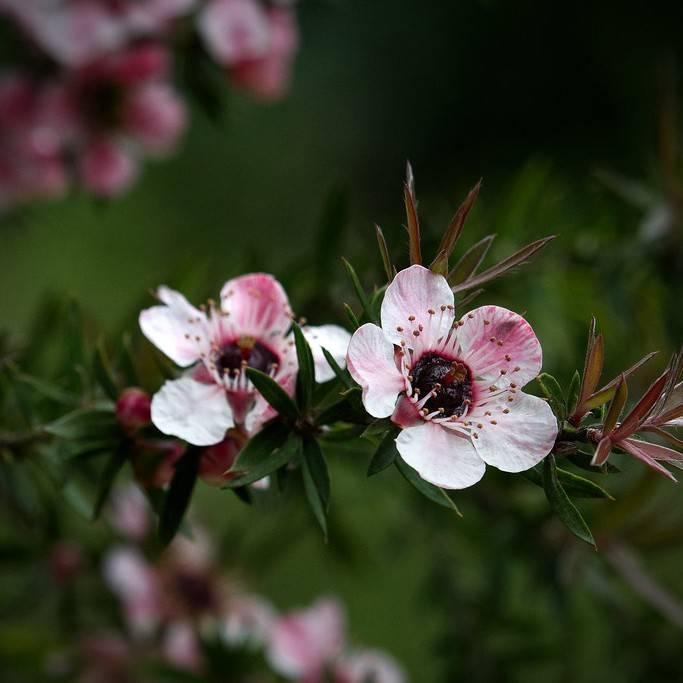
Also called manuka in its native New Zealand, broom tea tree is a tough, adaptable evergreen grown for its showy white, pink, or red spring blooms and fine, needle-like aromatic foliage. It thrives in cool, temperate climates and has deep cultural and medicinal significance to Indigenous Māori communities, who have used its leaves and bark for remedies for centuries. Many compact, garden-friendly cultivars have been developed for ornamental use in landscaping and container growing.
Care Guide
Watering
Water newly planted broom tea trees regularly to keep the soil evenly moist for the first 1-2 years until established, reducing frequency once roots are deep. Mature plants are highly drought-tolerant, requiring only occasional watering during extended dry periods; avoid overwatering, as soggy soil causes root rot. Potted specimens need more frequent watering, allowing the top 1 inch of soil to dry out between applications.
Light
Broom tea tree requires full sun, a minimum of 6 hours of direct sunlight daily, to produce abundant blooms and maintain a dense, compact growth habit. It can tolerate light partial shade, but growth will become leggy, flowering will be sparse, and it may be more prone to fungal diseases. Indoor-grown specimens should be placed in a south-facing window or under grow lights to meet their light needs.
Soil
This plant prefers well-drained, slightly acidic to neutral soil with a pH between 5.5 and 7.0, and tolerates poor, sandy, or rocky low-fertility soils common in its native coastal habitats. Heavy clay soils that hold moisture should be amended with coarse sand or organic matter to improve drainage before planting, as standing water will quickly kill the plant. Potted specimens grow best in a loose, fast-draining mix formulated for Australian native plants or ericaceous shrubs.
Fertilizer
Broom tea tree has low nutrient needs and does not require frequent fertilization; over-fertilizing, especially with high-phosphorus formulas, can damage its sensitive root system. Apply a slow-release, low-phosphorus fertilizer formulated for native Australian or ericaceous plants once per year in early spring, just before new growth emerges. Potted plants can be given a diluted, balanced liquid fertilizer once every 2-3 months during the growing season, at half the recommended strength.
Temperature
It thrives in cool temperate climates, preferring average temperatures between 50-75°F (10-24°C) during the growing season, and can tolerate light winter frosts down to 20°F (-7°C) once mature. Young plants and potted specimens are more frost-sensitive and should be protected with frost cloth or brought indoors if temperatures drop below freezing for extended periods. In hot, humid climates, provide afternoon shade and good air circulation to prevent leaf scorch and fungal issues.
Pruning
Prune broom tea tree lightly after flowering has finished in late spring to maintain a neat shape, remove spent blooms, and encourage dense, bushy new growth. Avoid cutting back into old, woody growth that has no green foliage, as the plant does not resprout well from bare wood and may suffer permanent damage. Overgrown specimens can be gradually shaped over 2-3 years by removing no more than one-third of the total growth each season.
Propagation
Broom tea tree is most commonly propagated from semi-hardwood cuttings taken in late summer or early fall, using 3-4 inch long stem sections with mature, firm growth; dip cut ends in rooting hormone and place in a well-draining propagation mix with bottom heat for best results. It can also be grown from fresh seed collected from mature seed pods, though seed-grown plants may not retain the exact flower color or growth habit of the parent cultivar. Germination takes 2-4 weeks in warm, moist conditions, and seedlings should be kept out of direct sun until they develop their second set of true leaves.
Humidity
This plant tolerates a wide range of humidity levels, from dry coastal air to moderate inland humidity, and is well-adapted to the low humidity of most indoor home environments. High humidity combined with poor air circulation increases the risk of fungal leaf spot and powdery mildew, so ensure plants have plenty of space between them for airflow in humid climates. Indoor specimens do not require regular misting, though an occasional misting during very dry winter heating periods can help keep foliage looking fresh.
Repotting
Potted broom tea tree should be repotted every 2-3 years in early spring, before new growth begins, to refresh the soil and prevent root binding. Choose a pot only 1-2 inches larger than the current container to avoid excess soil that holds moisture, as the plant prefers a slightly tight root environment. Handle the root ball gently during repotting to avoid damaging the fine, sensitive roots, and water thoroughly after transplanting to settle the soil.
Uses & Symbolism
Broom tea tree is widely planted as an ornamental shrub in landscaping, used for hedges, border plantings, coastal gardens, and container displays, prized for its long-lasting, colorful blooms and low maintenance needs. Its aromatic leaves are steeped to make a traditional herbal tea rich in antioxidants, and it is the source of manuka honey, produced when bees forage on its nectar, valued for its reputed antibacterial properties. Indigenous Māori have used its bark, leaves, and resin for centuries to treat wounds, sore throats, digestive issues, and other ailments, and its hard, durable wood is used for small craft and tool projects.
Diseases & Pests
Broom tea tree is relatively pest-resistant, but may be affected by scale insects, aphids, and spider mites, which can be controlled with horticultural oil or insecticidal soap applications, especially when infestations are caught early. Fungal diseases including powdery mildew, leaf spot, and root rot are the most common issues, typically caused by overwatering, poor drainage, or insufficient air circulation around the plant. In wet, humid climates, it may also develop myrtle rust, a highly contagious fungal disease that causes bright yellow spore spots on leaves and stems, requiring immediate removal of affected foliage and fungicide treatment to prevent spread.
Related plants
Other plants you might like if you grow Broom Tea Tree.
%22%2F%3E%0A%20%20%20%20%20%20%3Ccircle%20cx%3D%22920%22%20cy%3D%22180%22%20r%3D%2290%22%20fill%3D%22%23cfe8d5%22%2F%3E%0A%20%20%20%20%20%20%3Cpath%20d%3D%22M600%20590c-90-180-215-255-310-280%200%20165%20118%20296%20270%20296h40z%22%20fill%3D%22%2379b88e%22%2F%3E%0A%20%20%20%20%20%20%3Cpath%20d%3D%22M600%20590c80-150%20198-212%20302-228-8%20142-123%20255-270%20255h-32z%22%20fill%3D%22%235c9f73%22%2F%3E%0A%20%20%20%20%20%20%3Cpath%20d%3D%22M600%20610V360%22%20stroke%3D%22%234f8c64%22%20stroke-width%3D%2218%22%20stroke-linecap%3D%22round%22%2F%3E%0A%20%20%20%20%20%20%3Ctext%20x%3D%22600%22%20y%3D%22700%22%20text-anchor%3D%22middle%22%20font-family%3D%22Arial%2C%20sans-serif%22%20font-size%3D%2244%22%20fill%3D%22%23365c45%22%3E%0A%20%20%20%20%20%20%20%20Plant%20image%20coming%20soon%0A%20%20%20%20%20%20%3C%2Ftext%3E%0A%20%20%20%20%3C%2Fsvg%3E%0A%20%20)