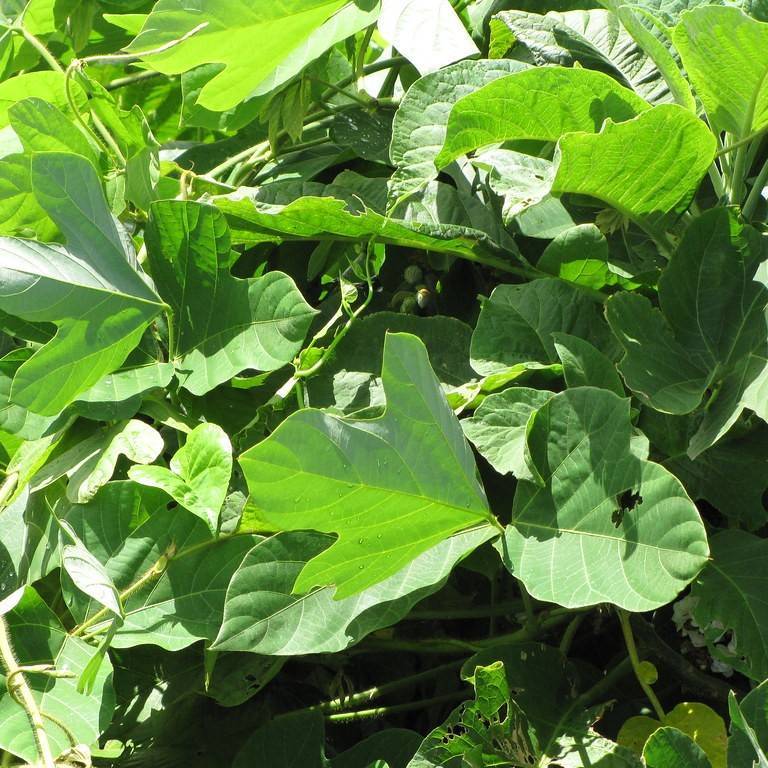
Kudzu Vine
Pueraria montana var. lobata
Overview
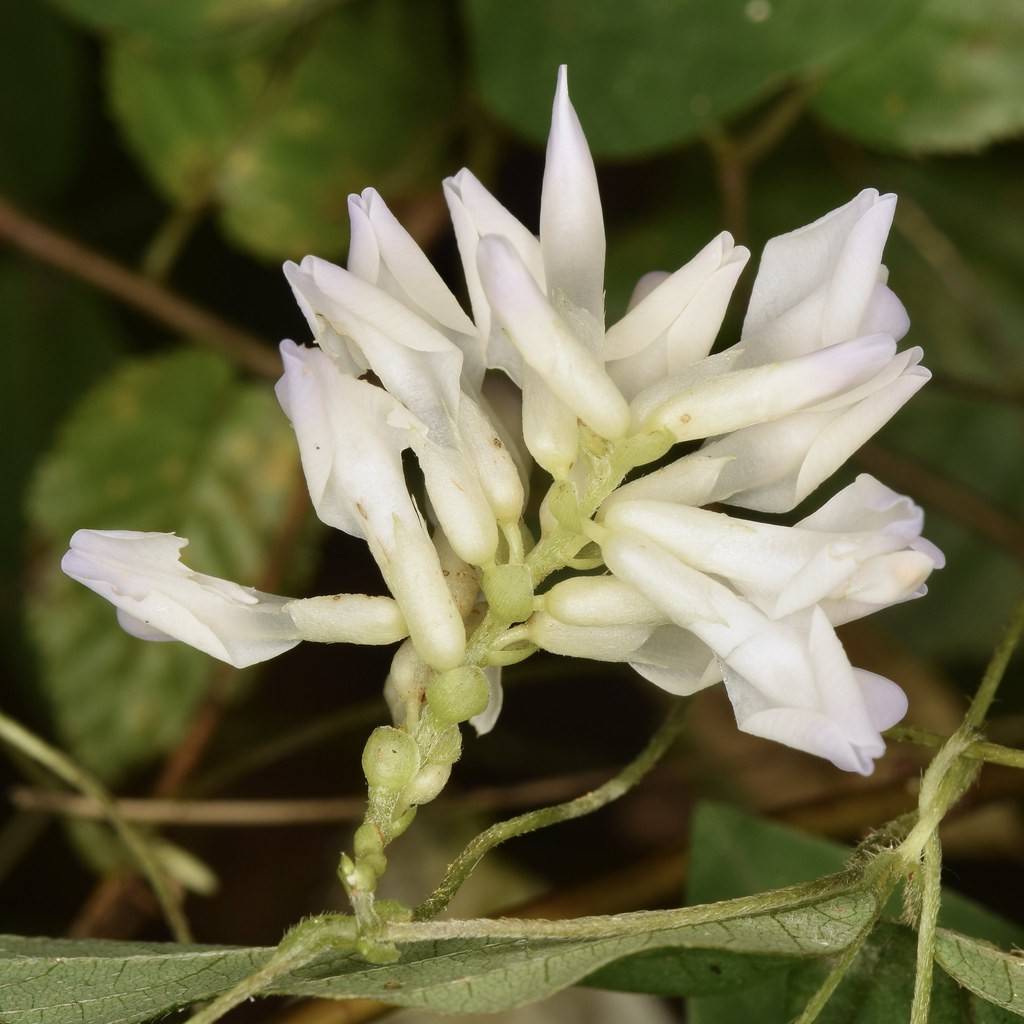
Kudzu vine is a deciduous, climbing legume that produces trailing, twining stems covered in coarse brown hairs. It was introduced to North America in the late 19th century as an ornamental and erosion control plant, but quickly escaped cultivation to become a major invasive pest. The vine produces clusters of fragrant, purple, pea-like flowers in late summer, followed by flat, hairy seed pods that contain several hard seeds.
Care Guide
Watering
Kudzu is highly drought-tolerant once established, thriving in natural rainfall levels with minimal supplemental watering needed for established plants. Young plants require regular, consistent moisture to establish root systems, but mature plants can survive extended dry periods without additional irrigation. Overwatering in poorly drained sites may cause root rot, though the vine is largely resilient to most moisture-related stressors.
Light
Kudzu grows best in full, direct sunlight, where it can achieve its maximum growth rate of up to 1 foot per day during peak growing season. It tolerates partial shade, but growth slows significantly in low-light conditions, and the vine will often stretch upward to reach brighter light sources. Full sun exposure also encourages abundant flowering and foliage production.
Soil
Kudzu adapts to a wide range of soil types, including sandy, loam, clay, and even nutrient-poor, eroded soils, with a preferred pH range of 5.0 to 7.0. It tolerates moderate soil salinity and occasional flooding, making it suitable for roadside and riparian sites in its native range. Well-drained soil is ideal, though the vine can withstand short periods of waterlogging without permanent damage.
Fertilizer
As a nitrogen-fixing legume, kudzu forms symbiotic relationships with soil bacteria to pull nitrogen from the air, so it rarely requires supplemental nitrogen fertilizer. It responds well to small applications of phosphorus and potassium in very poor soils, but fertilization is generally unnecessary for established plants. Excess fertilizer can encourage overly aggressive growth that is harder to control, especially in areas where it is considered invasive.
Temperature
Kudzu thrives in warm, temperate to subtropical climates, with optimal growing temperatures between 68°F and 86°F (20°C to 30°C). It can tolerate winter temperatures as low as 10°F (-12°C) when established, with above-ground growth dying back to the root crown in cold weather before re-sprouting in spring. Prolonged freezing temperatures below 0°F (-18°C) can kill even mature root systems, limiting its spread to regions with mild winters.
Pruning
Regular, aggressive pruning is required to control kudzu growth, especially in areas where it is invasive, as unmanaged vines can smother trees, buildings, and other vegetation. Cut stems back to the ground level multiple times per growing season to weaken the root system, and remove all cut plant material to prevent re-rooting. For eradication, pruning should be combined with root removal or targeted herbicide application to prevent re-sprouting from deep, persistent root systems.
Propagation
Kudzu propagates easily from stem cuttings, root divisions, and seed, though seed germination requires scarification to break through the hard outer seed coat. Stem nodes that come into contact with soil will readily develop roots, allowing the vine to spread vegetatively across large areas without seed production. For intentional cultivation, root divisions taken in early spring before new growth emerges have the highest success rate, establishing quickly in warm, moist soil.
Humidity
Kudzu tolerates a wide range of humidity levels, from dry continental climates to humid subtropical environments, with no special humidity requirements for growth. It thrives in high humidity common to the southeastern United States, where its invasive spread is most severe, but also grows well in drier regions with adequate soil moisture. Average ambient humidity between 40% and 80% supports optimal growth, with no negative effects from short periods of very low or very high humidity.
Repotting
Kudzu is rarely grown in containers due to its extremely aggressive, fast-growing root system, which can quickly outgrow even large pots. If grown in a container for ornamental or research purposes, repot annually in early spring before new growth emerges, using a large, sturdy pot with drainage holes to prevent root binding. Even in containers, regular root pruning is necessary to keep the vine manageable, as unpruned roots will break through pot walls and spread into surrounding soil.
Uses & Symbolism
In its native East Asia, kudzu has a long history of use in traditional medicine to treat fever, diarrhea, and high blood pressure, and its starchy roots are used as a food ingredient and thickener. The vine's strong, flexible fibers are used to make textiles, paper, and basketry, while its nitrogen-fixing ability makes it useful for erosion control on degraded slopes in carefully managed settings. Its fragrant flowers produce nectar that is valued by beekeepers for making a mild, floral honey.
Diseases & Pests
Kudzu is relatively resistant to most pests and diseases in its introduced range, contributing to its invasive success, though it may be affected by fungal leaf spots, powdery mildew, and root rot in overly saturated soils. Common pests include Japanese beetles, kudzu bugs, and aphids, which feed on foliage and stems, but rarely cause significant damage to healthy, established plants. A specialized rust fungus, *Synchytrium minutum*, is being studied as a potential biological control agent for invasive kudzu populations in North America.
Related plants
Other plants you might like if you grow Kudzu Vine.