Gentian Speedwell
Veronica gentianoides
Overview
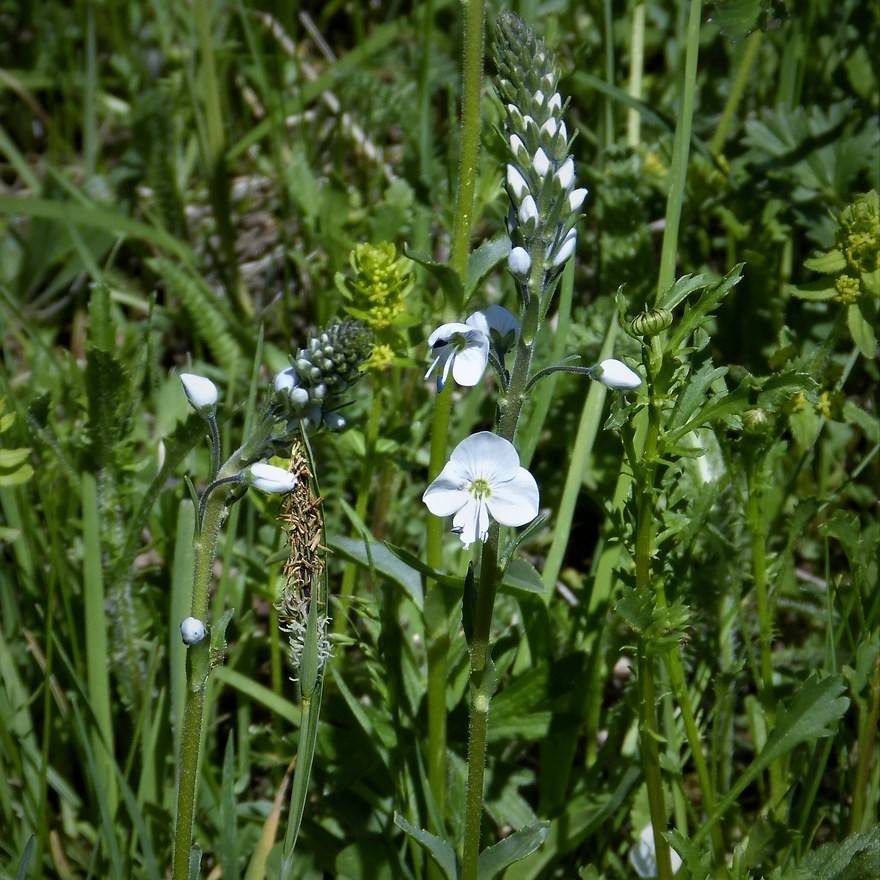
Gentian Speedwell is a hardy, mat-forming perennial named for its glossy, lance-shaped leaves that resemble those of true gentian plants. In late spring to early summer, it produces upright, slender spikes lined with delicate, pale blue to lavender, five-petaled flowers that attract bees and other pollinators. Native to high-altitude meadows and rocky slopes, it thrives in cool, temperate climates and is valued for its low-maintenance nature and long blooming period. It spreads slowly via creeping rhizomes, forming dense, attractive foliage clumps that remain evergreen in mild winter regions.
Care Guide
Watering
Water regularly to keep soil consistently moist but not waterlogged, especially during the first growing season as the plant establishes its root system. Reduce watering frequency in winter, allowing the top inch of soil to dry out between sessions to prevent root rot. Avoid overhead watering to minimize the risk of foliar fungal diseases, directing water to the base of the plant instead.
Light
Grows best in full sun to partial shade, with dappled afternoon shade recommended in regions with hot, intense summer sun to prevent leaf scorch. In cooler northern climates, full sun exposure encourages the most abundant flower production and compact, healthy foliage growth. Too much deep shade will result in leggy growth and reduced flowering.
Soil
Prefers well-drained, loamy or sandy soil with a neutral to slightly alkaline pH, though it can adapt to mildly acidic conditions as well. It tolerates poor, rocky soils well, making it a popular choice for rock gardens and gravel beds, as long as drainage is excellent. Heavy clay soils should be amended with compost or grit to improve drainage before planting.
Fertilizer
Feed lightly in early spring with a balanced, slow-release granular fertilizer formulated for flowering perennials to support healthy foliage and bloom development. Avoid over-fertilizing, as this can lead to excessive, leggy foliage growth at the expense of flowers, and may weaken the plant’s cold hardiness. No additional fertilization is needed during the growing season for established plants.
Temperature
Thrives in cool temperate climates, with ideal growing temperatures ranging from 55-75°F (13-24°C) during the active growing season. It is cold hardy down to USDA zone 3, tolerating winter temperatures as low as -40°F (-40°C) without additional protection in most cases. It struggles in regions with consistently hot, humid summers above 85°F (29°C), where it will benefit from extra shade and moisture.
Pruning
Deadhead spent flower spikes after blooming to encourage a possible second flush of smaller flowers later in the season and to keep the plant looking tidy. In late fall or early spring, cut back any brown, damaged foliage to the base of the clump to make way for new, healthy growth. If clumps become too large or spread beyond their desired space, thin them out by dividing in early spring or after flowering.
Propagation
Easiest to propagate by division in early spring just as new growth emerges, or immediately after flowering ends, separating mature clumps into smaller sections with intact roots and replanting immediately. It can also be grown from seed sown directly outdoors in fall, as the seeds require a period of cold stratification to germinate successfully in spring. Stem cuttings taken from non-flowering shoots in early summer can also root well in moist, well-drained potting mix under indirect light.
Humidity
Prefers moderate humidity levels between 40-60%, typical of its native mountain meadow habitats. It tolerates average garden humidity well and does not require extra moisture in most temperate regions, though it may struggle in extremely dry, arid conditions without supplemental watering. High humidity combined with poor air circulation can increase the risk of foliar fungal issues, so ensure plants are spaced adequately for airflow.
Repotting
If grown in containers, repot every 2-3 years in early spring before new growth begins, using a well-drained potting mix amended with grit or perlite to improve drainage. Choose a pot that is 1-2 inches larger in diameter than the current container to accommodate the plant’s slow-spreading root system. Ensure the pot has sufficient drainage holes to prevent waterlogging, which can quickly cause root rot in container-grown specimens.
Uses & Symbolism
Gentian Speedwell is a popular choice for rock gardens, alpine beds, border edges, and ground cover in cool, temperate landscapes, where its low, spreading foliage and delicate blue blooms add soft color and texture. It is also well-suited for container planting on patios and balconies, and its cut flowers make charming, long-lasting additions to small floral arrangements. As a pollinator-friendly plant, it is frequently included in wildlife and native pollinator gardens to support local bee populations.
Diseases & Pests
Gentian Speedwell is relatively pest and disease resistant, but can be susceptible to root rot if planted in poorly drained, waterlogged soil, especially during cold winter months. Powdery mildew, downy mildew, and leaf spot may occur in conditions of high humidity and poor air circulation, which can be prevented by spacing plants adequately and avoiding overhead watering. Slugs and snails may occasionally feed on young, tender foliage, particularly in damp, shaded locations, and can be controlled with bait, barriers, or hand-picking.
Related plants
Other plants you might like if you grow Gentian Speedwell.