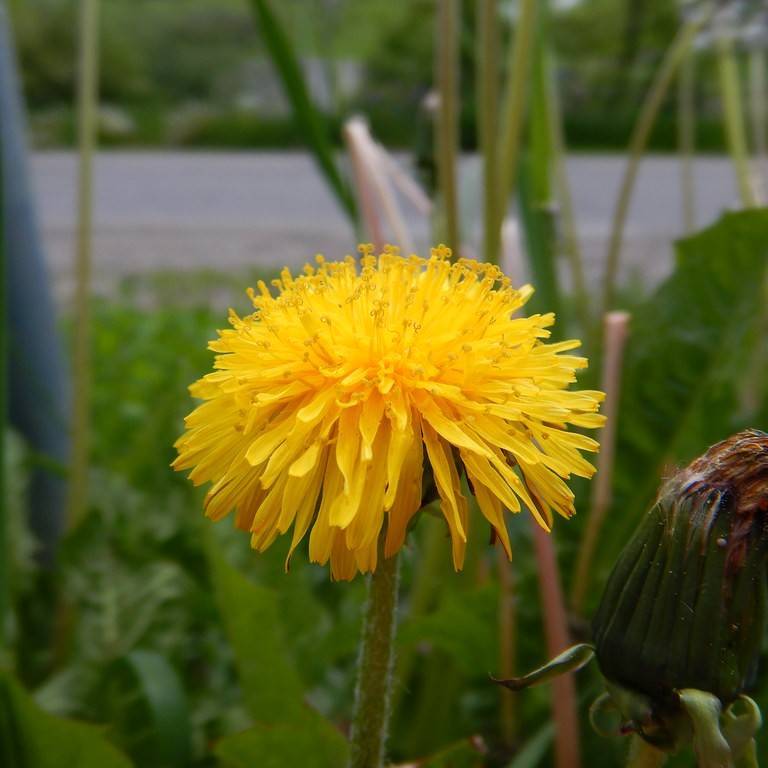
Common Dandelion
Taraxacum officinale
Overview
Common dandelion is a resilient herbaceous plant recognized for its distinctive bright yellow flower heads that mature into fluffy, wind-dispersed seed puffs known as achenes. Its deeply lobed, jagged leaves grow in a low rosette close to the soil, while thick, fleshy taproots extend deep into the ground to support its drought-tolerant growth. Though often classified as a weed in residential lawns, it has a long history of use in traditional medicine, cooking, and even natural dye production across many cultures.
Care Guide
Watering
Dandelions are highly drought-tolerant once established, thriving with only natural rainfall in most temperate regions. Supplemental watering is only needed during extended periods of extreme, multi-week drought to prevent leaf wilting. Overwatering or consistently waterlogged soil can cause root rot, so avoid excessive irrigation in garden settings.
Light
This species grows best in full, direct sunlight, producing the most abundant flowers and largest leaves when receiving 6+ hours of unobstructed light daily. It can tolerate partial shade, though growth will be slower, and flower production will be significantly reduced. It is highly adaptable to varying light conditions, making it capable of growing in gaps between pavement, lawns, and disturbed sites.
Soil
Dandelions tolerate nearly all soil types, from sandy and rocky to heavy clay, as long as drainage is adequate to prevent standing water around the roots. It prefers a slightly acidic to neutral soil pH between 6.0 and 7.5, but can survive in more extreme pH levels that many other plants cannot tolerate. It often thrives in low-nutrient, disturbed soils where competing vegetation is sparse.
Fertilizer
Fertilizer is almost never required for dandelions, as they are capable of extracting sufficient nutrients from even poor-quality soils. If growing intentionally for edible leaves, a light application of balanced, nitrogen-rich organic fertilizer in early spring can encourage lusher, milder foliage growth. Over-fertilization will lead to excessive, soft leaf growth with a more bitter flavor.
Temperature
Dandelions are cold-hardy, surviving winter temperatures as low as -30°F (-34°C) when their taproots are insulated by soil or snow cover. Optimal growth occurs between 60°F and 70°F (15°C and 21°C), though plants will continue to grow in warmer temperatures as long as moisture is available. Frost will kill aboveground foliage, but taproots will resprout new leaves in spring once temperatures rise above freezing.
Pruning
Pruning is not required for dandelion health, but removing flower heads before they go to seed will prevent unwanted spread across lawns and garden beds. If harvesting leaves for culinary use, snip outer leaves at the base of the rosette, leaving inner growth intact to allow the plant to continue producing new foliage. To completely remove a dandelion, dig up the entire taproot, as any remaining root fragments will resprout into a new plant.
Propagation
Dandelions most commonly propagate via wind-dispersed seeds, which can travel hundreds of meters from the parent plant once the flower head matures into a fluffy seed puff. Seeds germinate readily on bare soil with minimal moisture and light, with no stratification required. They can also be propagated by dividing taproots in early spring, cutting healthy root sections into 2-inch segments and planting them 1-2 inches deep in moist soil.
Humidity
Dandelions are highly adaptable to a wide range of humidity levels, thriving in both arid and humid temperate climates with no special adjustments needed. They tolerate dry air well, as their deep taproots access moisture far below the soil surface that shallow-rooted plants cannot reach. Extremely high, consistent humidity combined with poor air circulation can occasionally lead to foliar fungal issues, though this is rare in outdoor settings.
Repotting
Repotting is rarely necessary for dandelions, even when grown intentionally in containers, as their taproots adapt to the size of their growing space. If growing in a pot, choose a deep container at least 12 inches deep to accommodate the long taproot, and refresh the top layer of soil annually in early spring. If the plant becomes root-bound, transplant it to a larger pot in early spring before new leaf growth emerges, taking care not to damage the taproot during the process.
Uses & Symbolism
Nearly all parts of the dandelion are edible: young, tender leaves are eaten raw in salads or cooked like spinach, while the flowers are used to make wine, jelly, or fried fritters, and roasted taproots are used as a caffeine-free coffee substitute. In traditional herbal medicine, dandelion is used as a diuretic, to support digestive health, and as a source of vitamins A, C, K, and minerals including iron and calcium. It is also a valuable early-season nectar source for pollinators including bees, butterflies, and hoverflies, supporting beneficial insect populations in early spring when few other flowers are in bloom.
Diseases & Pests
Dandelions are remarkably resistant to most pests and diseases, with very few issues impacting healthy plants. Occasional fungal diseases such as powdery mildew or leaf spot may appear in excessively wet, poorly ventilated conditions, but these rarely cause serious harm and can be avoided by ensuring plants have adequate space and are not overwatered. Rare pest visitors include aphids and root weevils, which can be removed with a strong spray of water or by encouraging natural predators such as ladybugs in the garden.
Related plants
Other plants you might like if you grow Common Dandelion.