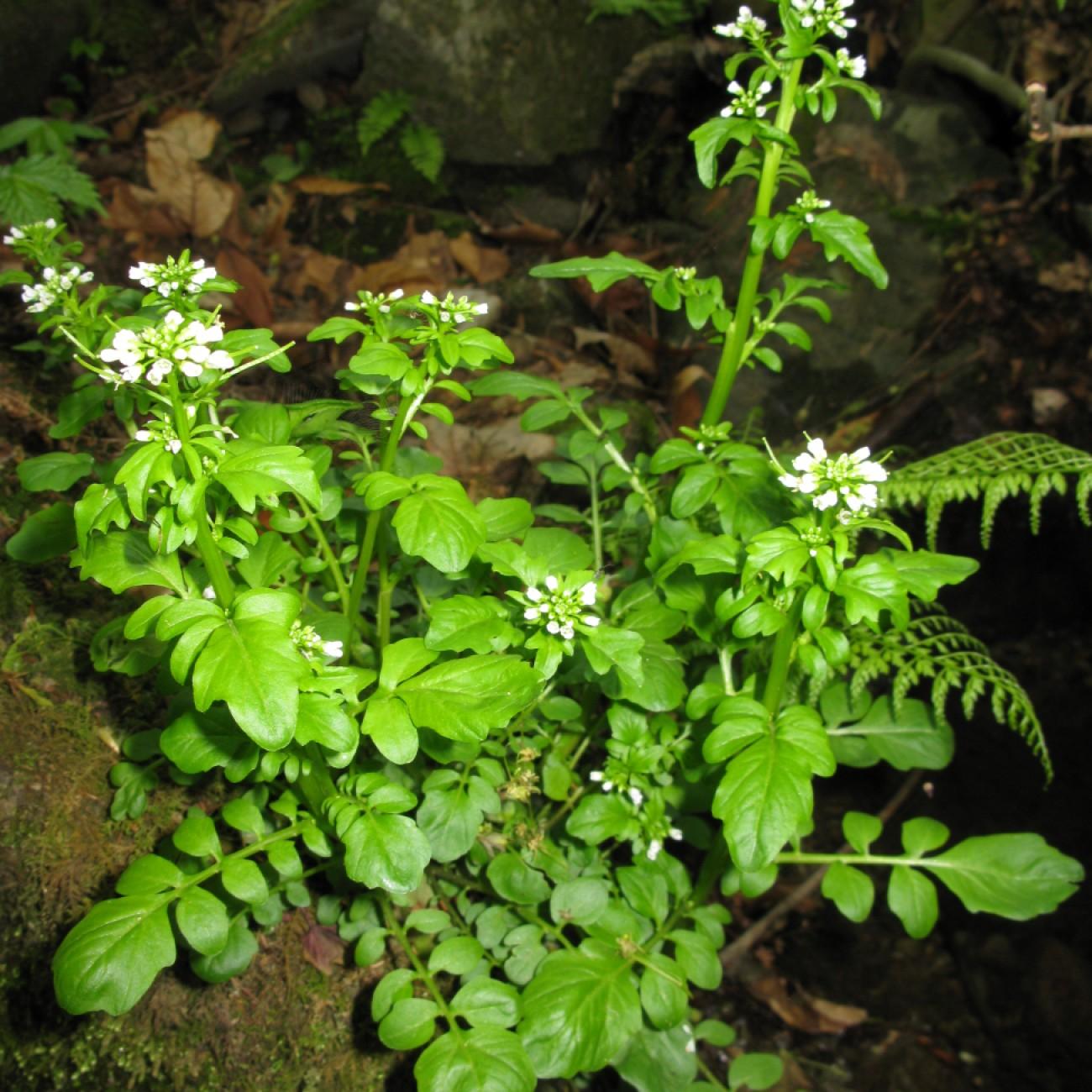
Brewer's Bitter Cress
Cardamine breweri
Overview
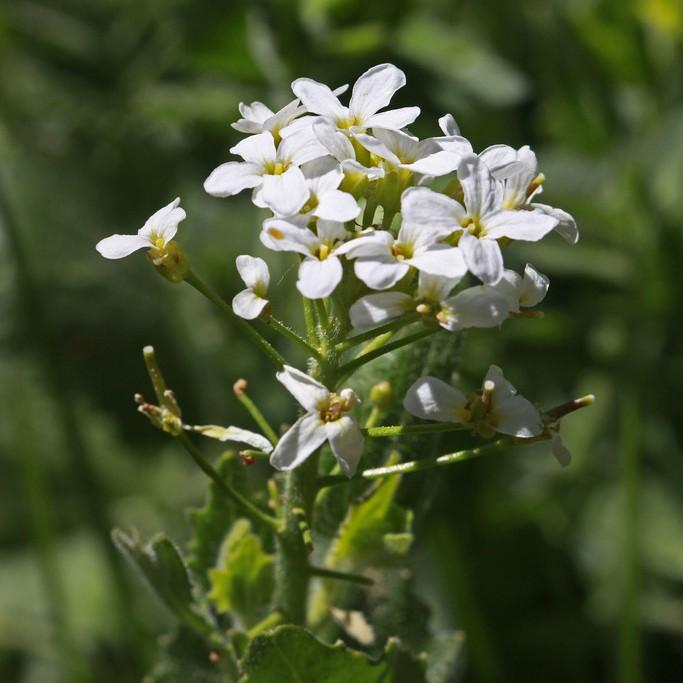
Brewer's bitter cress is a low-growing, herbaceous perennial adapted to damp, shaded environments such as streambanks, wet meadows, and moist coniferous forest understories. It bears small, rounded to heart-shaped basal leaves and slender upright stems topped with delicate clusters of four-petaled white flowers from late spring to mid summer. As a member of the mustard family, it has a mild peppery, bitter flavor typical of related edible cress species.
Care Guide
Watering
Brewer's bitter cress requires consistently moist, never waterlogged soil, so water regularly to maintain even moisture levels, especially during periods of dry weather or if grown in containers. It cannot tolerate prolonged drought, so avoid letting the top layer of soil dry out completely between waterings, and mulch around the base to help retain soil moisture in outdoor plantings.
Light
This species thrives in partial to full shade, mimicking its native forest understory habitat, and should be protected from intense, direct midday sun that can scorch its delicate foliage. It can tolerate very dappled morning sun, but prolonged exposure to full sun will cause leaf wilting, browning, and stunted growth.
Soil
Grow Brewer's bitter cress in rich, loamy, well-drained soil with a high organic matter content that retains moisture effectively, with a slightly acidic to neutral pH range of 5.5 to 7.0. Amending soil with compost, leaf mold, or well-rotted manure before planting will improve both moisture retention and nutrient content to support healthy growth.
Fertilizer
Fertilize sparingly once in early spring with a balanced, slow-release organic fertilizer, as excessive nitrogen can promote overly lush, tender growth that is more susceptible to pest damage. Plants growing in organically rich native soil typically do not require additional fertilization, while container-grown specimens may benefit from a half-strength liquid balanced fertilizer every 4 to 6 weeks during the active growing season.
Temperature
Brewer's bitter cress prefers cool temperatures between 50-75°F (10-24°C) and is hardy to USDA zones 5 through 8, tolerating winter temperatures down to -20°F (-29°C) when planted in appropriate outdoor conditions. It struggles in prolonged heat above 80°F (27°C), so provide extra shade and consistent moisture during summer heatwaves to prevent heat stress and dieback.
Pruning
Prune off spent flower stalks after blooming to prevent unwanted self-seeding if you wish to limit spread, and trim back any yellowed or damaged foliage in late fall to keep the planting area tidy. If growing as an edible, harvest individual leaves regularly from the outer edges of the plant to encourage new, tender foliage growth without harming the main plant.
Propagation
Brewer's bitter cress can be easily propagated by sowing fresh, stratified seeds directly outdoors in late fall or early spring, as seeds require a period of cold stratification to break dormancy and germinate successfully. Established clumps can also be divided in early spring before new growth begins, carefully separating the root balls into smaller sections and replanting them immediately in moist, shaded locations.
Humidity
This species prefers moderate to high humidity levels between 50% and 70%, typical of its native moist forest and riparian habitats, and will suffer from leaf crisping if exposed to very dry air for extended periods. If grown indoors as a potted plant, place it on a pebble tray filled with water or mist it regularly to maintain adequate ambient humidity levels.
Repotting
Container-grown Brewer's bitter cress should be repotted every 1 to 2 years in early spring, moving to a slightly larger pot with fresh, organic-rich potting mix to accommodate its shallow, spreading root system. Take care not to damage the delicate roots during repotting, and water thoroughly immediately after transplanting to reduce transplant shock and help the plant establish in its new container.
Uses & Symbolism
The tender leaves and young shoots of Brewer's bitter cress are edible, with a mild peppery, bitter flavor similar to other cress varieties, and can be eaten raw in salads, sandwiches, or used as a garnish, or cooked lightly as a potherb to soften its sharp taste. It also provides valuable early-season nectar for small native bees and other pollinators in its native range, and can be used as a low-growing ground cover in shaded, moist garden areas such as rain gardens or woodland garden borders.
Diseases & Pests
Brewer's bitter cress is relatively resistant to most pests and diseases, but can be susceptible to fungal issues such as downy mildew, powdery mildew, and root rot if grown in poorly drained soil or overly crowded conditions with poor air circulation. Aphids and flea beetles may occasionally feed on its foliage, which can be controlled with insecticidal soap, neem oil, or by encouraging natural predators such as ladybugs in the garden.
Related plants
Other plants you might like if you grow Brewer's Bitter Cress.