Blunt Mountainmint
Pycnanthemum muticum
Overview
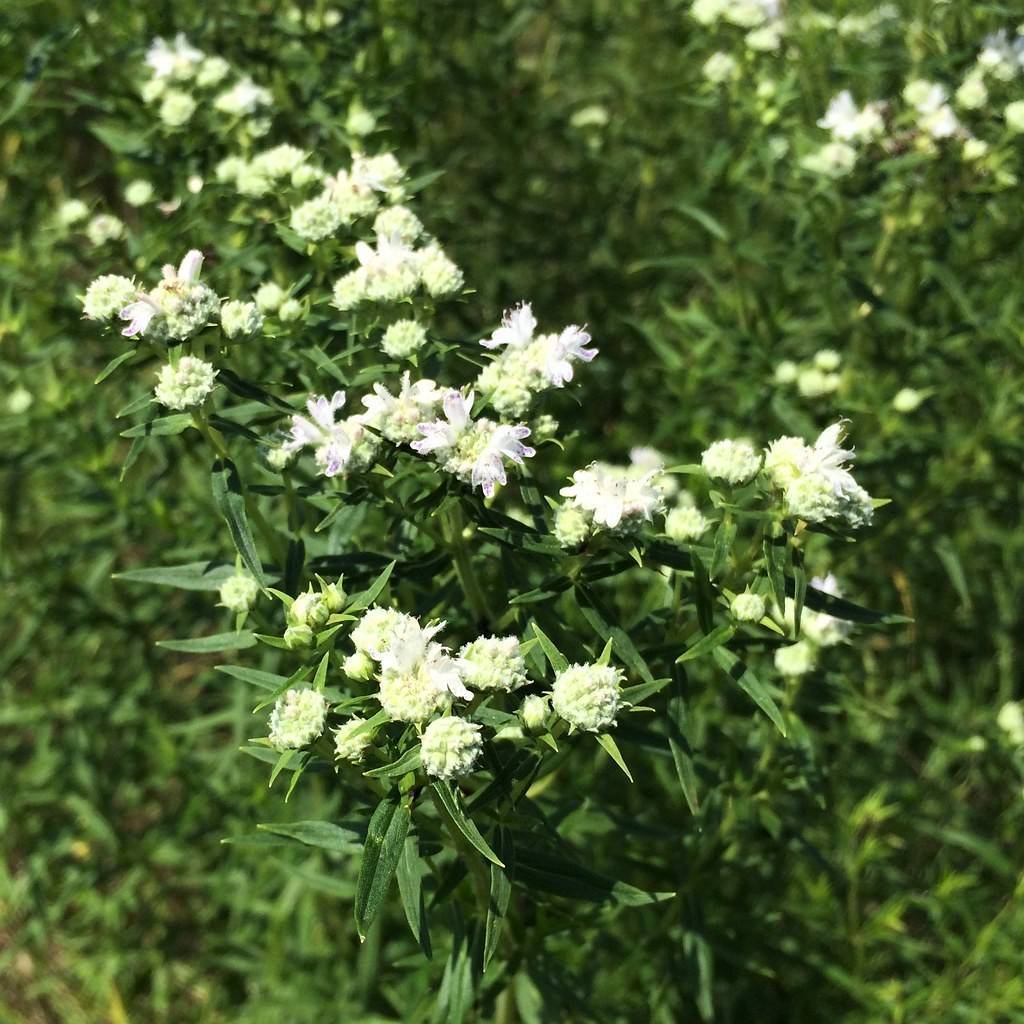
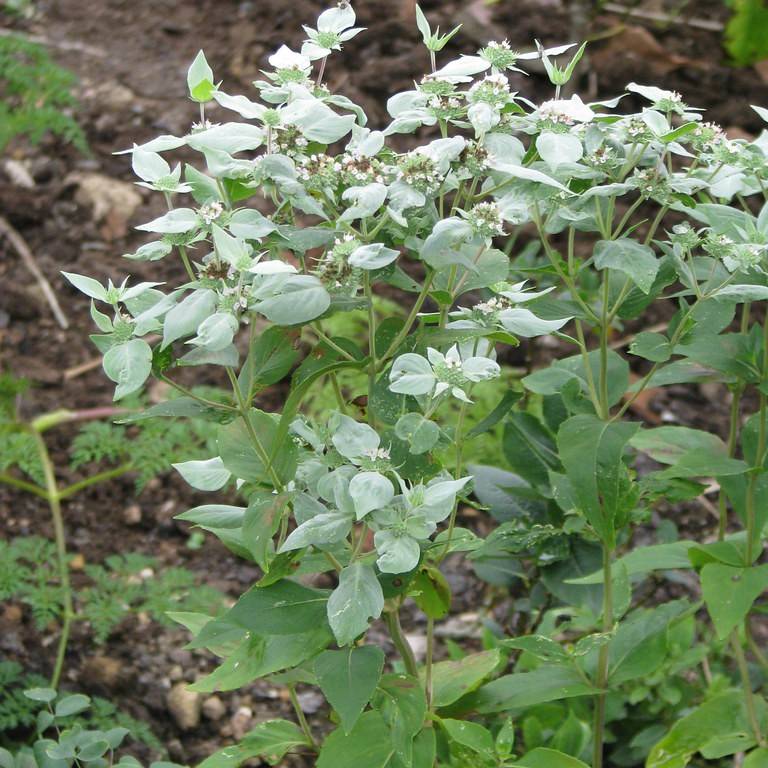
Blunt mountainmint is a herbaceous perennial in the mint family, known for its fuzzy, ovate leaves that release a strong, minty fragrance when crushed. Its most distinctive feature is the dense clusters of small, pale pink to lavender flowers surrounded by showy, silvery-white bracts that remain attractive for months from mid to late summer. A vigorous, clump-forming plant, it spreads slowly via rhizomes without being aggressively invasive, making it a popular choice for native pollinator gardens and naturalized landscapes.
Care Guide
Watering
Blunt mountainmint prefers consistently moist, well-drained soil, though it is highly drought tolerant once established, surviving short periods of dryness without significant stress. Water newly planted specimens deeply once or twice a week for the first growing season to encourage a deep root system, reducing frequency once the plant is settled. Avoid overwatering or letting plants sit in waterlogged soil, as this can lead to root rot in poorly draining locations.
Light
This species thrives in full sun, which produces the most compact growth, abundant flowering, and brightest silvery bract coloration. It can tolerate partial shade, though plants may become leggy, produce fewer flowers, and have less prominent silvery foliage in low light conditions. For indoor cultivation, place it in a south-facing window that receives at least 6 hours of direct sunlight daily, supplementing with grow lights if natural light is insufficient.
Soil
Blunt mountainmint adapts to a wide range of soil types, including sandy, loamy, and clay soils, as long as drainage is adequate. It tolerates a pH range from slightly acidic to slightly alkaline, thriving in neutral soil around 6.0 to 7.5. Amending heavy clay soil with compost or organic matter before planting will improve drainage and support healthier root growth, though the plant will grow in poor, low-nutrient soils without additional amendments.
Fertilizer
This low-maintenance plant requires very little fertilization, as excessive nutrients can cause leggy growth and reduce its characteristic aromatic oils and flower production. A light application of balanced, slow-release organic fertilizer in early spring is sufficient for plants growing in poor soil, while those in average garden soil may not need supplemental feeding at all. Avoid high-nitrogen fertilizers, as these will prioritize foliage growth over flowering and the development of the plant’s signature silvery bracts.
Temperature
Blunt mountainmint is extremely cold hardy, suitable for USDA zones 4 to 8, tolerating winter temperatures as low as -30°F (-34°C) when dormant. It grows best in moderate summer temperatures between 65°F and 85°F (18°C to 29°C), though it can tolerate short periods of heat above 90°F (32°C) if provided with adequate moisture. Frost will kill back above-ground foliage in fall, and plants will regrow from root systems the following spring.
Pruning
Prune back stems by one-third in early summer if you wish to encourage a more compact, bushy growth habit and prevent flopping, especially for plants growing in partial shade. Deadheading spent flower clusters is not required for continued bloom, but removing faded bracts in late summer can improve the plant’s appearance if desired. Cut back all dead foliage to ground level in late fall or early spring before new growth emerges to keep the planting area tidy and reduce overwintering pest habitat.
Propagation
Blunt mountainmint is most easily propagated by division in early spring or late fall, when dormant clumps can be dug up, split into smaller sections with a sharp spade, and replanted immediately. It can also be grown from stem cuttings taken in early to mid-summer, rooting cuttings in moist potting mix under indirect light for 2 to 3 weeks before transplanting. While it produces viable seed, seed propagation is less common, as seeds require 30 days of cold stratification to germinate, and seedlings may take 2 to 3 years to reach mature flowering size.
Humidity
This native species adapts well to a wide range of humidity levels, thriving in the moderate to high humidity of its native eastern North American habitat. It tolerates dry air conditions well, especially once established, making it suitable for indoor cultivation without regular misting. Good air circulation around the foliage helps prevent fungal leaf spot diseases, especially in areas with high humidity and poor ventilation.
Repotting
When grown in containers, repot blunt mountainmint every 2 to 3 years in early spring, as its rhizomatous root system can become pot-bound over time. Choose a pot that is 2 to 3 inches wider than the current container, with drainage holes to prevent waterlogging, and use a well-draining general-purpose potting mix amended with a small amount of compost. During repotting, you can divide overgrown clumps into smaller plants to limit size and produce new specimens, if desired.
Uses & Symbolism
Blunt mountainmint is a staple of native pollinator gardens, attracting a wide range of bees, butterflies, moths, and beneficial predatory wasps, and it is recognized as one of the top North American native plants for supporting pollinator biodiversity. Its aromatic leaves can be used fresh or dried to make minty herbal teas, added to salads, or used as a flavoring for sauces and drinks, with a milder, sweeter flavor than common peppermint or spearmint. The long-lasting silvery bracts and dense flower clusters make it a popular cut flower for fresh or dried arrangements, and it is often planted in naturalized areas, rain gardens, and meadow plantings for erosion control and low-maintenance landscaping.
Diseases & Pests
Blunt mountainmint is largely pest and disease resistant, with its strong aromatic oils deterring most herbivorous insects, including deer and rabbits. The most common issues are fungal diseases such as powdery mildew and leaf spot, which occur in areas with poor air circulation, high humidity, and prolonged leaf wetness; these can be prevented by spacing plants properly to allow air flow and avoiding overhead watering. Rarely, aphids or spider mites may colonize stressed plants, which can be controlled with a strong spray of water, insecticidal soap, or neem oil applications.
Related plants
Other plants you might like if you grow Blunt Mountainmint.