Golden Club
Orontium aquaticum
Overview
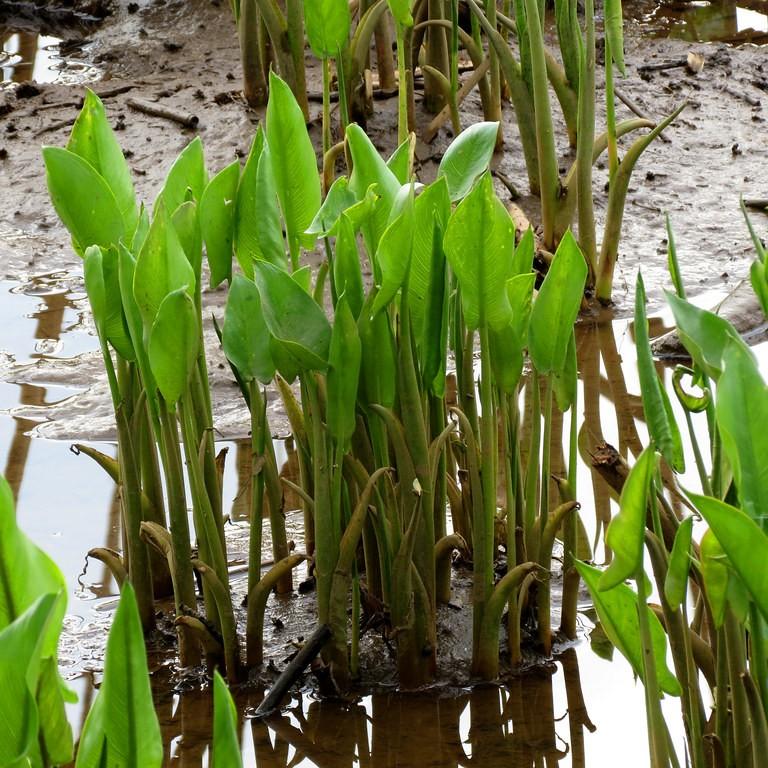
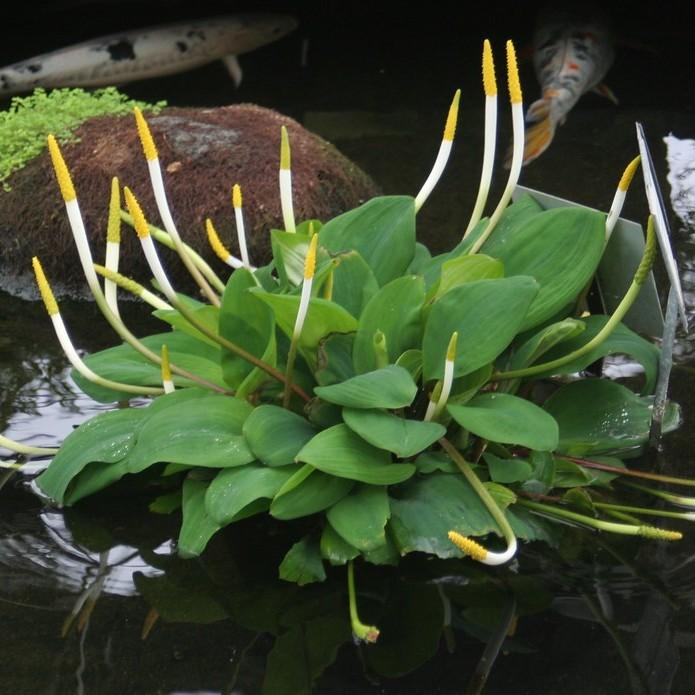
Golden Club, also called never-wet, is a marginal aquatic plant native to slow-moving streams, ponds, and boggy wetlands of eastern North America. Its waxy, oval leaves repel water so effectively that droplets roll off completely, earning it the never-wet nickname. In spring, it produces unique, velvety golden-yellow flower spikes that rise 6 to 12 inches above the water surface, maturing to produce clusters of blue-green berries in late summer.
Care Guide
Watering
As an aquatic or marginal plant, Golden Club requires consistent shallow water coverage of 2 to 6 inches over its root crown, or consistently saturated boggy soil that never dries out completely. For container cultivation, place the potted plant in a tray or pond with constant water access, refilling regularly to maintain consistent water levels and avoid drying out root systems.
Light
Golden Club thrives in full sun, which encourages robust flowering and dense foliage growth, but can tolerate partial shade, though bloom production may be reduced in low-light conditions. In hotter southern climates, light afternoon shade can prevent leaf scorch during periods of intense summer heat, as long as the plant receives at least 6 hours of direct sunlight daily.
Soil
It prefers heavy, nutrient-rich loam or clay soil with a neutral to slightly acidic pH between 6.0 and 7.0, typical of wetland environments. For container growing, use a heavy aquatic potting mix without added perlite or light amendments that may float, and top the soil surface with a layer of gravel to prevent soil erosion in water.
Fertilizer
Fertilize Golden Club once annually in early spring, just before new growth emerges, using a slow-release aquatic plant fertilizer formulated for pond and marginal species to avoid water contamination. Avoid high-nitrogen fertilizers, which can encourage excessive foliage growth at the expense of flower production, and never use standard garden fertilizers that may leach harmful nutrients into natural water sources.
Temperature
Golden Club is cold-hardy in USDA zones 4 to 9, tolerating winter temperatures as low as -30°F (-34°C) as long as its root crown is below the freeze line in water or saturated soil. In regions where ponds freeze solid, move container-grown plants to a cool, frost-free location over winter, or sink containers to deeper pond levels to protect roots from freezing. It thrives in summer temperatures between 65 and 85°F (18 to 29°C), withstanding short periods of higher heat as long as water levels remain consistent.
Pruning
Prune away yellowed, damaged, or dead foliage and spent flower spikes throughout the growing season to maintain a tidy appearance and prevent decaying plant matter from fouling surrounding water. In late fall after foliage dies back, cut back all above-ground growth to just above the root crown to prepare the plant for winter dormancy and reduce the risk of rot in cold, wet conditions.
Propagation
Golden Club is most easily propagated by dividing mature rhizomes in early spring before new growth begins, separating sections with at least one healthy growth bud and replanting immediately at the same depth as the parent plant. It can also be grown from seed harvested from ripe blue-green berries in late summer, sown immediately in saturated potting mix kept at 70 to 75°F (21 to 24°C), though seed-grown plants take 2 to 3 years to reach flowering maturity.
Humidity
As a wetland native, Golden Club requires very high ambient humidity above 70% to thrive, which is naturally sustained when grown in or near water features. For indoor or container cultivation outside of pond settings, mist foliage regularly and place the potted plant on a tray of pebbles filled with water to maintain consistent high humidity levels, avoiding dry indoor air from heating or cooling systems that can cause leaf browning.
Repotting
Repot container-grown Golden Club every 2 to 3 years in early spring before new growth emerges, when rhizomes begin to outgrow their current container. Use a wide, shallow aquatic pot to accommodate spreading rhizome growth, and refresh the potting mix at each repotting to replenish nutrients, ensuring the root crown is planted at the same depth as it was in the previous container to avoid rot.
Uses & Symbolism
Golden Club is a popular ornamental plant for water gardens, pond margins, and bog landscapes, adding unique textural interest and bright spring color to aquatic planting schemes. Its dense root systems help stabilize shoreline soil and reduce erosion, while its foliage provides shelter for small aquatic organisms and pond wildlife. Indigenous peoples of eastern North America historically processed the starchy rhizomes and seeds to remove toxic calcium oxalate crystals, using them as a cooked food source.
Diseases & Pests
Golden Club is largely pest and disease resistant when grown in its preferred aquatic conditions, though it may occasionally be affected by aphids or spider mites on new foliage during periods of low humidity. Overly shallow water or dry soil can cause root rot, while excessive shade or nutrient-poor soil may lead to sparse foliage and reduced flowering. In stagnant, low-oxygen water, it may develop fungal leaf spots, which can be addressed by improving water circulation and removing affected foliage.
Related plants
Other plants you might like if you grow Golden Club.