Grassy Arrowhead
Sagittaria graminea
Overview
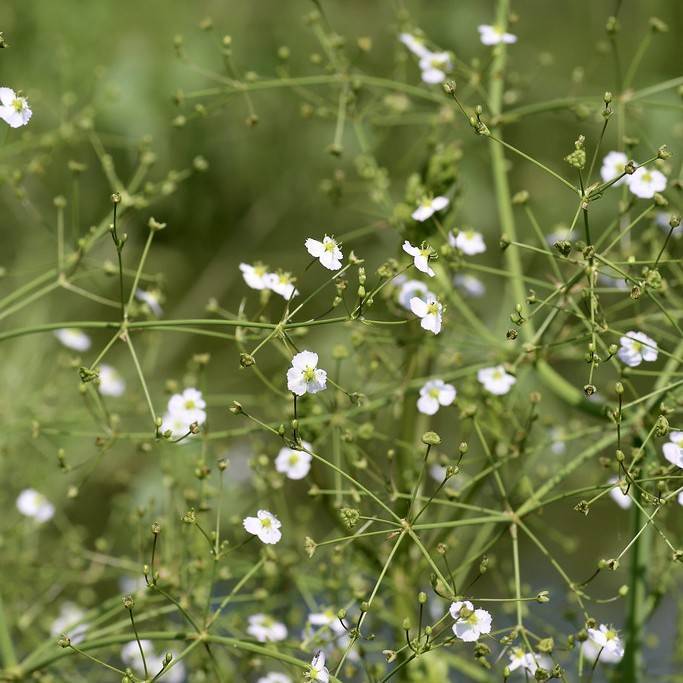
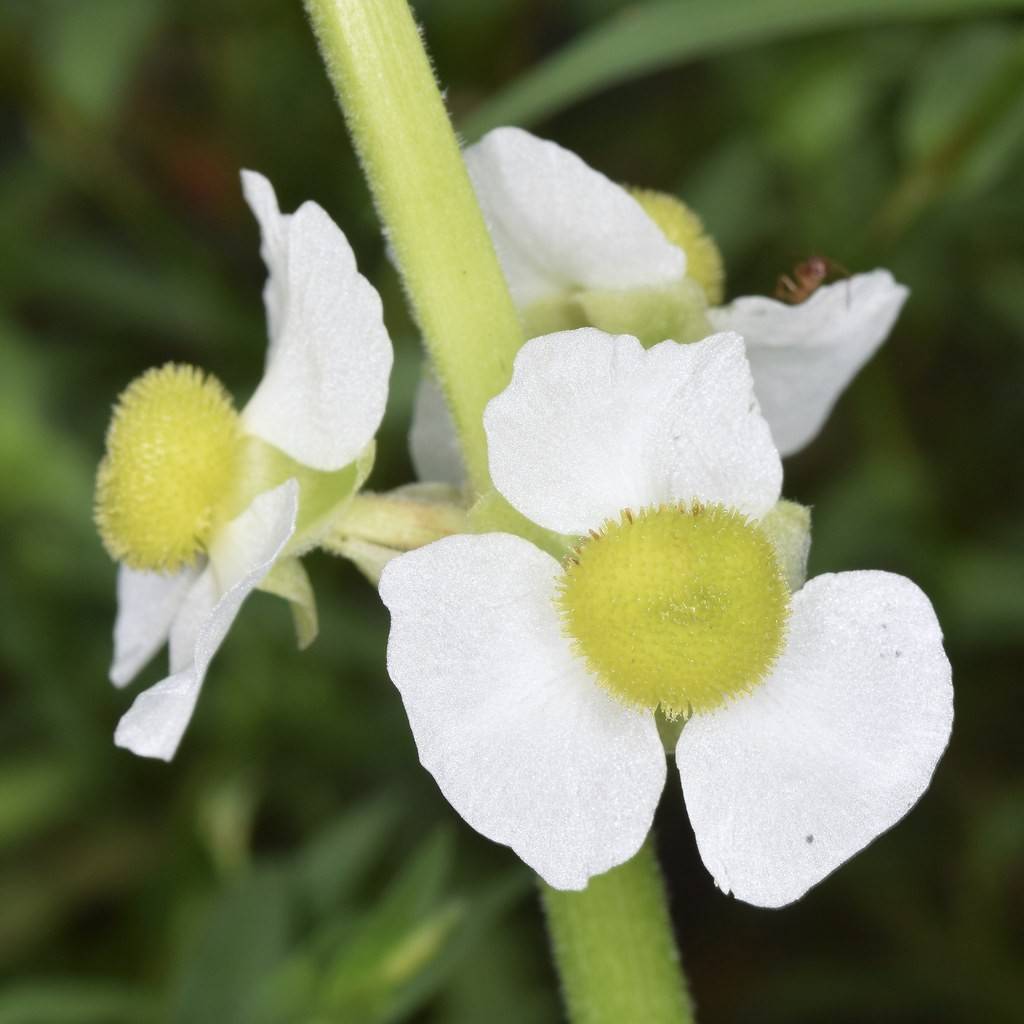
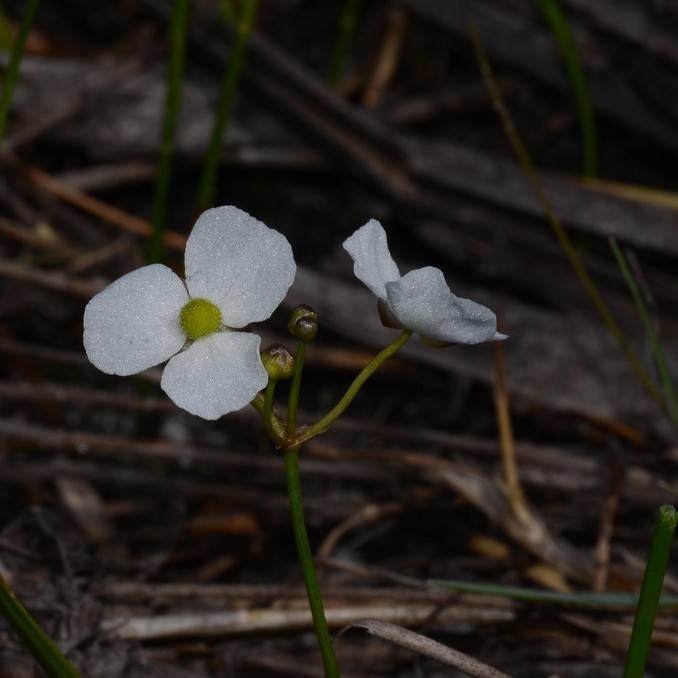
Sagittaria graminea, commonly called Grassy Arrowhead, is an aquatic or marginal wetland plant distinguished by its slender, linear leaves that lack the iconic arrowhead shape of many other Sagittaria species. It produces delicate, three-petaled white flowers on upright stalks above the water surface from late spring to early fall, attracting pollinators like bees and butterflies. Adapted to calm, shallow freshwater environments, it spreads via rhizomatous root systems to form dense, erosion-controlling colonies in marshes, pond edges, and slow-moving streams.
Care Guide
Watering
As an aquatic plant, Grassy Arrowhead requires consistent submersion in 2 to 12 inches of shallow, calm freshwater, or consistently saturated wet soil if planted at a water body margin. Never allow the root zone to dry out completely; top up water levels regularly to maintain consistent depth, especially during hot, dry periods. Avoid placing it in fast-moving water that can dislodge shallow root systems or damage delicate foliage.
Light
Grassy Arrowhead thrives in full sun, requiring a minimum of 6 hours of direct sunlight daily to produce abundant foliage and flowers. It can tolerate very light partial shade, but extended low light conditions will lead to sparse growth, reduced flowering, and weakened rhizome development. For indoor aquatic containers, position it near a south-facing window or supplement with full-spectrum grow lights to meet its light needs.
Soil
Plant Grassy Arrowhead in heavy, nutrient-rich loam or clay soil that holds water well, avoiding light, sandy substrates that will not anchor its rhizomes effectively. The ideal soil pH is neutral to slightly acidic, ranging from 6.0 to 7.5. If planting in a pond container, top the soil layer with a 1-inch layer of gravel to prevent soil from dispersing into the water and to hold rhizomes in place.
Fertilizer
Feed Grassy Arrowhead once monthly during the active growing season (spring through summer) with a slow-release aquatic plant fertilizer formulated for pond plants, following package dosage instructions to avoid over-fertilizing that can trigger algae blooms. Do not use standard garden fertilizers, as they may contain high levels of phosphorus that disrupt aquatic ecosystem balance. No fertilizer is needed during the dormant winter months when growth slows significantly.
Temperature
Grassy Arrowhead is cold-hardy in USDA zones 5 through 11, tolerating winter water temperatures as low as 20°F (-7°C) as long as its root zone is below the frost line and does not freeze solid. Its optimal growing temperature range is 60–85°F (15–29°C), and it will go dormant and die back to the rhizome when temperatures drop consistently below 50°F (10°C) in fall. In regions with harsh winters, potted specimens can be moved to a cool, dark indoor location until spring to protect rhizomes from deep freezing.
Pruning
Remove yellowed, damaged, or dead foliage and spent flower stalks regularly throughout the growing season to encourage new growth, improve air circulation, and prevent decaying plant matter from fouling surrounding water. In late fall after the first frost, cut back all above-ground foliage to 2–3 inches above the root line to prepare the plant for winter dormancy. Thin out overcrowded colonies every 2–3 years to prevent aggressive spread and maintain healthy, vigorous growth.
Propagation
Grassy Arrowhead is most easily propagated by division of its rhizomatous root system in early spring before new growth emerges. Dig up mature clumps, carefully separate the rhizomes into sections with at least one healthy growing bud per section, and replant each section at the same depth it was previously growing. It can also be grown from seed collected from mature seed heads in fall, sown directly in saturated soil or shallow water in spring, though seed-grown plants take 1–2 years to reach flowering maturity.
Humidity
As an aquatic wetland plant, Grassy Arrowhead naturally tolerates very high humidity levels between 70% and 100% that are typical of its native pond and marsh habitats. It does not require extra humidity measures when grown in outdoor aquatic environments, as proximity to water provides sufficient ambient moisture. For indoor container-grown specimens, maintain high humidity by placing the pot in a tray of water or grouping it with other aquatic plants to create a localized humid microclimate.
Repotting
Container-grown Grassy Arrowhead should be repotted every 2–3 years in early spring before new growth begins, to refresh depleted soil and prevent rhizomes from becoming root-bound in the pot. Gently remove the entire root ball from the old container, trim away any rotting or dead rhizome sections, and replant in a slightly larger container with fresh, heavy loam soil topped with a layer of gravel. After repotting, submerge the container back to its original water depth to minimize transplant shock.
Uses & Symbolism
Grassy Arrowhead is widely used in pond and wetland landscaping to stabilize shorelines, prevent soil erosion, and provide shelter and spawning habitat for fish, amphibians, and aquatic invertebrates. Its small, attractive white flowers and fine grassy foliage make it a popular ornamental choice for water gardens, marginal pond plantings, and bog containers. Indigenous communities of North America have traditionally harvested its starchy, potato-like rhizomes as a food source, eaten raw, boiled, or roasted.
Diseases & Pests
Grassy Arrowhead is relatively pest and disease resistant, but it may occasionally be affected by aquatic aphids and spider mites that feed on foliage, which can be controlled by rinsing affected leaves with a strong stream of water or using insecticidal soap safe for aquatic environments. Fungal leaf spot and root rot can occur in overly stagnant water or if plants are grown in poorly aerated, nutrient-depleted soil; improving water circulation and removing decaying foliage will help prevent these issues. Overcrowded colonies may also attract snails and slugs that feed on young leaves, which can be managed by handpicking or introducing natural predators like ducks or aquatic snail-eating fish.
Related plants
Other plants you might like if you grow Grassy Arrowhead.