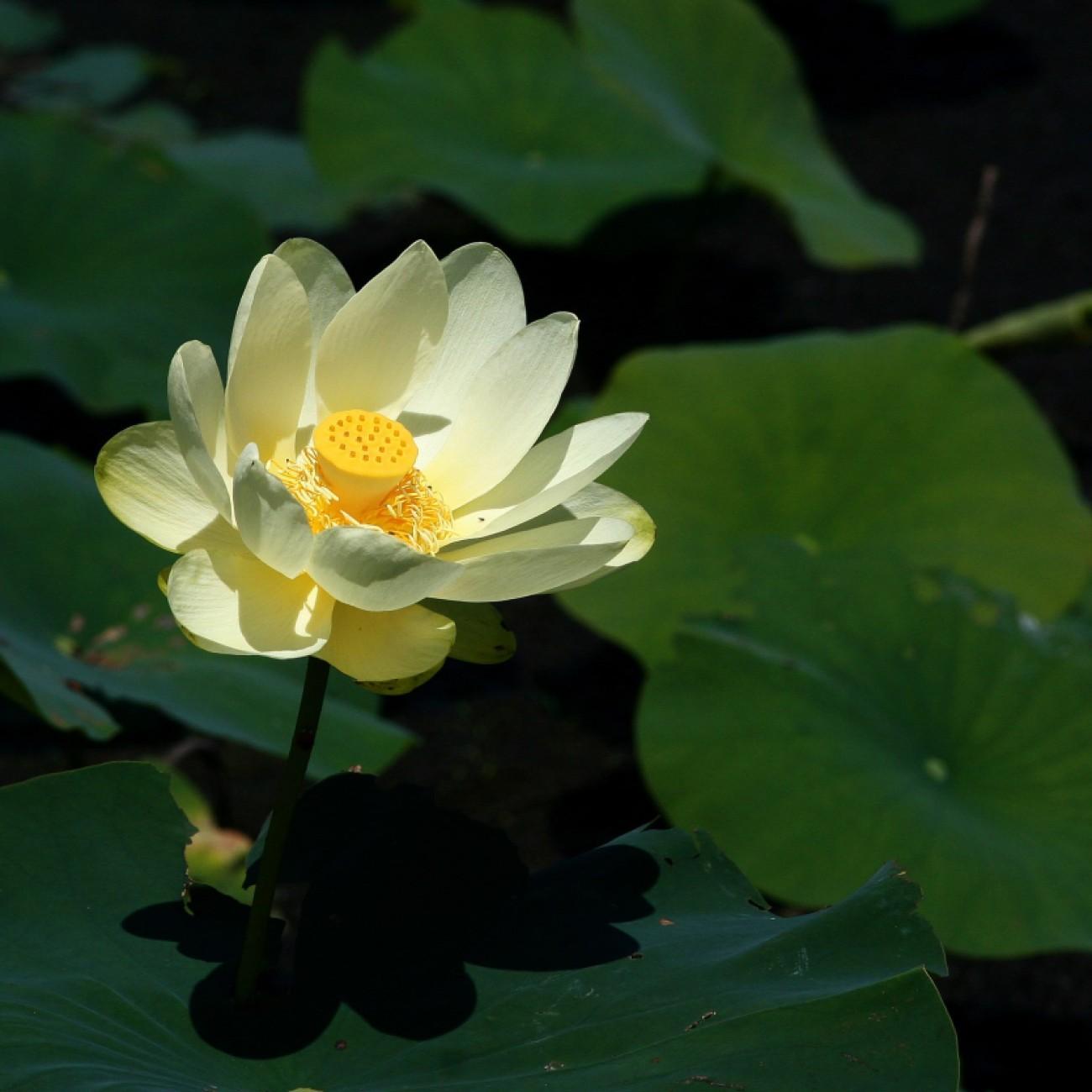
American Lotus
Nelumbo lutea
Overview
American lotus is an iconic aquatic plant recognized by its circular, water-repellent leaves that can reach up to 2 feet in diameter, held aloft on thick, sturdy petioles above the water surface. It produces showy, fragrant pale yellow flowers 4-10 inches wide that bloom for just a few days in summer, maturing into distinctive, flat, conical seed heads that are popular in dried floral arrangements. The species plays a key ecological role in wetland habitats, providing shelter for aquatic wildlife and stabilizing sediment in shallow lakes, ponds, and slow-moving streams.
Care Guide
Watering
American lotus requires consistent submersion in 1-4 feet of still or slow-moving freshwater, with water levels kept stable throughout the growing season to avoid stressing developing rhizomes. During winter dormancy in cooler climates, ensure the plant’s root zone is below the frost line to prevent freezing damage, adjusting water levels if necessary to protect submerged rhizomes. Avoid placing it in fast-moving water, which can damage delicate new growth and dislodge established plants.
Light
This aquatic species thrives in full, direct sunlight for a minimum of 6 hours per day, which supports robust leaf growth and abundant flowering. It can tolerate very light dappled shade for short periods, but reduced sunlight will lead to fewer blooms and weaker, leggy petioles that are more prone to breakage. When grown in ponds, position it away from overhanging trees or other structures that may block consistent sun exposure.
Soil
American lotus grows best in heavy, nutrient-rich loam or clay sediment with a pH between 6.0 and 7.5, free of loose, light organic matter that can float away when submerged. For container cultivation in decorative ponds, plant rhizomes in a heavy, clay-based aquatic potting mix, topped with a layer of gravel to prevent soil from dispersing into the water column. Avoid standard potting mixes that contain perlite, peat, or other lightweight amendments, as these will float and disrupt water quality.
Fertilizer
Feed established plants with slow-release aquatic fertilizer tablets formulated for water lilies and lotus, pushed into the sediment near the rhizomes at the start of the growing season and again 6-8 weeks later to support blooming. Avoid over-fertilizing, which can cause excessive algae growth in the surrounding water and burn the delicate root system of the lotus. Young, newly planted rhizomes do not require fertilizer in their first growing season, as they rely on stored energy in the rhizome to establish.
Temperature
American lotus prefers summer water temperatures between 70-90°F (21-32°C) for active growth and flowering, and can tolerate air temperatures up to 100°F (38°C) as long as water levels remain consistent. It is cold-hardy in USDA zones 4-11, surviving winter temperatures as low as -30°F (-34°C) as long as its rhizomes are submerged below the frost line in unfrozen sediment. In regions with extremely cold winters, container-grown plants can be moved to a frost-free, cool location such as a basement if pond levels are too shallow to protect rhizomes.
Pruning
Remove yellowed, dying leaves and spent flower stalks regularly throughout the growing season by cutting them just above the water surface to prevent rotting material from fouling the water and to encourage new growth. Avoid cutting stems below the water line, as this can allow water to enter the hollow rhizome system and cause rot that spreads to the rest of the plant. At the end of the growing season, once foliage has died back completely, cut all remaining stems down to the sediment level to prepare the plant for winter dormancy.
Propagation
American lotus is most commonly propagated by dividing mature rhizomes in early spring just before new growth emerges, carefully separating sections with at least one visible growth bud and replanting them immediately in wet sediment. It can also be grown from seed, but seeds must first be scarified (nicked with a file to break the hard outer coat) and soaked in warm water for several days until they swell, before being planted in shallow, warm sediment. Seed-grown plants typically take 2-3 years to reach flowering maturity, while rhizome divisions often bloom in their first growing season.
Humidity
As an aquatic plant, American lotus thrives in high humidity levels between 60-80%, which are naturally present in its wetland and pond habitats. It tolerates lower humidity levels as long as it remains fully submerged in adequate water, as its foliage is adapted to withstand fluctuations in ambient moisture common in outdoor environments. Indoor-grown specimens in container ponds may require occasional misting of foliage if indoor humidity drops below 50% for extended periods, to prevent leaf tip browning.
Repotting
Container-grown American lotus should be repotted every 2-3 years in early spring before new growth begins, to refresh the soil and prevent rhizomes from becoming overcrowded in their pots. Gently lift the entire root ball from the pot, trim away any dead or rotting rhizome sections, and replant the healthy sections in a larger container with fresh aquatic potting mix, topping with gravel to hold soil in place. After repotting, submerge the container at the appropriate water depth gradually, to allow the plant to acclimate to its new growing medium.
Uses & Symbolism
Nearly all parts of American lotus are edible for humans: its large starchy rhizomes are cooked and eaten like potatoes, its immature seeds are consumed raw or roasted, and its young leaves and leaf stalks are boiled as a vegetable. The plant is widely planted in ornamental ponds and water gardens for its striking foliage, fragrant summer flowers, and attractive seed heads, which are often harvested for use in fresh and dried floral arrangements. Ecologically, it is used in wetland restoration projects to stabilize shoreline sediment, filter excess nutrients from runoff, and provide food and shelter for fish, waterfowl, and pollinators.
Diseases & Pests
American lotus is relatively pest-resistant, but may be affected by aquatic aphids, lotus leaf beetles, and snails that feed on young foliage, causing unsightly holes and stunted growth if populations are left unchecked. Fungal leaf spot and blight can occur in excessively humid, poorly ventilated conditions, causing brown lesions on leaves that can spread if affected foliage is not removed promptly. Over-fertilization and poor water quality can lead to excessive algae growth that smothers young leaves and competes with the lotus for nutrients, requiring regular water quality monitoring to prevent.
Related plants
Other plants you might like if you grow American Lotus.