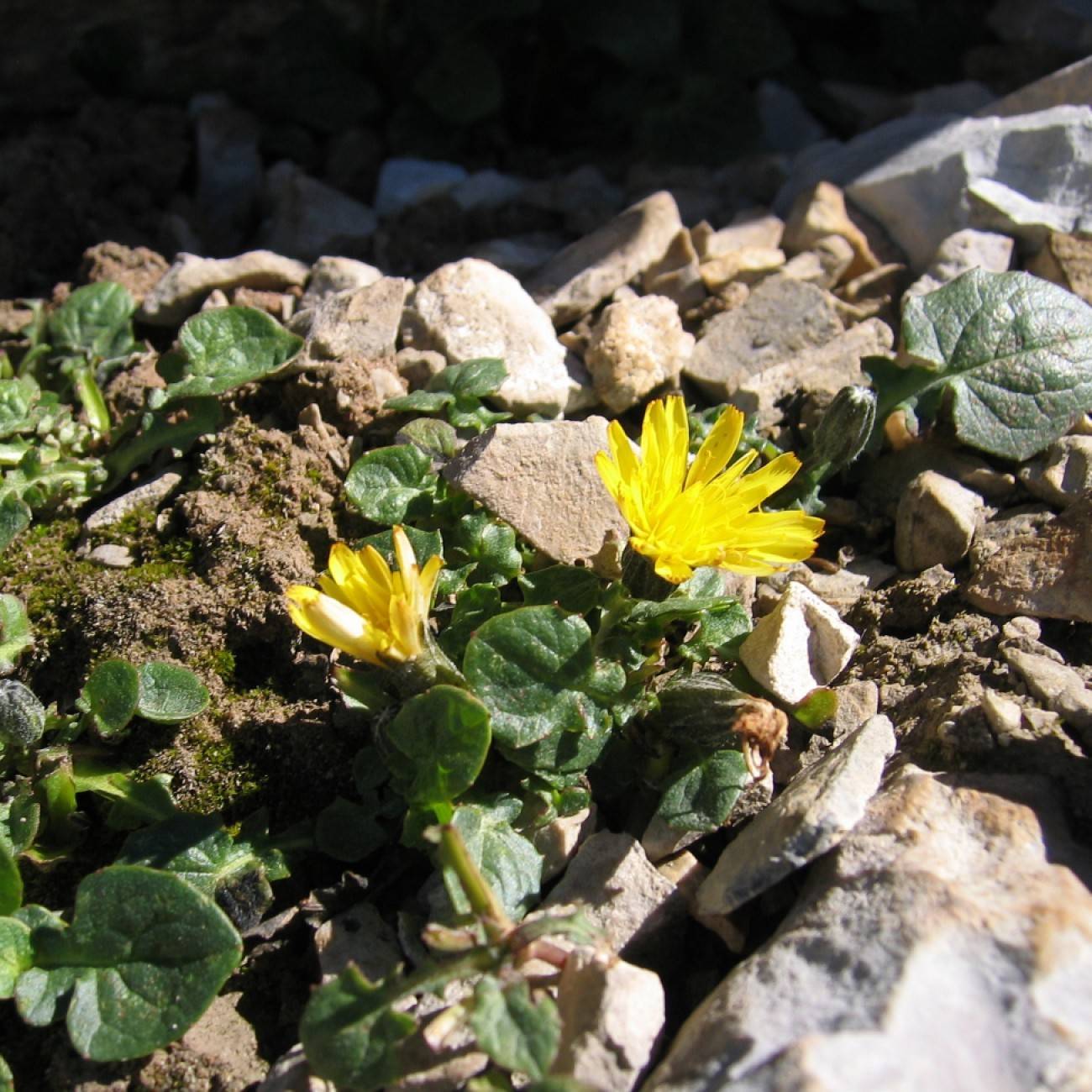
Dwarf Alpine Hawksbeard
Crepis pygmaea
Overview
Dwarf Alpine Hawksbeard is a compact, cold-hardy perennial native to high-elevation rocky slopes, scree fields, and alpine meadows across southern and central European mountain ranges. It forms low, dense mats of small, lobed green foliage, sending up slender, short stems topped with cheerful bright yellow composite flowers that resemble small dandelions. This species is highly adapted to harsh alpine conditions, including extreme temperature fluctuations, strong winds, and shallow, nutrient-poor substrates, making it a popular choice for rock gardens and alpine trough plantings.
Care Guide
Watering
Dwarf Alpine Hawksbeard requires well-drained conditions and moderate moisture during its active growing season in spring and early summer, with soil allowed to dry out slightly between waterings to prevent root rot. During winter dormancy, keep the plant almost completely dry, as excess moisture around its roots in cold conditions will quickly cause decay. Avoid overwatering, especially in container plantings, as its shallow root system is highly susceptible to rot in waterlogged soil.
Light
This alpine species thrives in full sun, requiring at least 6 hours of direct sunlight daily to produce abundant flowers and maintain its compact, dense growth habit. In extremely hot, low-elevation climates, it can benefit from light afternoon shade to prevent foliage scorch and reduce heat stress, though it will not bloom well in heavily shaded positions. When grown indoors as a container plant, place it in a south-facing window or under bright grow lights to meet its high light requirements.
Soil
Dwarf Alpine Hawksbeard needs extremely well-drained, gravelly or sandy soil with a neutral to slightly alkaline pH, mimicking its native rocky alpine substrate. Heavy, clay-rich soils that retain moisture are unsuitable, as they will lead to rapid root rot; amend garden soil with coarse sand, crushed limestone, and grit to improve drainage before planting. For container or trough plantings, use a specialized alpine potting mix composed of equal parts potting soil, coarse grit, and perlite to ensure optimal drainage and aeration for shallow roots.
Fertilizer
This species is adapted to low-nutrient alpine soils and requires very little fertilization to thrive, with excess nutrients leading to leggy, weak growth and reduced flowering. Apply a dilute, balanced slow-release fertilizer at one-quarter the recommended strength once per year in early spring, just as new growth begins to emerge. Avoid fertilizing during the summer or fall, as this can stimulate tender new growth that will be damaged by cold winter temperatures.
Temperature
Dwarf Alpine Hawksbeard is extremely cold-hardy, tolerating winter temperatures as low as -30°F (-34°C) when grown in well-drained conditions, suitable for USDA hardiness zones 3 through 7. It prefers cool summer temperatures between 50-70°F (10-21°C), and will struggle in prolonged hot, humid weather above 80°F (27°C), often going dormant early in these conditions. In warmer climates, grow it in a shaded, cool position or in a container that can be moved to a cool, shaded spot during summer heatwaves.
Pruning
Pruning requirements for Dwarf Alpine Hawksbeard are minimal; simply snip off spent flower stems after blooming to keep the plant tidy and prevent self-seeding if desired. In late fall or early spring, trim away any dead, brown, or damaged foliage to make room for new growth and improve air circulation around the mat of leaves. Avoid heavy pruning, as this can damage the shallow, compact crown of the plant and reduce its vigor in the following growing season.
Propagation
Dwarf Alpine Hawksbeard is most commonly propagated by seed, sown directly on the surface of well-drained gritty soil in late fall or early spring, as seeds require a period of cold stratification to germinate successfully. Mature clumps can also be divided in early spring, carefully pulling apart the dense mat of roots and foliage into smaller sections and replanting them immediately in suitable substrate. Root cuttings taken in late winter can also be successful, though this method is less commonly used for home cultivation.
Humidity
This alpine species prefers low to moderate humidity levels, between 30-50%, and is well-adapted to the dry, windy conditions of its native mountain habitat. High humidity, especially in combination with warm temperatures, can lead to fungal leaf spot and root rot, so ensure good air circulation around the plant at all times. When grown indoors, avoid placing it in humid rooms such as bathrooms, and do not mist the foliage, as excess moisture on leaves can encourage disease.
Repotting
Container-grown Dwarf Alpine Hawksbeard has a small, shallow root system and only needs repotting every 3-4 years, when it has completely filled its current pot with roots. Repot in early spring, just before new growth emerges, using a slightly larger pot with plenty of drainage holes and a gritty, well-drained alpine potting mix. Be careful not to plant the crown of the plant too deeply, as this can cause rot, and water lightly after repotting to settle the soil around the roots.
Uses & Symbolism
Dwarf Alpine Hawksbeard is primarily used ornamentally in rock gardens, alpine troughs, crevice gardens, and gravel gardens, where its compact size and bright yellow flowers add cheerful color to small, well-drained spaces. It is also a popular plant for alpine plant collections and specialist shows, valued for its diminutive form and reliable blooming habit. In its native range, it provides an important early-season nectar source for small alpine pollinators including solitary bees and butterflies.
Diseases & Pests
Dwarf Alpine Hawksbeard is relatively pest and disease free when grown in suitable well-drained conditions, but can be affected by root rot if planted in heavy, waterlogged soil or overwatered, especially during cold winter months. Fungal leaf spot and powdery mildew can occur in high-humidity conditions or if the plant is grown with poor air circulation, causing brown or white spots on foliage that can be treated by removing affected leaves and improving air flow. Aphids and slugs may occasionally feed on young new growth, though these pests rarely cause significant damage to healthy, established plants.
Related plants
Other plants you might like if you grow Dwarf Alpine Hawksbeard.