European Water Plantain
Alisma plantago-aquatica
Overview
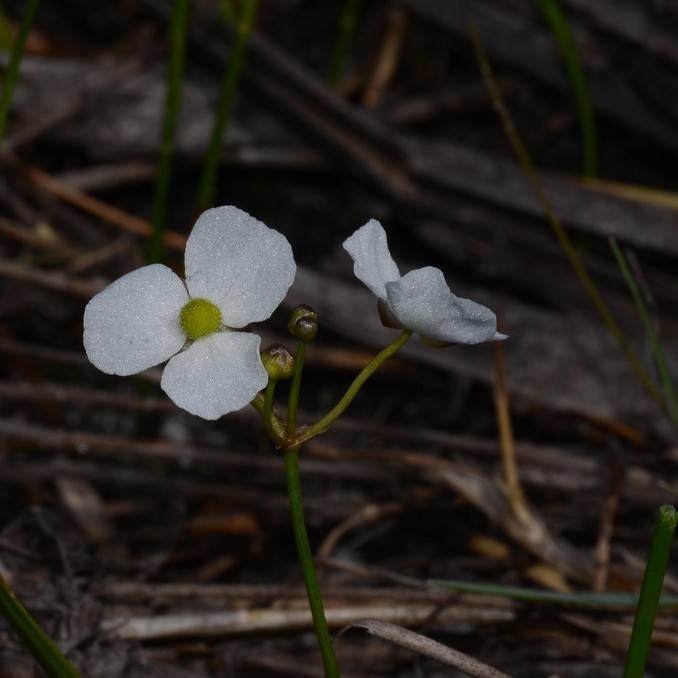
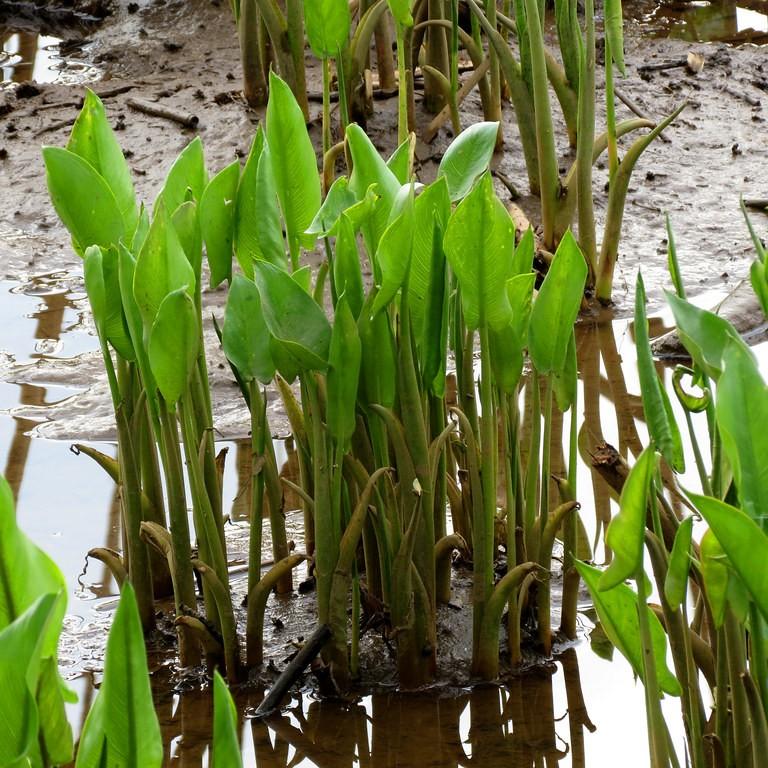
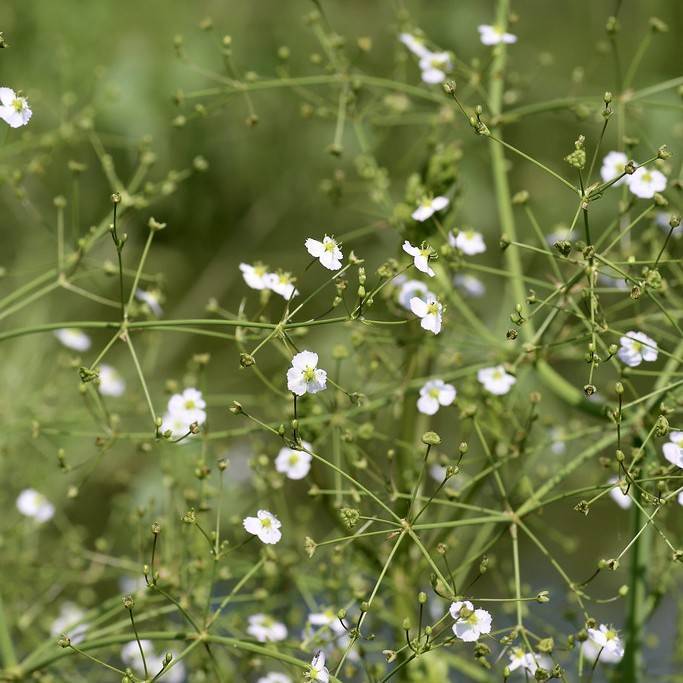
European Water Plantain is a semi-aquatic herb that thrives in the muddy margins of ponds, lakes, slow streams, and marshes. It produces two distinct foliage types: broad, oval-shaped floating or emergent leaves with prominent parallel veins, and smaller, narrower submerged leaves. From late spring to late summer, it sends up tall, branching stalks lined with tiny, three-petaled flowers that attract pollinators including bees and flies. The plant spreads via both buoyant seeds and creeping rhizomes, forming dense colonies that provide shelter for small aquatic organisms.
Care Guide
Watering
As an aquatic species, European Water Plantain requires constant submersion of its root system in 2-12 inches (5-30 cm) of shallow, still or slow-moving freshwater. Never allow the soil around its roots to dry out; maintain consistent water levels throughout the growing season to prevent stress. For container cultivation, place potted specimens in a pond or water garden basin where their roots remain fully saturated at all times.
Light
This species prefers full sun exposure, receiving at least 6 hours of direct sunlight daily for optimal foliage growth and abundant flowering. It can tolerate partial shade, but reduced light will result in fewer blooms and slower, leggier stalk growth. Avoid planting in deep shade, as this may cause the plant to decline and die back prematurely.
Soil
Grow European Water Plantain in heavy, nutrient-rich loam or clay soil typical of wetland habitats, with a neutral to slightly alkaline pH between 6.5 and 8.0. The soil must be consistently waterlogged and free of fast-draining amendments like sand or perlite, which prevent the root system from staying fully saturated. For container planting, use a dedicated aquatic potting mix or heavy garden soil, and top with a 1-inch layer of gravel to prevent soil from leaching into the water.
Fertilizer
Fertilize sparingly once per month during the active growing season using a slow-release aquatic plant fertilizer formulated for pond species. Avoid standard water-soluble fertilizers, which can leach excess nutrients into the water and trigger harmful algal blooms. Skip fertilization entirely during the dormant winter months, when the plant’s growth slows significantly.
Temperature
European Water Plantain thrives in temperate climates with summer temperatures between 60 and 80°F (15 and 27°C), and is hardy to USDA zones 4 through 9. It dies back to its rhizomes in winter, tolerating extended periods of freezing temperatures as long as the root zone does not freeze solid; in colder regions, move container-grown specimens to a protected, frost-free area or submerge pots deeper in the pond below the ice line. Avoid exposure to sustained temperatures above 90°F (32°C), which can cause foliage scorch and reduce flowering.
Pruning
Remove yellowed, damaged, or dead foliage periodically throughout the growing season to keep the plant looking tidy and prevent decaying organic matter from fouling the surrounding water. After flowering finishes in late fall, cut back all emergent stalks and foliage to just above the soil line to prepare the plant for winter dormancy. Thin overcrowded colonies every 2 to 3 years to prevent aggressive spread and maintain space for other aquatic species.
Propagation
The easiest method of propagation is division in early spring, before new growth emerges: dig up mature rhizome clumps, cut into sections with at least one healthy growing bud, and replant sections at the same depth in suitable wet soil or aquatic containers. It can also be grown from seed collected from mature seed heads in late summer; sow seeds on the surface of saturated, muddy soil in a warm, sunny location, keeping them constantly wet until germination occurs in 2 to 4 weeks. Avoid introducing wild-collected seeds or plants to natural waterways outside their native range to prevent invasive spread.
Humidity
As a wetland species, European Water Plantain requires very high ambient humidity near 100% in its natural habitat, and will not tolerate dry, arid conditions for extended periods. When grown in container water gardens in drier climates, ensure the surrounding area has adequate moisture, or mist emergent foliage occasionally if air humidity drops below 50% for long stretches. Submerged root systems must stay fully saturated at all times to support the plant’s humidity needs.
Repotting
Repot container-grown European Water Plantain every 2 to 3 years in early spring, before new growth begins, to refresh the nutrient-depleted soil and control spread. Lift the entire root ball from its pot, trim away any dead or rotting rhizome sections, and replant in a slightly larger aquatic pot with fresh heavy loam or aquatic potting mix, topped with a gravel layer to prevent soil erosion. After repotting, submerge the pot at its usual depth in the pond or water garden immediately.
Uses & Symbolism
In traditional herbal medicine, dried European Water Plantain rhizomes have been used topically to treat minor skin irritations and internally to support urinary tract health, though internal consumption is not recommended without medical supervision due to its toxic compounds. It is a popular addition to wildlife-friendly ponds and water gardens, where its dense foliage provides shelter for fish fry, amphibians, and aquatic invertebrates, and its flowers support native pollinator populations. The plant also helps stabilize muddy shorelines and filter excess nutrients from pond water, improving overall water quality.
Diseases & Pests
European Water Plantain is relatively pest and disease resistant, but may be affected by common aquatic pests including aphids, water lily beetles, and snails, which feed on the soft emergent foliage and flower stalks. Fungal leaf spot and root rot can occur in stagnant, poorly oxygenated water, or if the plant is planted in overly compacted, nutrient-saturated soil. In areas with high nutrient runoff, the plant may become aggressive and outcompete smaller native aquatic species, requiring regular thinning to control spread.
Related plants
Other plants you might like if you grow European Water Plantain.