Hardy Orange
Poncirus trifoliata (syn. Citrus trifoliata)
Overview
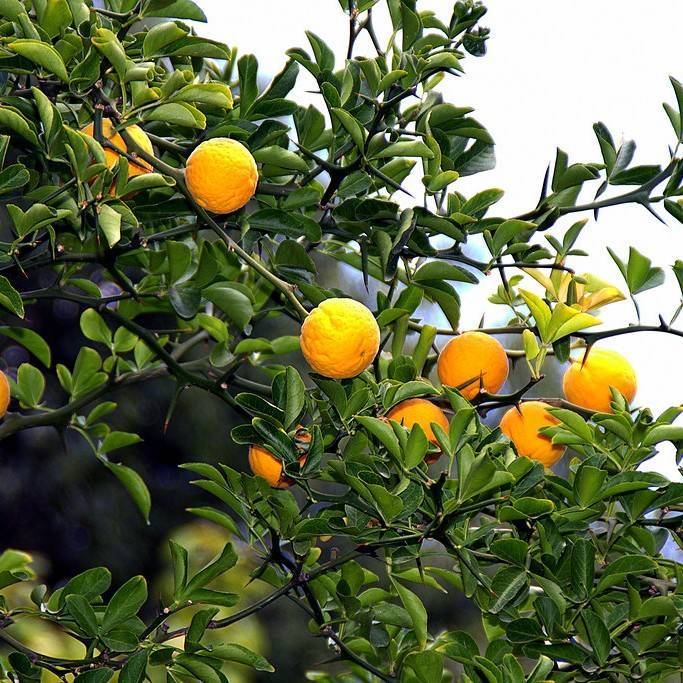
Hardy orange, also called trifoliate orange, is a deciduous shrub or small tree recognizable by its thick, 1-2 inch long sharp thorns and three-parted compound leaves, unique among commonly cultivated citrus relatives. It produces abundant small, white, sweetly fragrant flowers in early spring before foliage emerges, followed by round, fuzzy, yellow-orange fruits 1-2 inches in diameter that ripen in fall and often persist through winter. Though far more cold-tolerant than true oranges, surviving temperatures as low as -10°F (-23°C), its fruits are extremely sour and bitter when raw, distinguishing it from edible citrus species.
Care Guide
Watering
Water young hardy orange plants deeply and regularly during their first 2-3 growing seasons to establish a robust root system, allowing the top 2-3 inches of soil to dry out between waterings. Mature plants are highly drought-tolerant, requiring only occasional supplemental watering during extended periods of hot, dry weather, and are prone to root rot if kept in consistently waterlogged conditions. Avoid overhead watering to reduce the risk of foliar fungal diseases, directing water at the base of the plant instead.
Light
Hardy orange thrives in full, direct sunlight, requiring a minimum of 6 hours of unobstructed sun per day to produce abundant blooms, fruits, and dense, healthy foliage. It can tolerate partial shade, but growth will become leggy, flowering will be significantly reduced, and the plant will be more susceptible to pest infestations and fungal issues. When grown as a hedge, position plants where all sides receive equal sun exposure to encourage uniform, dense growth.
Soil
This adaptable shrub grows well in a wide range of soil types, including sandy, loam, and clay soils, as long as the site provides excellent drainage. It tolerates a broad pH range from 5.0 to 8.0, thriving in slightly acidic to slightly alkaline conditions, and can even handle moderately saline soils in coastal regions. Avoid heavy, poorly drained soils where water pools for more than a few hours after rain, as this will quickly cause fatal root rot.
Fertilizer
Fertilize hardy orange sparingly, as over-fertilization can lead to excessive soft growth that is more vulnerable to cold damage and pest infestations. Apply a balanced, slow-release 10-10-10 fertilizer once per year in early spring, just before new growth emerges, scattering it evenly around the drip line of the plant and watering it in thoroughly. If growing in very poor, nutrient-deficient soil, a light second application of fertilizer can be made in early summer, but avoid fertilizing after mid-summer to prevent new growth that will be damaged by early fall frosts.
Temperature
Hardy orange is exceptionally cold-hardy for a citrus relative, surviving winter temperatures as low as -10°F (-23°C) when fully dormant, making it suitable for growing in USDA hardiness zones 5 through 9. It tolerates high summer temperatures up to 100°F (38°C) without stress, as long as it receives adequate water during extreme heat. Young plants may benefit from a layer of winter mulch and a protective burlap wrap in zones 5 and 6 during their first 2-3 winters to prevent cold injury until they are fully established.
Pruning
Prune hardy orange in late winter or early spring before new growth begins, removing any dead, damaged, or diseased branches first, followed by thinning out crowded inner growth to improve air circulation. If grown as a security hedge, shear plants 1-2 times per year after flowering to maintain the desired height and shape, taking care to wear thick protective gloves to avoid injury from the sharp thorns. Remove any root suckers that emerge around the base of the plant promptly, especially if it is being used as a rootstock for grafted citrus, to prevent the rootstock from overtaking the desired grafted cultivar.
Propagation
Hardy orange is most commonly propagated from seed, which requires 3-4 months of cold stratification at 32-40°F (0-4°C) to break dormancy, followed by sowing in well-draining seed starting mix in spring; seeds germinate reliably within 2-3 weeks under warm, moist conditions. It can also be propagated from semi-hardwood cuttings taken in mid-summer, treated with rooting hormone, and placed in a humid, shaded propagation bed, though cuttings root at a lower success rate than seeds. It is widely used as a rootstock for grafting other citrus varieties, as it imparts cold hardiness and disease resistance to more tender edible citrus cultivars.
Humidity
Hardy orange adapts well to a wide range of humidity levels, thriving in both the humid summers of its native East Asian range and the drier climates of interior North America, with no specific humidity requirements for healthy growth. It tolerates moderate coastal humidity well, as long as it is planted in a well-drained site with good air circulation to prevent foliar fungal issues. In very arid desert climates, occasional misting of foliage during periods of extreme dryness can help reduce leaf scorch, though it is not required for survival.
Repotting
When grown in containers, repot young hardy orange plants every 1-2 years in early spring before new growth emerges, moving them to a pot 2-3 inches larger in diameter than their current container, using a well-draining citrus potting mix. Mature container-grown plants only need repotting every 3-4 years, as they prefer to be slightly root-bound, and can be top-dressed with fresh potting mix in years when repotting is not performed. Ensure all containers have multiple drainage holes to prevent waterlogging, and avoid using overly large pots, as excess potting mix can hold too much moisture and lead to root rot.
Related plants
Other plants you might like if you grow Hardy Orange.