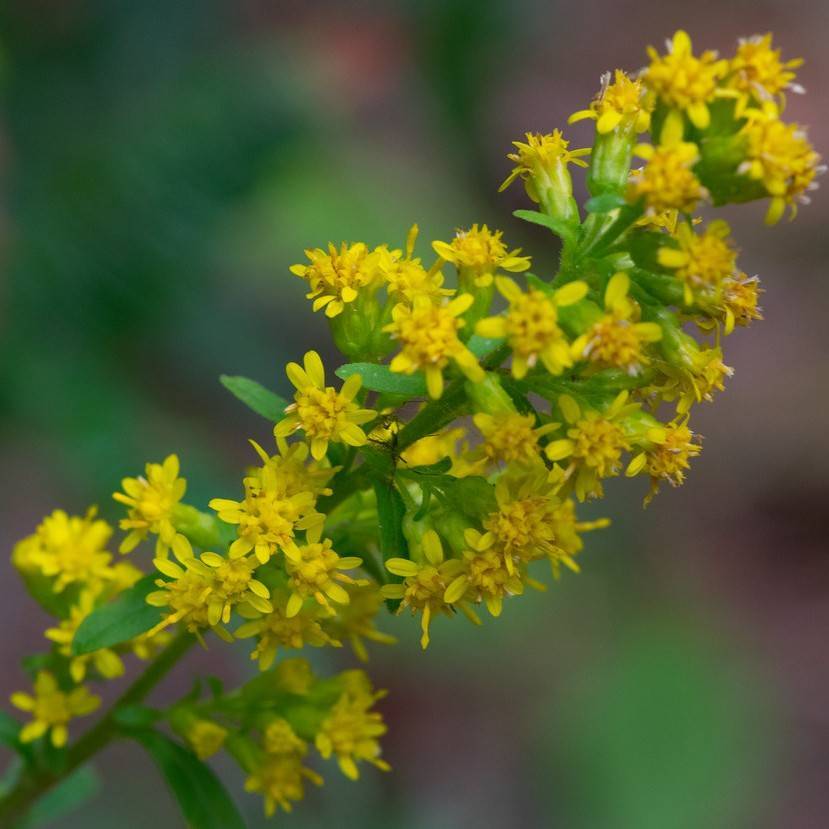
Elm Leaved Goldenrod
Solidago ulmifolia
Overview
Elm Leaved Goldenrod gets its common name from its serrated, oval-shaped leaves that closely resemble the foliage of elm trees, setting it apart from many other goldenrod species with narrower foliage. It grows in upright, gently spreading clumps that produce branching, airy panicles of tiny, bright yellow daisy-like flowers from late summer through early fall. Adaptable to a range of wild habitats, including open woodlands, prairies, and roadside edges, it is a hardy, low-fuss native plant well suited to naturalized garden designs.
Care Guide
Watering
Water newly planted elm leaved goldenrod regularly to keep soil evenly moist for the first growing season as it establishes a deep root system. Once established, it is highly drought tolerant, requiring only occasional supplemental water during extended periods of extreme heat or prolonged dry spells. Avoid overwatering or planting in consistently waterlogged sites, as this can cause root rot.
Light
Thrives in full sun, which supports the most robust growth and heaviest flowering, with at least 6 hours of direct sunlight per day preferred. It can tolerate partial shade, though plants grown in shadier conditions may become leggy, produce fewer blooms, and require staking to stay upright.
Soil
Adaptable to a wide range of soil types, including sandy, loamy, and clay soils, as long as the site offers good drainage. It tolerates poor, low-nutrient soils far better than many ornamental garden plants, and grows well in neutral to slightly acidic pH levels. Heavy, poorly draining soils should be amended with compost or grit to improve drainage before planting.
Fertilizer
Elm leaved goldenrod rarely needs supplemental fertilization, as it thrives in low to medium fertility soils typical of its native habitats. If grown in extremely poor, nutrient-depleted soil, a light application of balanced, slow-release fertilizer in early spring can support healthy growth, but over-fertilization will cause overly lush, leggy growth that flops over. Avoid using high-nitrogen fertilizers, as these prioritize foliage growth over flower production.
Temperature
Hardy in USDA zones 3 through 8, tolerating winter lows as cold as -40°F (-40°C) and summer highs up to 95°F (35°C) without issue. It adapts well to the fluctuating temperature conditions of its native North American range, with no extra protection needed for winter in its suitable hardiness zones. Extended periods of temperatures above 100°F (38°C) may cause temporary wilting, which will resolve once cooler conditions return or supplemental water is provided.
Pruning
Minimal pruning is required for elm leaved goldenrod; spent flower stalks can be cut back to the base of the plant in late fall after blooming finishes, or left standing through winter to provide seed for native birds and shelter for beneficial insect overwintering. If plants become leggy in partial shade, they can be pinched back by 1/3 in early summer to encourage bushier, more compact growth that does not require staking. Clumps can be divided every 3-4 years in early spring if they spread beyond their desired space in the garden.
Propagation
Most easily propagated by root division in early spring before new growth begins, or in late fall after flowering has finished; dig up the entire clump, separate it into smaller sections with healthy roots and at least one growing shoot, and replant immediately at the same depth. It can also be grown from seed sown directly outdoors in late fall, as the seeds require a period of cold stratification to germinate, or sown indoors after 4-6 weeks of refrigeration. Stem cuttings taken from new growth in late spring or early summer will also root reliably when placed in moist, well-draining potting mix.
Humidity
Tolerates a wide range of humidity levels, from the dry summers of the central Great Plains to the higher humidity of the eastern United States, with no special adjustments needed. It has no specific humidity requirements, and common household or outdoor humidity levels are more than sufficient for healthy growth. Excessively high humidity combined with poor air circulation can increase the risk of foliar fungal diseases, so space plants appropriately to allow airflow between clumps.
Repotting
Elm leaved goldenrod is most commonly grown directly in garden beds rather than containers, so repotting is rarely required. If grown in a large container, repot every 2-3 years in early spring to refresh the potting mix and give the expanding root system more space, using a well-draining general purpose potting mix. Ensure containers have ample drainage holes to prevent water buildup that can cause root rot.
Related plants
Other plants you might like if you grow Elm Leaved Goldenrod.