Hardy Hibiscus
Hibiscus moscheutos
Overview
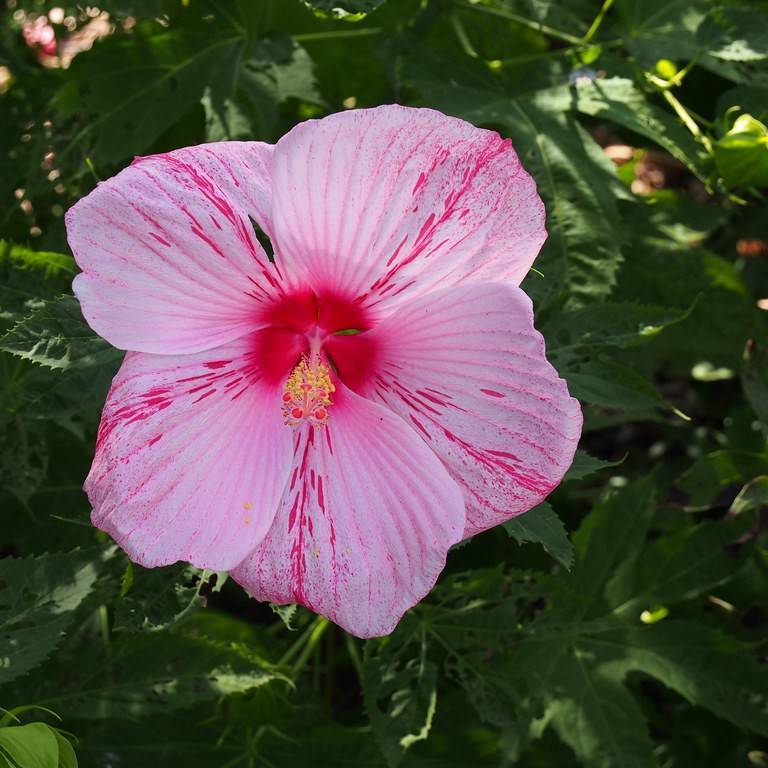
Hardy hibiscus, also called rose mallow, is a herbaceous perennial that dies back to the ground each winter before sprouting vigorous new growth in late spring. It produces some of the largest flowers of any temperate garden plant, with blooms measuring 6-12 inches across in shades of red, pink, white, and bicolor, each bloom lasting one day but produced in abundant succession for months. Unlike tropical hibiscus, it tolerates freezing winter temperatures down to USDA zone 4, making it a popular choice for adding tropical flair to cold-climate gardens.
Care Guide
Watering
Hardy hibiscus thrives in consistently moist soil and tolerates occasional flooding, making it well suited to rain gardens or low-lying wet areas of the yard. Water deeply 1-2 times per week during dry periods, ensuring the root zone never dries out completely, especially during bloom season. Reduce watering in fall as growth slows, and avoid overwatering dormant plants in winter to prevent root rot.
Light
Plant hardy hibiscus in full sun, defined as at least 6 hours of direct unfiltered sunlight per day, to support maximum flower production and sturdy, upright growth. Too much shade will result in leggy, sparse growth and far fewer blooms, plus increased risk of fungal disease from poor air circulation and slow-drying foliage. It can tolerate very light dappled shade in extremely hot, arid climates, but full sun is preferred in most regions.
Soil
Grow hardy hibiscus in rich, moisture-retentive soil with a slightly acidic to neutral pH between 6.0 and 7.0 for best performance. It tolerates heavy clay soil and wet conditions that many other perennials cannot, but will not perform well in dry, sandy soil unless heavily amended with organic matter. Mix 2-3 inches of compost, well-rotted manure, or peat moss into the planting hole to improve water retention and nutrient content.
Fertilizer
Feed hardy hibiscus with a balanced, slow-release 10-10-10 fertilizer in early spring just as new growth emerges, to support vigorous vegetative growth and early bud development. Follow up with a second application of a bloom-boosting 5-10-5 fertilizer in mid-summer when buds begin to form, to encourage larger, more vibrant blooms. Avoid over-fertilizing with high-nitrogen products, as this will produce excess leaf growth at the expense of flowers.
Temperature
Hardy hibiscus is adapted to temperate climates, surviving winter temperatures as low as -30°F (-34°C) in USDA zones 4 through 9. It dies back completely to the ground after the first hard frost, and benefits from a 2-3 inch layer of mulch over the root zone in cold regions to insulate roots from extreme temperature fluctuations. It tolerates summer heat well, thriving in temperatures up to 90°F (32°C) as long as adequate moisture is provided.
Pruning
Prune hardy hibiscus in late winter or early spring before new growth emerges, cutting all dead, woody stems back to 4-6 inches above the ground to make room for vigorous new shoots. Pinch back the tips of new growth when stems reach 12-18 inches tall in spring to encourage bushier, more branched growth that will produce more flower buds. Deadhead spent blooms regularly during the flowering season to encourage continuous bud production and prevent self-seeding if desired.
Propagation
Hardy hibiscus is most easily propagated by division in early spring, just as new shoots emerge from the ground, by digging up the entire root clump and splitting it into sections with at least 2-3 growing points each. It can also be propagated from softwood cuttings taken in late spring or early summer, rooting cuttings in moist potting mix under high humidity for 4-6 weeks before transplanting. While it can be grown from seed, seed-grown plants will not come true to the parent cultivar, and may take 2-3 years to reach flowering size.
Humidity
Hardy hibiscus adapts well to a wide range of humidity levels, thriving in the moderate to high humidity of its native wetland habitats as well as drier temperate conditions. It does not require any supplemental humidity when grown outdoors, but ensure good air circulation around plants to prevent fungal leaf spots in areas with high humidity and frequent rainfall. If grown in containers indoors over winter, mist foliage occasionally to offset the dry air from heating systems.
Repotting
Container-grown hardy hibiscus should be repotted every 2-3 years in early spring, just before new growth begins, to refresh the soil and give roots room to expand. Choose a pot that is 2-3 inches larger in diameter than the current container, with drainage holes to prevent waterlogging, and use a rich, peat-based potting mix with added perlite for drainage. In cold regions, move potted plants to a sheltered, unheated location for winter, or insulate the pot to prevent root damage from freezing temperatures.
Uses & Symbolism
Hardy hibiscus is a popular ornamental plant for perennial borders, rain gardens, wetland restoration projects, and container plantings, where its large, showy blooms add bold tropical color to temperate landscapes. The flowers and young leaves are edible, with a mild, tart flavor, and can be used fresh in salads, brewed into herbal tea, or used as a garnish, similar to tropical hibiscus varieties. It also provides nectar for pollinators including hummingbirds, butterflies, and native bees, supporting local ecosystem health in its native range.
Diseases & Pests
Hardy hibiscus is relatively pest and disease resistant, but can be susceptible to aphids, whiteflies, and Japanese beetles, which feed on foliage and flowers; treat infestations with insecticidal soap or neem oil, or handpick larger pests like Japanese beetles. Fungal diseases including leaf spot, rust, and powdery mildew can occur in wet, humid conditions with poor air circulation; prevent these by spacing plants properly for air flow, watering at the base rather than overhead, and removing affected foliage promptly. Root rot can occur in poorly drained soil or if dormant plants are overwatered in winter, so ensure planting sites or containers have adequate drainage to avoid this issue.
Related plants
Other plants you might like if you grow Hardy Hibiscus.