Balloon Flower
Platycodon grandiflorus
Overview
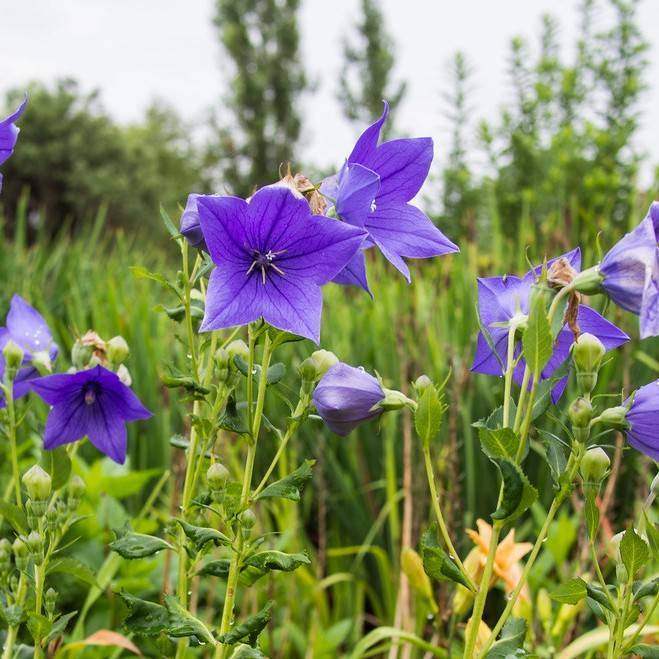
Balloon flower is a clump-forming herbaceous perennial native to East Asian grasslands and mountain slopes, beloved for its distinctive bud structure and long-lasting summer blooms. It features thick, toothed blue-green foliage arranged in upright stems, with unopened buds that swell like small balloons before unfurling into five-pointed, bell-shaped flowers up to 3 inches wide. The plant is cold-hardy down to USDA zone 3, dies back completely to the ground in winter, and re-emerges reliably in late spring, making it a low-fuss addition to temperate garden beds.
Care Guide
Watering
Balloon flowers prefer consistently moist, well-drained soil during their active growing season in spring and summer, requiring water when the top 1 to 2 inches of soil feel dry to the touch. Once established, they are moderately drought-tolerant, needing only supplemental water during extended periods of hot, dry weather to prevent wilting and bloom drop. Avoid overwatering or allowing the plant to sit in saturated soil, as this can cause its thick, fleshy taproot to rot, especially in winter.
Light
This plant thrives in full sun, receiving at least 6 hours of direct sunlight per day, which promotes the most abundant flowering and sturdy, upright stem growth that does not require staking. In regions with extremely hot, intense summer sun, it benefits from partial afternoon shade to prevent foliage scorch and extend the life of its blooms. Too much shade will result in leggy, floppy growth and reduced flower production.
Soil
Balloon flowers grow best in loamy, well-drained soil with a slightly acidic to neutral pH range of 5.5 to 7.0, though they can adapt to most average garden soils as long as drainage is good. Amend heavy clay soils with compost or well-rotted organic matter before planting to improve drainage and prevent waterlogging around the plant’s deep taproot. They do not tolerate heavy, water-retentive soils, especially during winter dormancy, as this quickly leads to root rot.
Fertilizer
Feed established balloon flowers once per year in early spring, just as new growth emerges, using a balanced, slow-release granular fertilizer with an N-P-K ratio of 10-10-10, worked lightly into the soil around the base of the plant. Alternatively, you can apply a diluted liquid all-purpose fertilizer every 4 to 6 weeks during the active growing season, but avoid over-fertilizing, as this can cause excessive leafy growth at the expense of blooms. No fertilizer is needed in fall or winter, when the plant is dormant.
Temperature
Balloon flowers are exceptionally cold-hardy, surviving winter temperatures as low as -40°F (-40°C) in USDA zones 3 through 8, and require a period of cold winter dormancy to bloom reliably the following year. They prefer average summer temperatures between 60°F and 80°F (15°C to 27°C), and will tolerate short periods of higher heat if provided with adequate moisture and partial shade. In warm climates above zone 8, the plant may not receive enough cold chill hours to thrive, leading to reduced vigor and blooming.
Pruning
Pinch back the tips of young stems in late spring when the plant is 6 to 8 inches tall to encourage bushier, more compact growth and more flower buds, reducing the need for staking. Deadhead spent blooms regularly throughout the flowering season to encourage continued blooming and prevent unwanted self-seeding, as balloon flowers can spread slowly if seed pods are allowed to mature. In fall, after the foliage has yellowed and died back completely, cut stems down to 1 to 2 inches above the soil line to tidy the bed and prepare the plant for winter dormancy.
Propagation
Balloon flowers are most commonly propagated from seed, sown directly outdoors in fall or started indoors 6 to 8 weeks before the last expected frost, with seeds requiring light to germinate so they should not be covered with soil. Because the plant has a deep, fragile taproot that does not tolerate disturbance well, division is not recommended unless absolutely necessary; if dividing, do so in very early spring when new growth first emerges, digging deeply to avoid damaging the taproot and replanting immediately. Stem cuttings can also be taken in late spring, using 4-inch long cuttings of soft new growth, dipped in rooting hormone, and planted in moist, well-draining potting mix until roots form in 3 to 4 weeks.
Humidity
Balloon flowers are adaptable to a wide range of humidity levels, thriving in the average ambient humidity of temperate garden environments with no special requirements. They tolerate both moderately dry and moderately humid conditions, as long as air circulation is good around the foliage to prevent fungal diseases. Excessively high, stagnant humidity combined with wet foliage can lead to powdery mildew, so space plants 12 to 18 inches apart to allow for airflow.
Repotting
When grown in containers, balloon flowers require repotting only every 3 to 4 years, as they prefer to be slightly root-bound and dislike disturbance to their taproot. Repot in early spring just as new growth emerges, choosing a container that is 2 inches larger in diameter than the current one, with drainage holes, and using a well-draining potting mix amended with perlite or coarse sand to improve drainage. Be very careful when removing the plant from its old pot to avoid damaging the thick taproot, as breakage can lead to rot or plant death.
Uses & Symbolism
Balloon flowers are popular ornamental plants for perennial borders, rock gardens, and cottage gardens, where their unique buds and vibrant blooms add seasonal interest from mid to late summer. In traditional East Asian medicine, the dried root of the plant, known as jie geng in Chinese medicine, is used to treat respiratory conditions including coughs, sore throats, and bronchitis. Young leaves and roots are also edible in Korean cuisine, where they are pickled or used in savory dishes and salads.
Diseases & Pests
Balloon flowers are relatively pest and disease resistant, though they can be susceptible to root rot if grown in poorly drained, waterlogged soil, especially during cold winter months. Common fungal diseases include powdery mildew and gray mold, which appear as white or gray fuzzy growth on foliage, usually caused by excessive moisture, poor air circulation, or overhead watering. Slugs and snails may occasionally feed on young, tender foliage in spring, especially in damp, shaded areas.
Related plants
Other plants you might like if you grow Balloon Flower.

%22%2F%3E%0A%20%20%20%20%20%20%3Ccircle%20cx%3D%22920%22%20cy%3D%22180%22%20r%3D%2290%22%20fill%3D%22%23cfe8d5%22%2F%3E%0A%20%20%20%20%20%20%3Cpath%20d%3D%22M600%20590c-90-180-215-255-310-280%200%20165%20118%20296%20270%20296h40z%22%20fill%3D%22%2379b88e%22%2F%3E%0A%20%20%20%20%20%20%3Cpath%20d%3D%22M600%20590c80-150%20198-212%20302-228-8%20142-123%20255-270%20255h-32z%22%20fill%3D%22%235c9f73%22%2F%3E%0A%20%20%20%20%20%20%3Cpath%20d%3D%22M600%20610V360%22%20stroke%3D%22%234f8c64%22%20stroke-width%3D%2218%22%20stroke-linecap%3D%22round%22%2F%3E%0A%20%20%20%20%20%20%3Ctext%20x%3D%22600%22%20y%3D%22700%22%20text-anchor%3D%22middle%22%20font-family%3D%22Arial%2C%20sans-serif%22%20font-size%3D%2244%22%20fill%3D%22%23365c45%22%3E%0A%20%20%20%20%20%20%20%20Plant%20image%20coming%20soon%0A%20%20%20%20%20%20%3C%2Ftext%3E%0A%20%20%20%20%3C%2Fsvg%3E%0A%20%20)