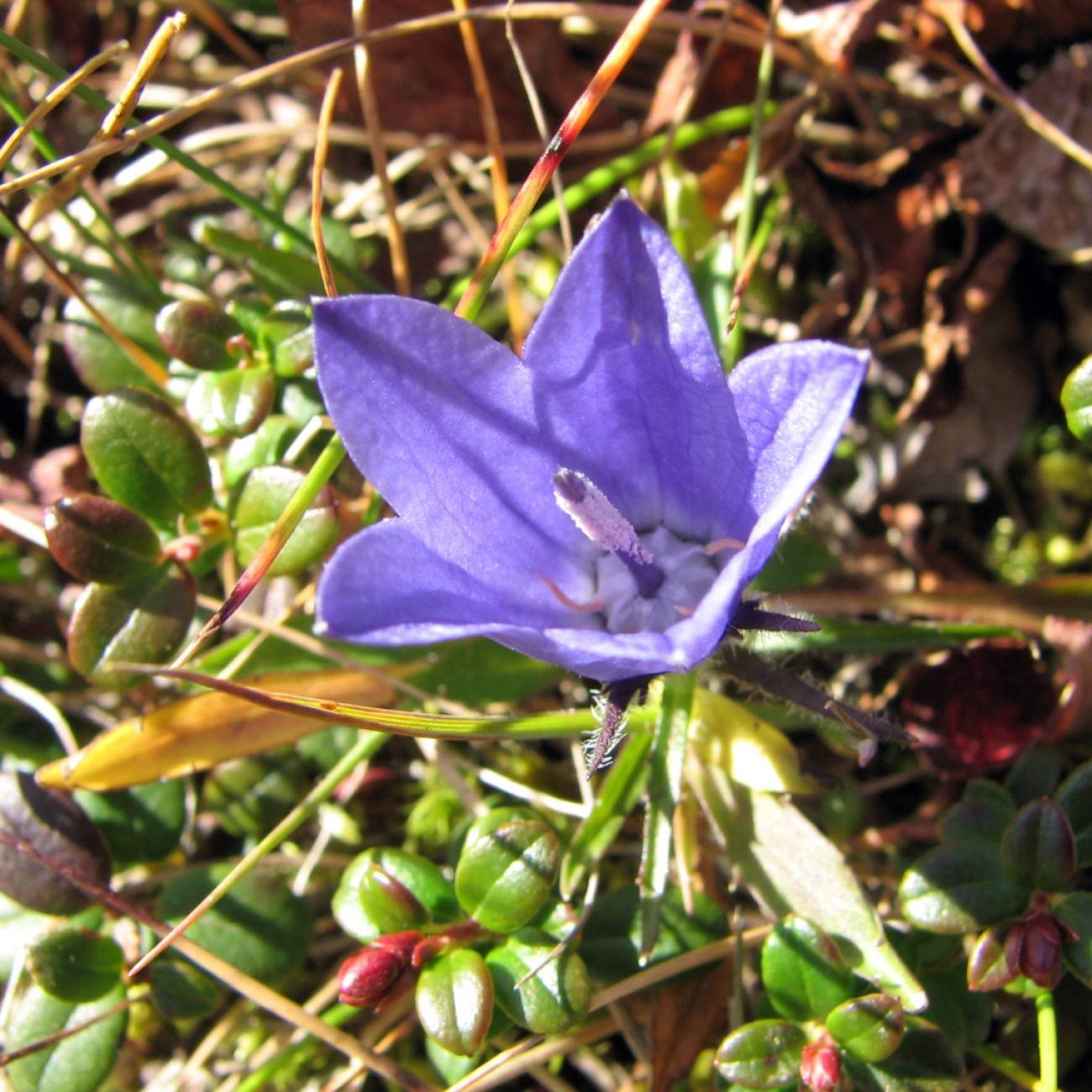
Alaska Bellflower
Campanula alaskana
Overview
Alaska Bellflower is a cold-hardy perennial adapted to the cool, moist climates of northern North American mountain slopes, meadows, and forest edges. It forms low clumps of rounded, toothed green basal foliage, sending up upright flower stalks lined with nodding, bell-shaped blooms that attract native bees, butterflies, and hummingbirds. The species is valued for its ability to thrive in short, cool growing seasons, making it a popular choice for northern and alpine gardens.
Care Guide
Watering
Keep soil consistently moist but not waterlogged, as Alaska Bellflower is adapted to naturally damp habitats and does not tolerate prolonged drought. Water deeply when the top 1 inch of soil feels dry, reducing frequency in late fall as the plant enters dormancy. Avoid overhead watering to minimize foliar disease risk, directing water at the base of the plant instead.
Light
Grow in full sun to partial shade, with partial shade preferred in regions with hotter summer temperatures to prevent foliage scorch. In its native northern range, full sun exposure supports robust flowering, as light intensity remains mild even during peak summer months. Provide at least 4 hours of direct sunlight daily to encourage abundant bloom production.
Soil
Prefers well-drained, loamy or sandy soil with a slightly acidic to neutral pH range of 5.5 to 7.0. The species tolerates poor, rocky soils common to alpine habitats, but will perform best with the addition of organic matter such as compost at planting time. Avoid heavy, clay soils that retain standing water, as this can lead to root rot.
Fertilizer
Fertilize sparingly once in early spring with a balanced, slow-release 10-10-10 fertilizer, as over-fertilization can lead to leggy growth and reduced flowering. For plants growing in poor soils, a light topdressing of compost in mid-summer can provide additional nutrients without risk of overfeeding. Discontinue all fertilization by late summer to allow the plant to prepare for winter dormancy.
Temperature
Thrives in cool temperatures between 50-75°F (10-24°C) during the growing season, and is extremely cold-hardy, tolerating winter temperatures as low as -40°F (-40°C) in USDA hardiness zones 3 to 7. High summer temperatures above 85°F (29°C) can cause stress, so provide extra shade and moisture during heatwaves. The plant requires a period of cold dormancy over winter to support healthy regrowth the following spring.
Pruning
Deadhead spent blooms regularly throughout the flowering season to encourage repeated blooming and prevent unwanted self-seeding in garden beds. Cut back entire flower stalks to the basal foliage once flowering is complete in late summer to keep the plant neat and reduce pest habitat. No additional pruning is needed over winter; leave basal foliage in place to protect the crown from frost damage, removing only dead foliage in early spring before new growth emerges.
Propagation
Easily propagated by seed sown directly outdoors in fall, as the seeds require a period of cold stratification to germinate; for indoor sowing, refrigerate seeds for 4-6 weeks before planting in spring. Established clumps can also be divided in early spring or late fall, separating root sections with at least one growing point each and replanting immediately at the same depth as the original plant. Softwood cuttings taken from new growth in late spring can also root successfully in moist, well-drained potting mix with bottom heat.
Humidity
Adapted to moderate to high humidity levels common in its native northern habitats, tolerating average garden humidity of 40-60% without issue. In very dry climates, occasional misting or placing a layer of organic mulch around the base of the plant can help maintain consistent soil moisture and raise surrounding humidity. Avoid placing the plant in areas with constant dry, blowing wind, which can desiccate foliage and reduce flowering.
Repotting
Alaska Bellflower is typically grown in garden beds rather than containers, but if potted, repot every 2-3 years in early spring before new growth begins. Select a pot with ample drainage holes, and use a well-drained, loamy potting mix amended with perlite or sand to improve drainage. Gently loosen tangled roots before placing in the new pot, and water thoroughly after repotting to reduce transplant shock.
Uses & Symbolism
Alaska Bellflower is widely used in cold-climate native gardens, alpine rock gardens, and pollinator plantings to provide summer color and support native bee and butterfly populations. Its delicate blooms make it a popular cut flower for small, informal floral arrangements, lasting up to a week in fresh water. Indigenous communities in its native range have historically used parts of the plant for mild medicinal purposes, including treatment of coughs and sore throats.
Diseases & Pests
Alaska Bellflower is relatively pest and disease resistant, but can be susceptible to root rot in poorly drained, waterlogged soils. Aphids and slugs may occasionally feed on young foliage and flower buds, which can be controlled with insecticidal soap for aphids and diatomaceous earth or hand-picking for slugs. Fungal leaf spot may occur in overly humid, poorly ventilated conditions, which can be prevented by spacing plants appropriately for air flow and avoiding overhead watering.
Related plants
Other plants you might like if you grow Alaska Bellflower.