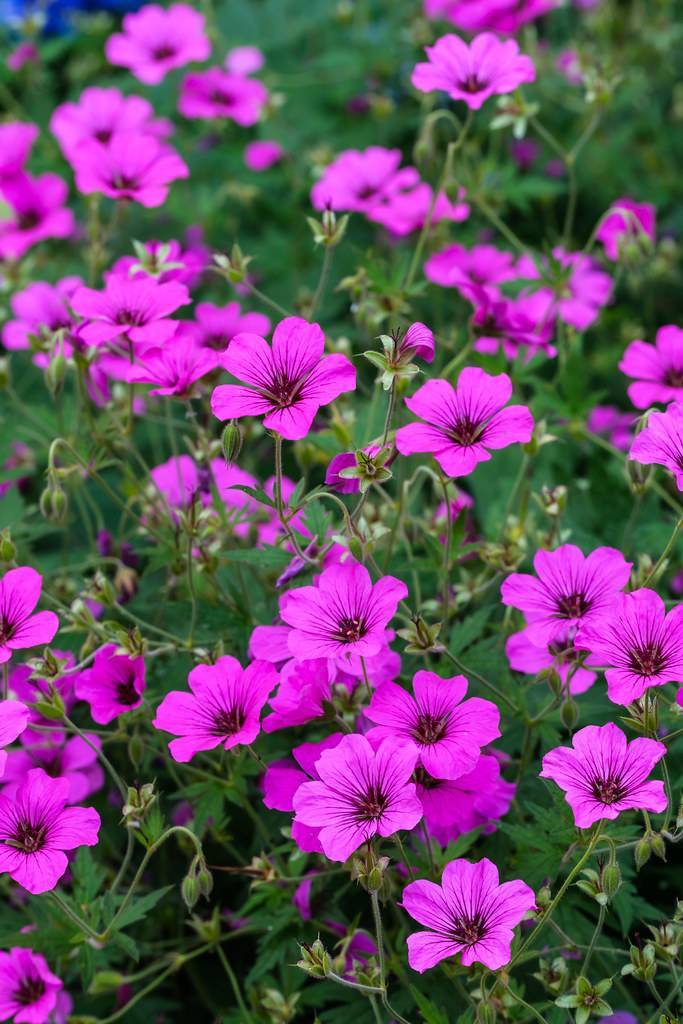
Hardy Geranium
Geranium spp. (section Geranium)
Overview
Hardy geraniums, often called cranesbills for their distinctive long, beak-like seed pods, are popular garden perennials prized for their adaptability and long bloom period. They feature lobed, often fragrant foliage that may turn vibrant red or orange in autumn, adding multi-season interest to landscapes. Unlike the common zonal geranium (Pelargonium), true hardy geraniums tolerate frost and return reliably year after year in temperate climates.
Care Guide
Watering
Water newly planted hardy geraniums regularly to keep soil evenly moist for the first growing season as they establish deep root systems. Once established, they are moderately drought-tolerant, only needing supplemental water during extended dry spells of 2 weeks or more. Avoid overwatering and soggy soil, which can cause root rot, especially in heavy clay soils.
Light
Most hardy geranium varieties thrive in full sun to partial shade, with at least 4-6 hours of direct sunlight daily for optimal blooming. In regions with hot, intense summer sun, provide afternoon shade to prevent leaf scorch and reduce water stress. Shadier conditions will result in sparser foliage and fewer flowers for most species.
Soil
Hardy geraniums prefer well-drained, loamy soil with a neutral to slightly alkaline pH between 6.0 and 7.5, though they adapt to a wide range of soil types including sandy and clay soils as long as drainage is good. Amend heavy clay soils with compost or well-rotted manure to improve drainage before planting. Avoid waterlogged, compacted soils that can suffocate the plant’s shallow root system.
Fertilizer
Fertilize hardy geraniums once in early spring with a balanced, slow-release 10-10-10 granular fertilizer to support new foliage growth and early bloom development. Over-fertilization will lead to lush, leggy foliage with reduced flowering, so avoid applying more than the recommended dose. In nutrient-rich garden soils, additional fertilization may not be necessary at all.
Temperature
Hardy geraniums thrive in temperatures between 60-75°F (15-24°C) during the growing season, and most varieties are cold-hardy to USDA zones 3-8, tolerating winter lows down to -40°F (-40°C) with a light layer of mulch for insulation. They can tolerate brief dips below freezing in spring and fall without damage, though young new growth may be damaged by hard late frosts. In regions with very mild winters, some evergreen varieties retain their foliage year-round.
Pruning
Deadhead spent flower stems regularly throughout the blooming season to encourage continuous reblooming and prevent self-seeding if you do not want volunteer seedlings. After the first major flush of blooms fades in mid-summer, shear the entire plant back by one-third to remove tired foliage and stimulate fresh new growth and a second round of flowers in fall. Cut back all remaining foliage to ground level in late fall after the first hard frost, or leave it in place over winter to provide habitat for beneficial pollinators, then remove it in early spring before new growth emerges.
Propagation
Hardy geraniums are most commonly propagated by division in early spring or late fall, when the plant is dormant; dig up the entire clump, separate it into smaller sections with healthy roots and growing points, and replant immediately at the same depth as the original plant. They can also be grown from seed sown directly in the garden in fall or started indoors 8-10 weeks before the last frost date, though seed-grown plants may not come true to the parent variety. Softwood cuttings taken from new growth in late spring or early summer will root easily in moist, well-drained potting mix kept out of direct sun for 3-4 weeks.
Humidity
Hardy geraniums tolerate a wide range of humidity levels, thriving in the average 40-60% relative humidity found in most temperate garden environments. They do not require high humidity, and are surprisingly tolerant of dry air, making them suitable for both coastal and inland garden locations. Excessively high humidity combined with poor air circulation can increase the risk of fungal leaf diseases, so space plants 12-24 inches apart to allow for good airflow.
Repotting
Hardy geraniums grown in containers should be repotted every 2-3 years in early spring, before new growth begins, to refresh the soil and provide more root space. Choose a pot with drainage holes one size larger than the current container, and use a well-drained, loamy potting mix amended with perlite or coarse sand to improve drainage. When repotting, gently loosen any tangled roots and cut away any soft, rotted root sections before replanting at the same depth as the original container.
Uses & Symbolism
Hardy geraniums are widely used as low-maintenance border plants, groundcovers, rock garden specimens, and container plants, where their spreading habit fills in gaps and suppresses weed growth. Their nectar-rich flowers attract bees, butterflies, and other beneficial pollinators, making them a popular addition to pollinator gardens and wildlife-friendly landscapes. Some species, such as Geranium maculatum, have a history of use in traditional herbal medicine for treating minor wounds and digestive issues, though they are not commonly used for culinary purposes.
Diseases & Pests
Hardy geraniums are relatively pest and disease resistant, but can be susceptible to fungal leaf spots, powdery mildew, and botrytis blight in conditions of high humidity, poor air circulation, or excessive overhead watering. Common pests include aphids, whiteflies, and slugs, which may feed on young, tender foliage, especially in shaded, moist locations. Root rot can occur in poorly drained, waterlogged soils, so proper site selection with good drainage is the best preventative measure for this issue.
Related plants
Other plants you might like if you grow Hardy Geranium.