Hardy Fuchsia
Fuchsia magellanica
Overview
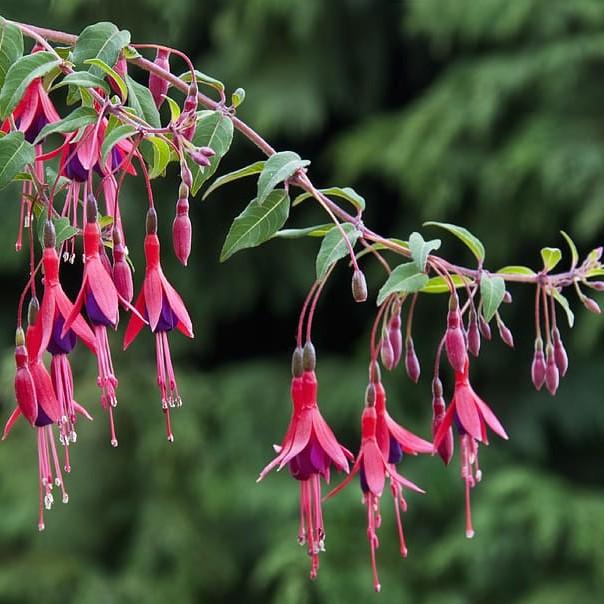
Hardy fuchsia is a deciduous shrub distinguished by its dangling, teardrop-shaped flowers, typically with red or pink sepals and purple corollas, that bloom from early summer to first frost. Unlike tender fuchsia varieties, it tolerates light freezes and can survive winter temperatures as low as 10°F (-12°C) with proper mulching, dying back to the ground in cold climates and resprouting in spring. Its arching, woody stems and small, oval green leaves create a bushy, mounded form that works well in borders, containers, or as a low informal hedge.
Care Guide
Watering
Keep soil consistently moist but not waterlogged, watering deeply 1-2 times per week during active growth, and reducing frequency in winter when the plant is dormant. Avoid wetting the foliage directly to minimize fungal disease risk, and add a 2-inch layer of organic mulch around the base to retain soil moisture and reduce evaporation.
Light
Grow in partial shade, ideally receiving 4-6 hours of dappled or morning sun daily, with protection from intense midday afternoon sun that can scorch leaves and cause flower drop. It tolerates full sun in cooler, coastal climates as long as soil moisture remains consistent.
Soil
Plant in well-draining, fertile loam soil with a slightly acidic to neutral pH between 6.0 and 7.0. Amend heavy clay or sandy soils with compost or well-rotted manure prior to planting to improve structure, nutrient content, and drainage.
Fertilizer
Feed with a balanced, slow-release granular fertilizer in early spring as new growth emerges, then follow with a diluted liquid fertilizer high in potassium every 2-4 weeks during the blooming season to support abundant flower production. Cease fertilizing by late summer to allow new growth to harden off before winter frost.
Temperature
Thrives in average summer temperatures between 60-75°F (15-24°C), and is hardy to USDA zones 6-9, with root protection from mulch allowing survival down to 10°F (-12°C). In zones colder than 6, grow in containers and overwinter indoors in a cool, frost-free location, or apply a thick 4-6 inch layer of straw or leaf mulch over the root zone in late fall for extra insulation.
Pruning
Prune back dead or damaged stems in early spring before new growth emerges, cutting woody stems back to 6-12 inches above the ground in colder climates where the plant dies back fully each winter. Deadhead spent blooms regularly throughout the growing season to encourage continuous flowering and prevent the plant from expending energy on seed production.
Propagation
Easily propagate from 4-6 inch softwood cuttings taken in late spring or early summer, removing lower leaves, dipping the cut end in rooting hormone, and planting in moist, well-draining potting mix kept under indirect light until roots form in 3-4 weeks. It can also be grown from seed, though seed-grown plants may not retain the exact flower characteristics of the parent plant, and will take longer to reach blooming maturity.
Humidity
Tolerates average ambient humidity levels between 40-60%, which is typical of most temperate garden environments. Avoid placing it in overly dry, exposed locations with constant strong winds, which can desiccate leaves and cause premature flower drop.
Repotting
For container-grown hardy fuchsia, repot every 1-2 years in early spring before new growth starts, using a slightly larger pot with fresh, well-draining potting mix amended with compost. Gently loosen the root ball when repotting to encourage new root growth, and ensure the pot has adequate drainage holes to prevent root rot.
Uses & Symbolism
Hardy fuchsia is widely planted as an ornamental in garden borders, cottage gardens, and hanging baskets, where its cascading, colorful blooms add long-lasting visual interest from summer to fall. Its nectar-rich flowers are highly attractive to hummingbirds, bees, and butterflies, making it a valuable addition to pollinator-friendly gardens. In some regions, its ripe, dark purple berries are edible, with a mild, tart flavor suitable for jams, jellies, or fresh eating.
Diseases & Pests
Common pests include aphids, whiteflies, spider mites, and fuchsia gall mites, which cause distorted growth and can be controlled with insecticidal soap, neem oil, or pruning of affected plant parts. Fungal diseases such as botrytis blight, rust, and root rot can occur in overly wet, poorly drained conditions or with excessive overhead watering, prevented by proper spacing for air circulation, well-draining soil, and watering at the base of the plant.
Related plants
Other plants you might like if you grow Hardy Fuchsia.