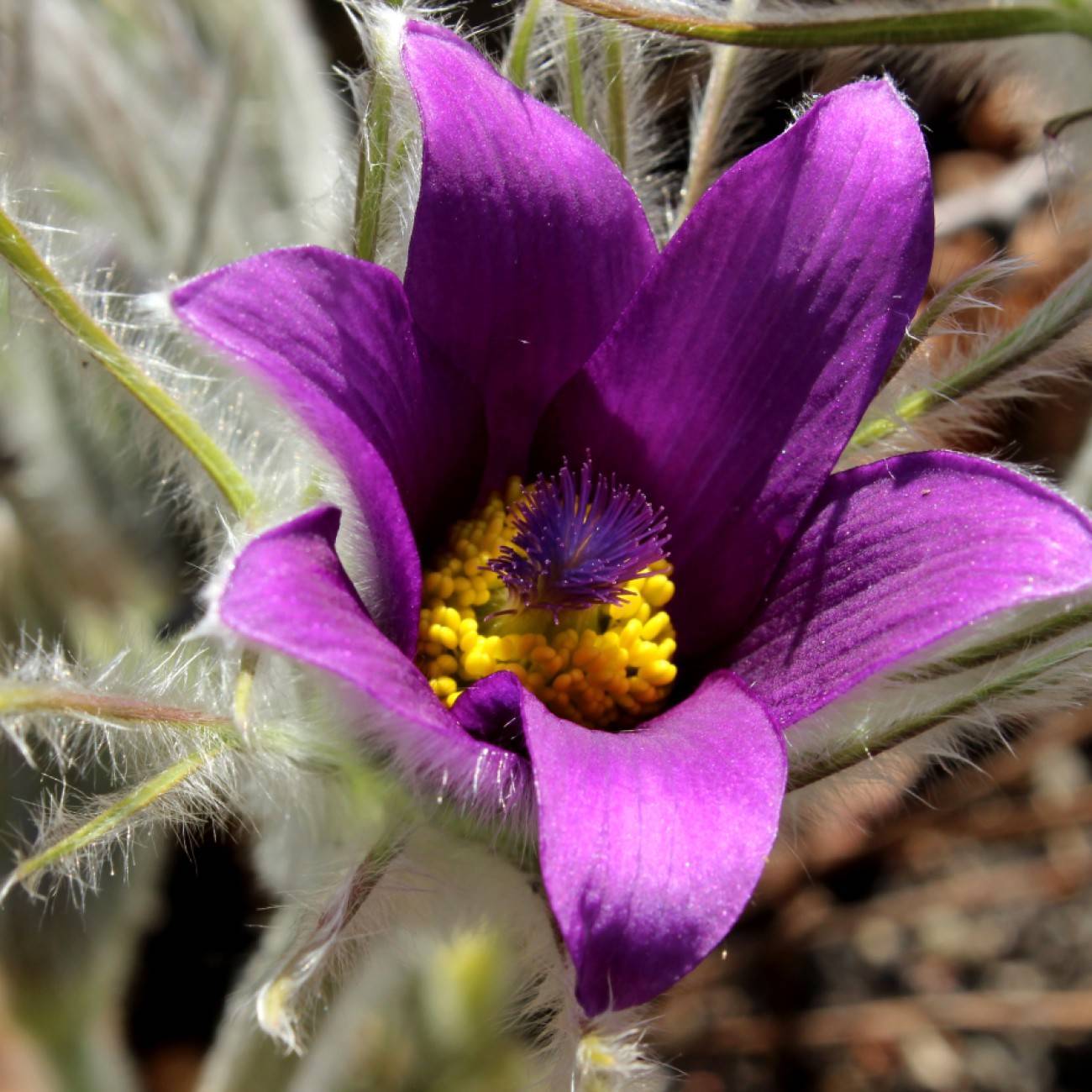
Haller's Pasque Flower
Pulsatilla halleri
Overview
Haller's Pasque Flower is a compact alpine perennial named for Swiss naturalist Albrecht von Haller, prized for its early spring blooms that emerge before its full foliage develops. Its silky, bell-shaped flowers are typically deep violet-purple, with prominent yellow stamens at the center, followed by distinctive feathery seed heads that remain ornamental for weeks after blooming. The plant’s dense, silvery-haired fern-like foliage forms a low mound that dies back to the ground in late summer as it enters dormancy. It is a popular choice for rock gardens, alpine troughs, and xeriscapes where its cold-hardy, low-growing habit can be showcased.
Care Guide
Watering
Water Haller's Pasque Flower sparingly, allowing the top 2 to 3 inches of soil to dry out completely between waterings, as it is highly susceptible to root rot in saturated conditions. During its dormant period in late summer and fall, reduce watering significantly, only providing moisture if the soil is completely dry for extended periods. Avoid overhead watering to prevent moisture from sitting on the fuzzy foliage, which can lead to fungal growth.
Light
This alpine species thrives in full sun, requiring at least 6 hours of direct sunlight per day to produce abundant blooms and maintain compact, healthy foliage. In regions with extremely hot summer temperatures, it benefits from light afternoon shade to prevent scorching of its delicate leaves and reduce stress during peak heat. Too much shade will result in leggy growth, reduced flowering, and increased susceptibility to fungal diseases.
Soil
Haller's Pasque Flower requires sharply drained, gritty, low-fertility soil with a neutral to alkaline pH, mimicking its native rocky mountain habitats. A mix of sandy loam, gravel, and a small amount of crushed limestone is ideal to improve drainage and adjust pH to its preferred range. Heavy, clay-rich soils that retain moisture will quickly cause root rot, so amend planting areas extensively with grit or perlite before installation.
Fertilizer
This species is adapted to low-nutrient mountain soils and requires very little fertilization; excessive nutrients will cause leggy growth and reduce flowering. Apply a dilute, balanced, slow-release fertilizer once in early spring just as new growth emerges, using half the recommended strength for general garden plants. Avoid fertilizing after flowering begins, and never fertilize during the dormant period, as this can damage the plant’s root system.
Temperature
Haller's Pasque Flower is extremely cold-hardy, tolerating winter temperatures as low as -40°F (-40°C) and thriving in USDA hardiness zones 3 through 8. It requires a period of cold winter dormancy to bloom reliably the following spring, making it poorly suited to regions with mild, frost-free winters. Summer temperatures above 85°F (29°C) can trigger early dormancy, so provide light afternoon shade in warmer climates to extend its growing season.
Pruning
Pruning is minimal for this low-maintenance species; simply snip off spent flower stalks after blooming if you do not wish to save the ornamental feathery seed heads. Remove any yellowed or damaged foliage during the growing season to improve air circulation around the plant and reduce fungal disease risk. Once the foliage dies back completely in late summer, you can trim it to ground level to keep the planting area tidy, though leaving the dormant crown undisturbed is also acceptable.
Propagation
Haller's Pasque Flower is most reliably propagated from seed, which requires a 3 to 4 month period of cold stratification to break dormancy; sow fresh seed outdoors in fall for natural stratification, or refrigerate moist seed for 12 weeks before sowing in spring. The plant develops a deep taproot and does not tolerate division well, so this propagation method is not recommended, as divided plants often fail to re-establish. Seedlings should be transplanted to their permanent location when they have 2 to 3 true leaves, as they do not tolerate root disturbance once their taproot develops.
Humidity
This alpine species prefers low to moderate humidity levels between 30% and 50%, adapted to the dry, breezy conditions of its native mountain habitats. High humidity, especially combined with warm temperatures and poor air circulation, increases the risk of fungal leaf spots and crown rot, so ensure plants are spaced adequately for airflow. Avoid placing Haller's Pasque Flower in enclosed, humid areas such as terrariums or poorly ventilated garden beds.
Repotting
If grown in alpine troughs or containers, repot Haller's Pasque Flower only once every 3 to 4 years, as it resents root disturbance and thrives when slightly root-bound. Repot during the dormant period in late fall or early winter, taking great care not to damage the deep taproot when transferring to the new container. Use a sharply drained, gritty potting mix formulated for alpine plants, and ensure the container has multiple drainage holes to prevent waterlogging.
Uses & Symbolism
Haller's Pasque Flower is a popular ornamental plant for rock gardens, alpine troughs, xeriscapes, and native wildflower gardens, where its early spring blooms and unique seed heads add seasonal interest. Historically, small, highly diluted preparations of the plant were used in traditional herbal medicine to treat coughs and skin conditions, though its toxicity makes internal consumption unsafe without professional guidance. It is also valued as a pollinator plant, providing early-season nectar for native bees and other beneficial insects emerging in spring.
Diseases & Pests
The most common issue affecting Haller's Pasque Flower is root rot, caused by overwatering or poorly drained soil, which causes wilting, yellowing foliage, and eventual death if not addressed quickly. Fungal leaf spots and powdery mildew can occur in conditions of high humidity, poor air circulation, or overhead watering, which can be treated with copper fungicide and by improving airflow around the plant. Slugs and snails may occasionally feed on young, tender foliage in spring, so use organic bait or physical barriers to protect new growth in areas with high pest pressure.
Related plants
Other plants you might like if you grow Haller's Pasque Flower.