Edelweiss
Leontopodium alpinum
Overview
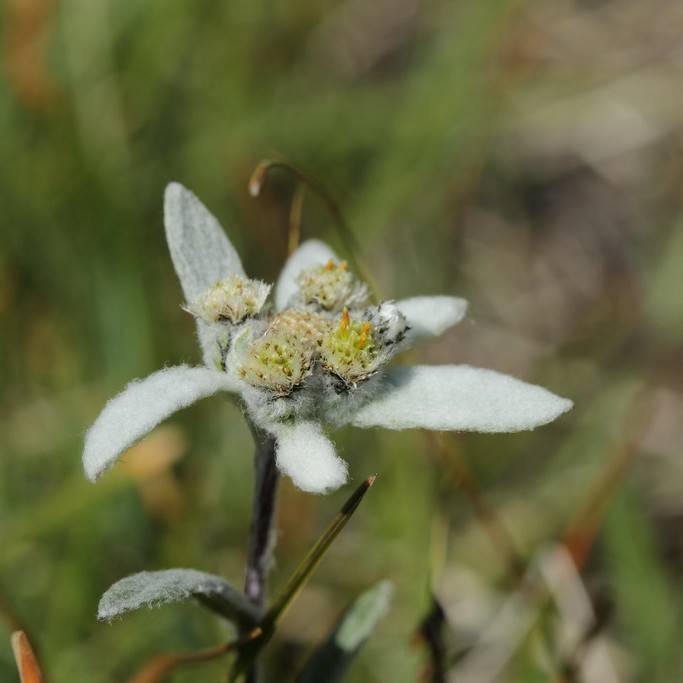
Edelweiss is a hardy alpine perennial adapted to high-altitude, rocky, exposed environments, characterized by dense, woolly white hairs covering its leaves and bracts that protect it from harsh UV radiation and cold. Its small, clustered yellow true flowers are surrounded by distinctive star-shaped white bracts, giving it its signature ethereal appearance. Long celebrated in European folklore as a symbol of courage and purity, it is a protected species in many wild alpine regions due to historical overharvesting.
Care Guide
Watering
Edelweiss requires infrequent, deep watering, allowing the soil to dry out completely between sessions to prevent root rot, as it is adapted to well-drained, dry alpine soils. Avoid overhead watering to prevent moisture buildup on its fuzzy foliage, which can lead to fungal growth. During winter dormancy, reduce watering significantly to keep the soil barely moist.
Light
This alpine species thrives in full, direct sunlight, requiring a minimum of 6 hours of unfiltered light daily to support healthy growth and flowering. In warmer, lower-altitude climates, it can benefit from light afternoon shade to prevent scorching during the hottest summer months. Indoor-grown edelweiss should be placed in a south-facing window or under grow lights to meet its high light requirements.
Soil
Edelweiss needs extremely well-drained, gritty, low-fertility soil with a neutral to slightly alkaline pH, mimicking its native rocky alpine habitat. A mix of sandy loam, perlite, crushed limestone, and small gravel works well, with no added organic matter that would retain excess moisture. Heavy, water-retentive soils will quickly cause root rot, so ensure planting containers have ample drainage holes.
Fertilizer
As a plant adapted to nutrient-poor mountain soils, edelweiss requires very little fertilization, with excess nutrients leading to leggy growth and reduced flowering. A single, light application of a balanced, slow-release fertilizer at half strength in early spring is sufficient for the entire growing season. Avoid high-nitrogen fertilizers, as these will promote foliage growth at the expense of blooms.
Temperature
Edelweiss is exceptionally cold-hardy, tolerating winter temperatures as low as -30°F (-34°C) when planted in well-drained soil, and requires a period of cold winter dormancy to bloom the following season. It prefers cool summer temperatures between 50-70°F (10-21°C), and struggles in hot, humid climates where temperatures regularly exceed 80°F (27°C). In warm regions, it is best grown in containers that can be moved to a cool, shaded location during summer heatwaves.
Pruning
Pruning requirements for edelweiss are minimal; spent flower stalks can be trimmed back after blooming to maintain a tidy appearance and prevent self-seeding if desired. In late winter or early spring, remove any dead or damaged foliage to make way for new growth. Avoid heavy pruning, as this can damage the plant’s low-growing, woody base.
Propagation
Edelweiss is most commonly propagated from seed, which requires a 4-6 week period of cold stratification in moist, refrigerated conditions to break dormancy before sowing on the surface of gritty, well-drained seed starting mix. It can also be propagated by careful division of mature clumps in early spring, though the plant has a delicate root system that is easily damaged during division. Cuttings are less reliable, but softwood tip cuttings taken in early summer can root in a gritty medium under high humidity.
Humidity
Edelweiss prefers low to moderate humidity levels between 30-50%, adapted to the dry, breezy conditions of high mountain slopes. High humidity, especially combined with warm temperatures, greatly increases the risk of fungal diseases and root rot, so ensure good air circulation around the plant at all times. Avoid placing it in humid environments like bathrooms or enclosed terrariums.
Repotting
Container-grown edelweiss only needs repotting every 2-3 years, as it prefers to be slightly root-bound and thrives in small, well-drained pots. Repot in early spring before new growth emerges, using fresh gritty soil and taking care not to damage its fragile root system. Only move up one pot size at a time to prevent excess soil from retaining too much moisture around the roots.
Uses & Symbolism
Edelweiss is widely cultivated as an ornamental plant for rock gardens, alpine troughs, and xeriscapes, prized for its unique foliage and delicate blooms. It has a long history of use in traditional European folk medicine to treat respiratory and digestive ailments, and is a common ingredient in high-end skincare products due to its antioxidant-rich compounds. It also holds significant cultural value, featured in folklore, art, and as a national symbol for several alpine countries including Austria and Switzerland.
Diseases & Pests
Edelweiss is relatively pest-resistant in its preferred growing conditions, but is highly susceptible to root rot caused by overwatering or poorly drained soil. Fungal diseases such as powdery mildew and leaf spot can occur if the plant is grown in high humidity, poor air circulation, or if moisture is allowed to sit on its fuzzy foliage for extended periods. Aphids and spider mites may occasionally infest stressed plants, especially those grown indoors or in overly warm conditions.
Related plants
Other plants you might like if you grow Edelweiss.