Hairy False Bindweed
Calystegia pubescens
Overview
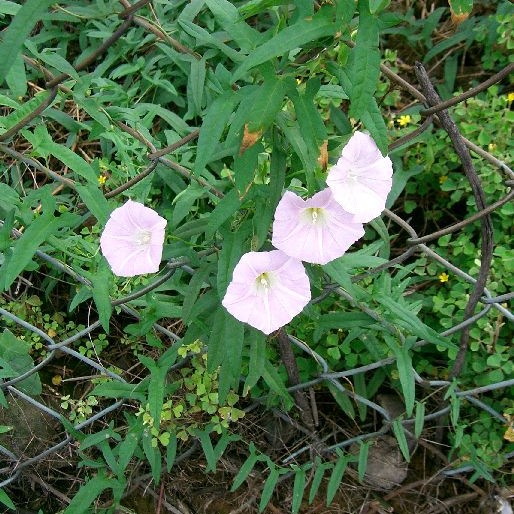
Hairy false bindweed is a twining vine distinguished by its soft, fuzzy stems and leaves, paired with showy, 2-3 inch wide pale pink or white trumpet-shaped flowers that bloom from mid-summer to early fall. It spreads via rhizomes and can form dense mats, making it effective for erosion control on slopes, though it may become aggressive in ideal conditions. Native to East Asia, it has naturalized in parts of North America and Europe, thriving in disturbed sites, meadows, and garden edges.
Care Guide
Watering
Water regularly during the first growing season to establish a deep root system, keeping soil consistently moist but not waterlogged. Once established, it is drought-tolerant, requiring only occasional watering during prolonged dry spells to prevent leaf drop. Overwatering in poorly drained soil can lead to root rot, so allow the top 1-2 inches of soil to dry out between waterings for garden-grown specimens.
Light
Grows best in full sun, which encourages maximum flower production and sturdy, compact growth. It can tolerate partial shade, though flowering will be reduced and stems may become leggy as the vine stretches toward brighter light. Ensure it receives at least 6 hours of direct sunlight daily for optimal performance.
Soil
Adaptable to a wide range of soil types, including sandy, loamy, and clay soils, as long as drainage is adequate. It prefers a neutral to slightly alkaline pH between 6.0 and 7.5, but can tolerate slightly acidic conditions as well. Amending heavy clay soil with compost or sand will improve drainage and support healthier root growth.
Fertilizer
Apply a balanced, all-purpose fertilizer in early spring before new growth emerges to support vigorous foliage and flower development. Avoid over-fertilizing, especially with high-nitrogen formulas, as this can promote excessive leaf growth at the expense of blooms. Established plants rarely need additional feeding if grown in moderately fertile soil.
Temperature
Thrives in temperate climates, with an ideal growing temperature range of 60-85°F (15-29°C). It is winter-hardy in USDA zones 5-9, dying back to the ground in winter and resprouting from rhizomes in spring. Severe, prolonged freezes without snow cover may damage root systems, so a 2-3 inch layer of mulch can be applied in late fall for insulation in colder parts of its range.
Pruning
Prune back aggressive growth in late spring or early summer to contain spread and prevent the vine from smothering nearby plants. Cut back all stems to 2-3 inches above ground level in late fall after foliage dies back to keep the planting area tidy and reduce overwintering pest habitat. Regularly remove any unwanted rhizome sprouts that spread beyond the desired growing area to prevent invasiveness.
Propagation
Most easily propagated by dividing rhizomes in early spring before new growth begins, separating healthy root sections with at least one growing bud and replanting at the same depth as the parent plant. It can also be grown from seed, which should be scarified or soaked in warm water for 24 hours before sowing to improve germination rates. Softwood cuttings taken in early summer will root readily in moist potting mix if kept in a warm, humid environment.
Humidity
Tolerates a wide range of humidity levels, from dry inland air to moderate coastal humidity, with no special requirements. Excessively high humidity combined with poor air circulation can increase the risk of fungal leaf spots, so space plants adequately to allow airflow around foliage. It does not require misting or supplemental humidity in garden settings.
Repotting
If grown in containers, repot every 2-3 years in early spring, moving to a pot one size larger with fresh, well-draining potting mix. Trim back overgrown rhizomes by up to one-third during repotting to prevent the plant from becoming root-bound and to control size. Ensure containers have adequate drainage holes to prevent waterlogging, as stagnant water can quickly damage the root system.
Uses & Symbolism
Hairy false bindweed is primarily grown as an ornamental vine for covering trellises, fences, or slopes, where its attractive flowers and dense foliage provide visual interest and erosion control. In traditional East Asian medicine, extracts of the plant have been used topically to treat skin irritations and swelling, though internal use is not recommended due to its toxicity. It is also occasionally planted as a low-maintenance groundcover for difficult, hard-to-landscape areas where other plants struggle to establish.
Diseases & Pests
Common fungal diseases include powdery mildew and leaf spot, which occur most often in humid, poorly ventilated conditions and can be treated with neem oil or copper fungicides, as well as by removing affected foliage. Aphids and spider mites may feed on young leaves and stems, causing stunted growth and leaf yellowing; these pests can be controlled with insecticidal soap or a strong jet of water to dislodge them. Root rot is a risk in waterlogged soil, so proper drainage is the most effective preventative measure.
Related plants
Other plants you might like if you grow Hairy False Bindweed.