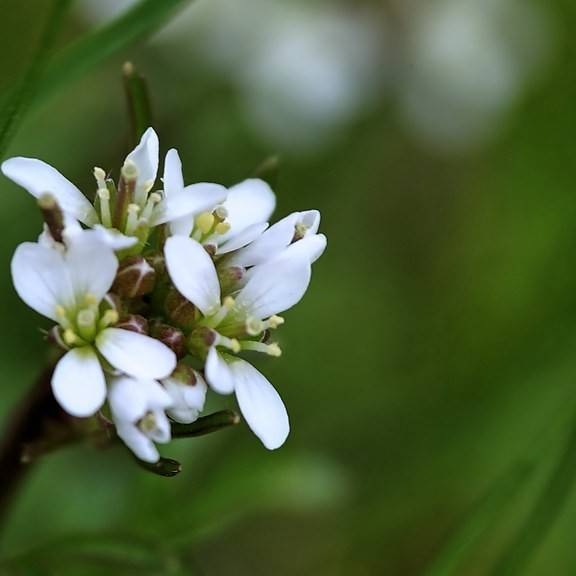
Hairy Bitter Cress
Cardamine hirsuta
Overview
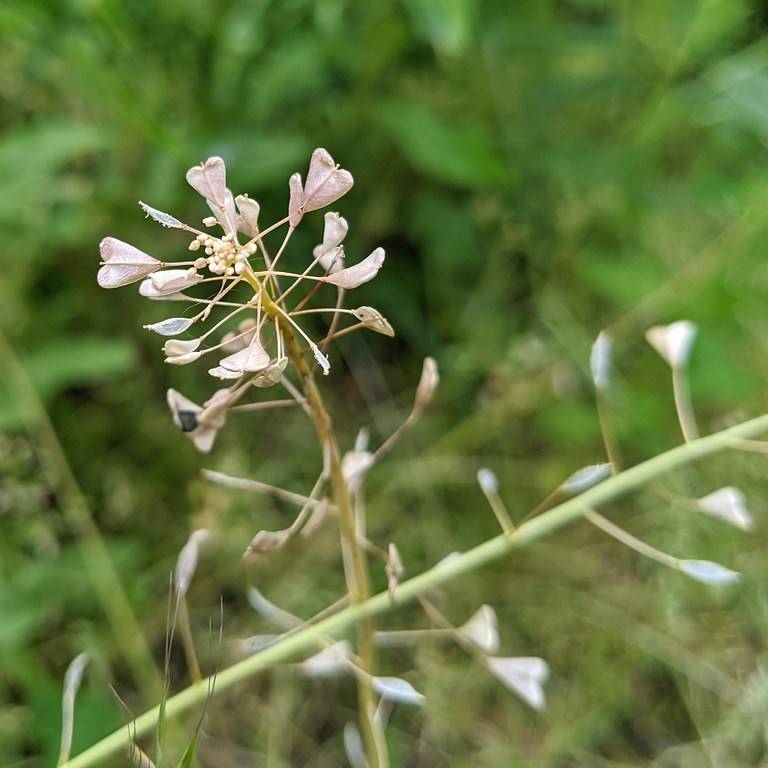
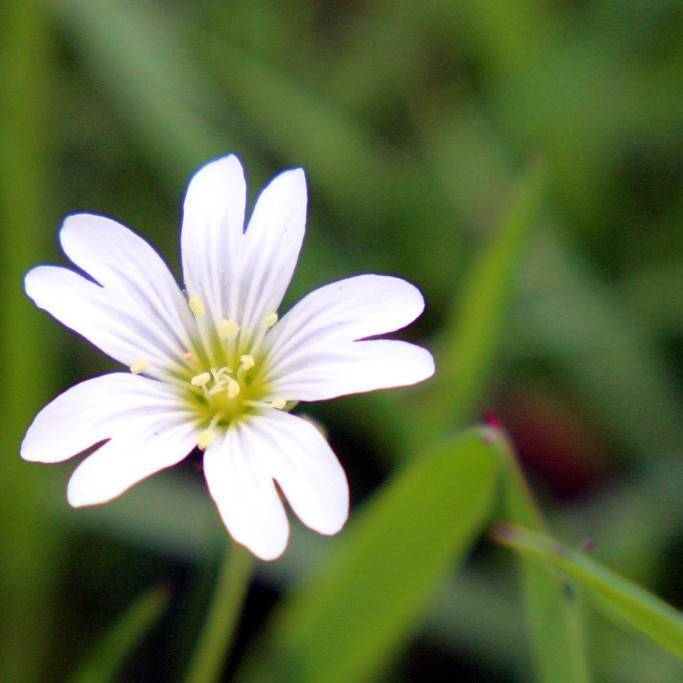
Hairy Bitter Cress is a widespread, low-growing annual plant that thrives in disturbed, moist soils across temperate regions worldwide, frequently colonizing lawns, garden beds, and container pots. It produces a basal rosette of pinnately lobed, softly hairy leaves, followed by slender upright stems bearing clusters of tiny white flowers in early spring through fall. When mature, its long, narrow seed pods burst open on contact to disperse seeds up to several feet away, contributing to its reputation as a prolific, hard-to-eradicate weed.
Care Guide
Watering
Hairy Bitter Cress prefers consistently moist, well-watered soil, and will wilt quickly if allowed to dry out completely, though it can tolerate short periods of drought once established. It thrives in areas with regular rainfall or frequent light irrigation, and is often found in spots that receive consistent moisture from garden watering or natural runoff. Avoid overwatering in poorly draining soils, as this can lead to root rot, though the plant is highly adaptable to variable moisture levels.
Light
This species grows best in partial shade, but can tolerate full sun in cooler climates or full shade in warmer regions, making it highly adaptable to a range of light conditions. It will grow more vigorously and produce lusher foliage in areas with dappled or indirect light, though it can survive even in heavily shaded undergrowth. Full sun exposure in hot summer weather may cause the plant to bolt and go to seed more quickly than it would in shadier spots.
Soil
Hairy Bitter Cress is not fussy about soil type, and will grow in sandy, loamy, or clay soils, as long as they retain some moisture and have a neutral to slightly acidic pH between 6.0 and 7.0. It is particularly adept at colonizing compacted, poor-quality soils where other plants struggle to grow, including gaps in paving, gravel paths, and nutrient-depleted garden beds. It will grow most vigorously in rich, loamy soil with high organic matter content, but does not require amended soil to thrive.
Fertilizer
As a fast-growing, opportunistic annual, Hairy Bitter Cress does not require regular fertilization, and can obtain all necessary nutrients from even poor-quality soil. If growing it intentionally as an edible herb, a light application of balanced, all-purpose liquid fertilizer once per growing season can encourage lusher, faster leaf growth. Excess nitrogen fertilization will cause overly soft, less flavorful foliage, so fertilizer use should be minimal for edible cultivation.
Temperature
Hairy Bitter Cress is a cool-season plant that grows best in temperatures between 50°F and 75°F (10°C and 24°C), and will bolt and go to seed rapidly once temperatures consistently exceed 80°F (27°C). It is frost-tolerant, and can survive light freezes down to 20°F (-7°C), allowing it to grow as a winter annual in mild temperate climates. In regions with harsh winters, it will germinate in early spring as soon as soil temperatures rise above 45°F (7°C), and complete its lifecycle before the hottest summer months.
Pruning
If grown as an edible crop, regularly pinch off flower stems as they appear to extend the leaf harvest period and prevent the plant from going to seed prematurely. To control its spread as a weed, pull entire plants before seed pods develop, as mature pods will burst and disperse seeds when disturbed during pulling. Deadheading spent flowers is not necessary for the health of the plant, but is critical to prevent unwanted self-seeding in garden areas.
Propagation
Hairy Bitter Cress propagates exclusively from seed, which is produced in large quantities by mature plants and can remain viable in soil for up to 10 years. Seeds germinate readily at cool soil temperatures, and do not require stratification or special treatment to sprout, often emerging within 3 to 7 days of exposure to moisture and light. It self-seeds prolifically without intervention, so intentional cultivation only requires scattering seeds on prepared, moist soil in early spring or fall.
Humidity
This adaptable plant tolerates a wide range of humidity levels, from dry indoor air to high outdoor humidity in subtropical regions, with no specific humidity requirements. It will grow most vigorously in moderate humidity between 40% and 70%, but can survive in both arid and very humid conditions as long as soil moisture is sufficient. High humidity combined with poor air circulation may increase the risk of fungal leaf spot, though this is rarely a serious issue for the hardy plant.
Repotting
Hairy Bitter Cress is rarely grown in containers intentionally, but often volunteers in potted houseplants and outdoor container gardens, where it can be left to grow or pulled as desired. If transplanting wild specimens for edible cultivation, gently lift the entire root ball and replant in standard potting mix, watering thoroughly after transplanting to reduce shock. Since it is a short-lived annual, it does not require regular repotting, and will complete its lifecycle within a single growing season regardless of container size.
Uses & Symbolism
The leaves, flowers, and young seed pods of Hairy Bitter Cress are edible, with a sharp, peppery flavor similar to watercress, often used fresh in salads, sandwiches, pesto, or as a garnish. In traditional herbal medicine, it has been used as a diuretic, appetite stimulant, and remedy for mild respiratory congestion, due to its high vitamin C and antioxidant content. It is also a valuable early-season nectar source for small native bees and other pollinators when few other flowers are in bloom.
Diseases & Pests
Hairy Bitter Cress is relatively resistant to most pests and diseases, though it may occasionally be affected by fungal issues such as downy mildew, white rust, and leaf spot in overly wet, poorly ventilated conditions. It is a host plant for the larvae of several butterfly species, including the orange tip and small white, which may feed on its leaves, though damage is rarely severe enough to harm the fast-growing plant. Aphids and flea beetles may occasionally feed on its foliage, but infestations are typically minor and do not require treatment.
Related plants
Other plants you might like if you grow Hairy Bitter Cress.